Easy DIY Containers for Winter Sowing That Actually Work
Have you ever wondered what types of containers would be good for winter sowing? The answer is that there are so many, the options are almost limitless. You have far more options than you might think. I’ve used several of these container types to winter start seeds with great success. Let’s look at some options for DIY containers for winter sowing. You’re sure to find an option you already have on hand, or can get easily.
If you want to learn more about winter sowing, check out these posts:
Winter Sowing for Strong Roots and Healthier Plants
10 Winter Sowing Tips for Beginners
What Makes a Good Winter Sowing Container
Before we talk specifics, let’s talk function. The best containers for winter sowing all share a few traits:
- Ability to create drainage holes to prevent soggy soil
- Clear or translucent sides to let light in
- Deep enough for roots to grow
- A lid or cover to trap moisture and snow
If a container checks those boxes, it could be a good choice to use for winter sowing. For all of these options, they’re very easy to collect by putting out a community ask if you do not have enough of your own. I’ve gather almost all of my winter sowing containers by asking friends and neighbors to save containers for me.
Classic DIY Containers for Winter Sowing
Milk Jugs
Milk jug winter sowing is popular, and for good reason. They are sturdy, easy to cut, and hold enough soil for strong seedlings. They’re also easy to move around if you need to.
To use milk jugs:
- Cut the jug almost in half, leave a little hinge so it’s easier to place the top back on
- Poke drainage holes in the bottom
- Fill with soil
- Put your seeds in the soil and cover to the appropriate seed depth listed on the seed packet
- Water in the seeds
- Flip the top back on and tape it shut
Remember to add a label so you know what you planted. This is one of my favorite containers for winter sowing.
Here’s a video I did where I used this method for winter sowing:
Water and Juice Bottles
Clear bottles work similarly to milk jugs and are especially good for flowers and herbs. I’ve used orange juice and 2 liter soda bottles before. The directions to use these are exactly the same as using a milk jug.
Takeout Containers
Clear takeout boxes are excellent DIY containers for winter sowing. They’re shallow, which makes them perfect for lettuce, spinach, and other greens. You can use aluminum ones as well, but make sure it has a clear top.
To use takeout containers:
- Clean the container and remove all food bits
- Poke holes in the bottom for drainage
- Fill with soil
- Add seeds
- Water in the seeds
- Take the lid, or use plastic if it doesn’t have a clear lid, and poke holes in it. You need holes to allow rain and snow to enter the container, and so the seeds can experience natural temperature fluctuations.
- Place the lid on top, tape if necessary for it to stay on
Rotisserie Chicken Containers
These are almost purpose-built for winter sowing. They have a tall lid that’s clear plastic. It’s easy for light to get in and the plants have room to grow.
The directions to use rotisserie chicken containers are the same as using takeout containers.
Recycled Containers You May Already Have
These options are also things that are relatively easy to find. After cleaning, the directions for use are the same as using takeout containers.
Salad Clamshells
Salad containers are ideal for shallow-rooted plants. They’re easy to find and make perfect mini greenhouses for leafy greens.
Yogurt and Cottage Cheese Tubs
While clear versions work best, you can use the white opaque versions as well as long as you use a clear lid. Add a plastic wrap lid or the clear lid of a matching container.
Berry Containers
Strawberry and blueberry containers are excellent choices for DIY containers for winter sowing. They make really good seed starting containers inside, as well. The containers already have drainage and ventilation built in. They’re ideal for small seed batches.
Bakery Cake Domes
If you’ve ever bought a grocery store cake, you’ve held a premium winter sowing container in your hands. Because these tend to be fairly large, they can be sectioned off to grow different varieties.
Unusual but Effective DIY Containers for Winter Sowing
Creativity is the name of the game when it comes to DIY containers.
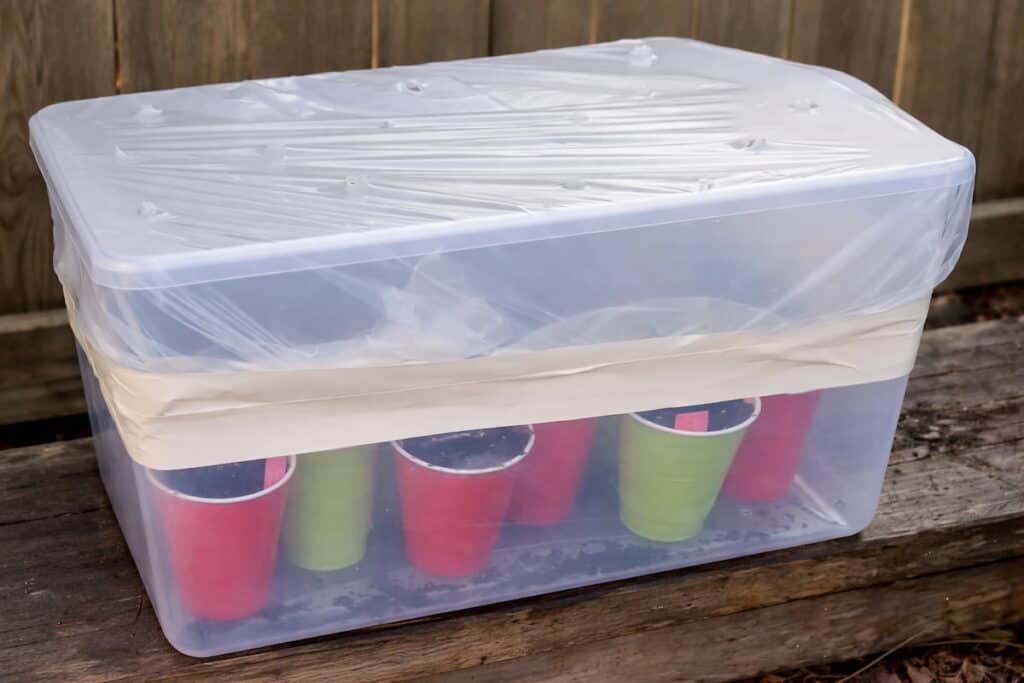
Clear Storage Bins
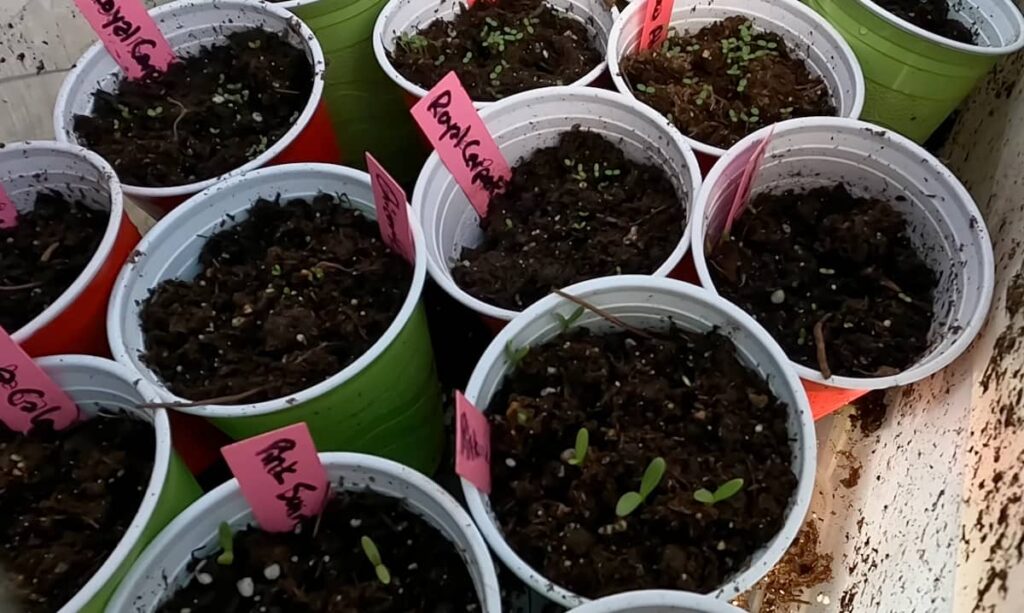
Large, clear bins can act like mini cold frames. They’re ideal for mass sowing if you fill the entire container with soil. Or I’ve used them to place Solo cups in with different seed varieties in each cup. You can even cut 20 oz soda bottles in half and use them as containers.
Watch this video to see how to make a clear storage bin into a DIY winter sowing container.
Plastic Egg Cartons
Clear egg cartons work beautifully for tiny seeds and easy transplanting. The seeds will quickly outgrow them once they sprout. But for things like lettuce that get planted quickly this can be a great option.
Coffee Canisters with Clear Lids
Large coffee cans are tall enough for roots and sturdy enough to withstand winter conditions. These are excellent for deep-rooted seedlings like herbs and native plants.
Soda Bottle or solo cup Flats
Prepare several 20 oz soda bottles the same way as milk jugs and juice bottles. Place them together on a tray. You’ll want to run some tape around the outside to keep them in a group, or you might find the wind will put them somewhere you don’t want, and disturb your seeds at the same time. This idea creates a winter sowing system that’s easy to move around while keeping it compact at the same time. You can place a different seed variety in each bottle.
Plastic Drawer Organizers
Clear organizers with compartments make labeling easy and keep varieties neatly separated. Use plastic wrap or other clear plastic as a lid to create the greenhouse effect.
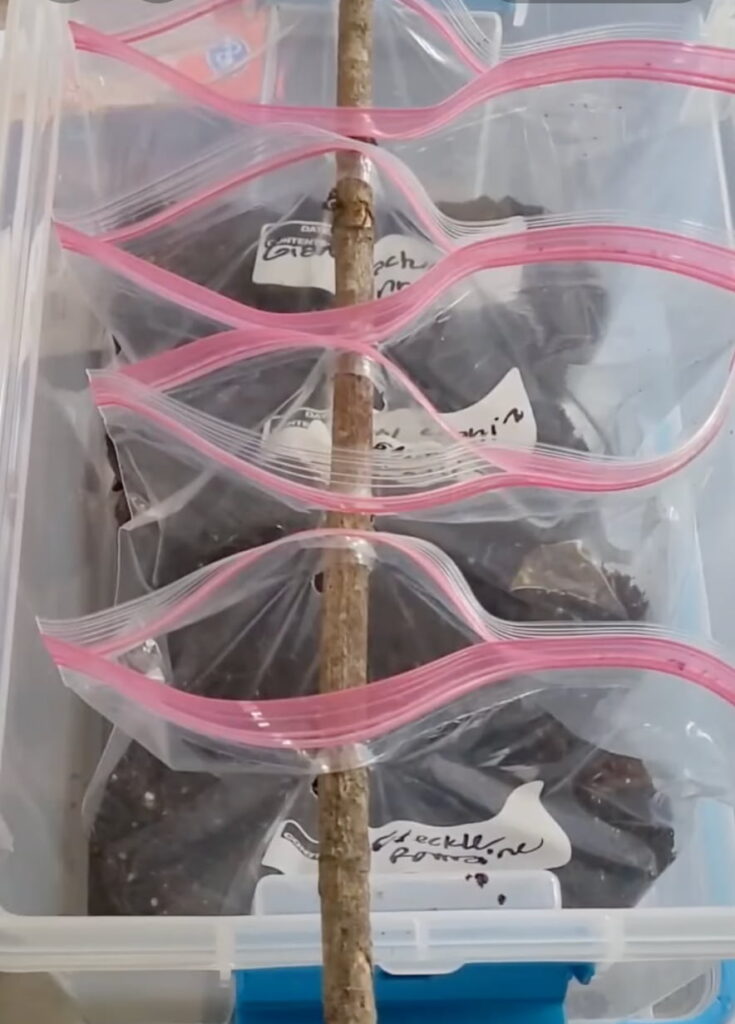
Ziplog or storage bags
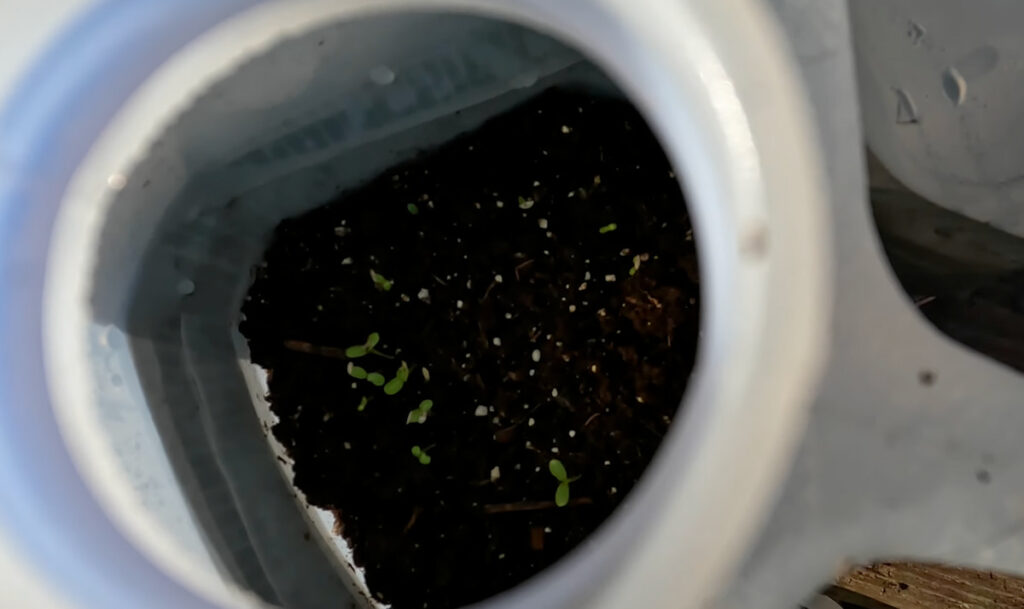
I’ve used these with success in the past. They can be a little tricky because they don’t always sit nicely, but they work great if that’s what you have. You can reuse ones instead of throwing them away. Just a give them a quick clean inside, poke holes, and they’re ready to go.
Here’s a video of me using this DIY container to start flower seeds.
Containers to Avoid
Some things just don’t do well outdoors in winter and/or will not allow enough light in.
- Opaque containers block light – you can use them with a clear lid, but they’re best avoided
- Glass can crack or shatter – you cannot add drainage to glass, they will drown your seeds even if they don’t break
- Containers without drainage invite rot – even the perfect clear container is not a good choice without drainage
- Biodegradable pots break down too quickly – do not use peat or coco coir starter pots, anything cardboard, or similar items that will break down over the winter.
Matching Containers to Plants
Large seeds and deep-rooted plants are better suited for taller containers. Tiny seeds and greens do well in more shallow ones. If you’re unsure, err on the side of deeper with more soil.
It’s All About Functionality
Winter sowing isn’t about having the perfect setup. It’s about working with what you have and using winter as a benefit to seed starting instead of a barrier. Look at what’s already in your recycling bin and imagine it growing seeds, and eventually food or beautiful flowers.
A little imagination goes a long way. If you’ve tried other containers winter sowing I’d love to hear what you used. Leave a comment below and let us know!