
How to Tell If Seedlings Are Ready to Transplant
If you’re anything like me there comes a point in your seed starting journey where you’re overwhelmed with seedlings. The number may be different for us all, but the question is the same “can I kick these seedlings outside yet?” Let’s walk through the most reliable ways to tell if your seedlings are ready to transplant.
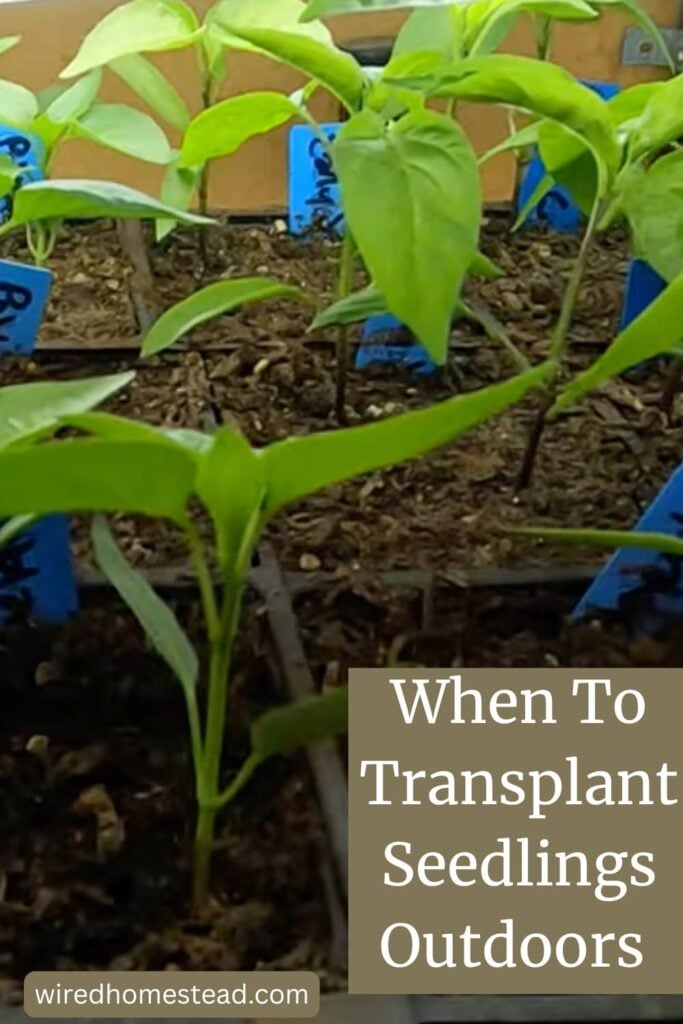
Pin It For Later ⤵️
Understanding Seedling Growth Stages
When a seed first sprouts, the initial leaves you see are called cotyledons. You may also hear them called seed leaves. These are temporary and their only purpose is to fuel early growth. They don’t tell you much more than the seed has sprouted.
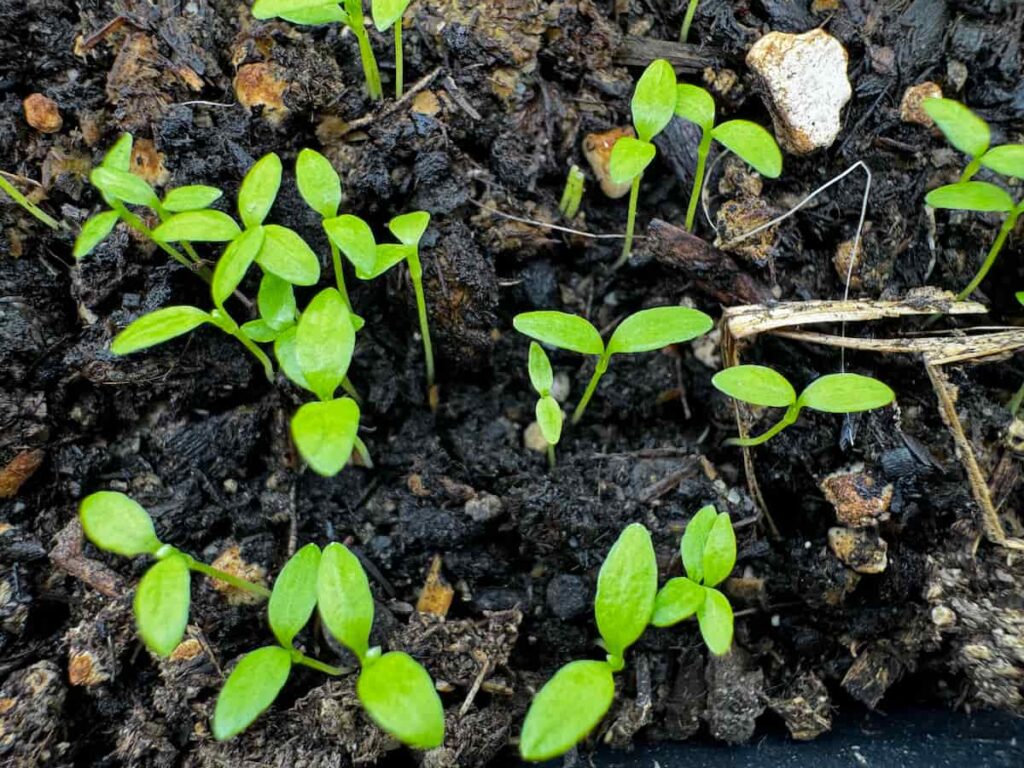
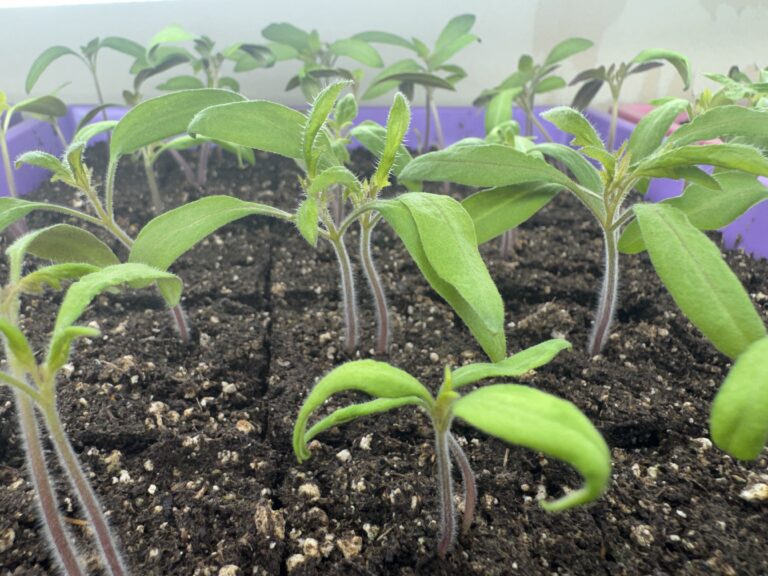
What matters are true leaves. These appear after the cotyledons and resemble the mature plant’s leaf shape. True leaves signal that the seedling has developed enough that they can handle a little bit of disturbance.
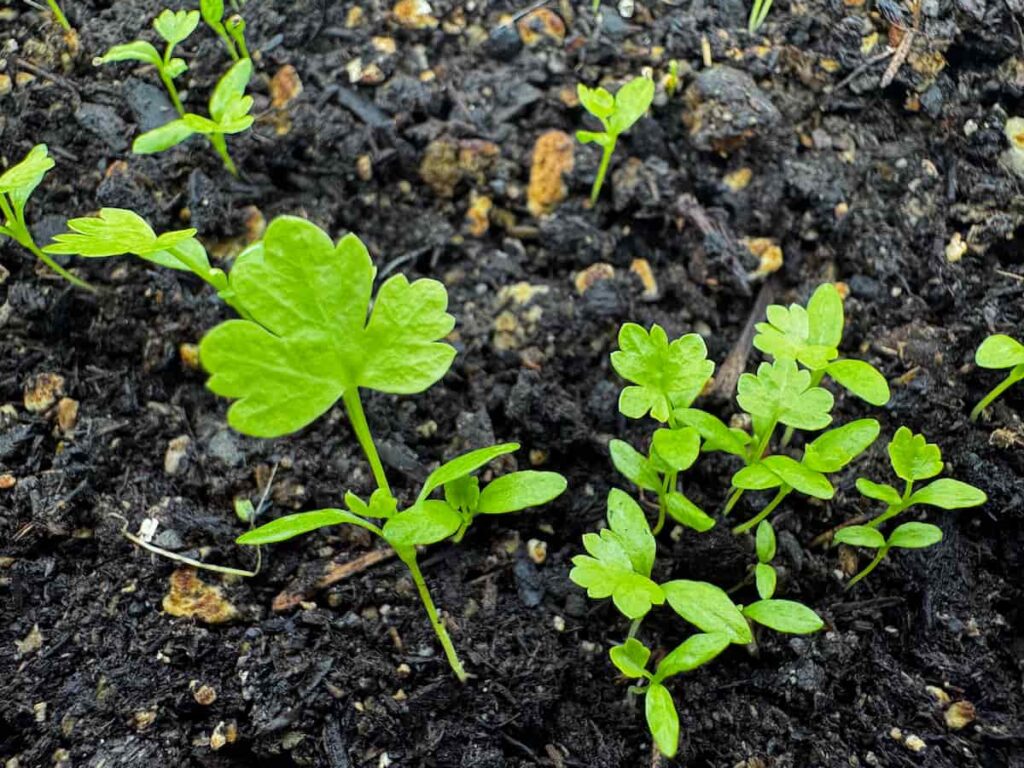
If your plant only has cotyledons, it’s not ready. No exceptions.
The True Leaf Rule
A simple guideline used by master gardeners is this:
Seedlings are usually ready to transplant once they have at least 2 to 3 sets of true leaves.
This shows that the plant has:
- A functioning root system
- The ability to photosynthesize efficiently
- Enough stored energy to recover from transplant shock
Fast growers like lettuce may be ready quickly. Slower growers, like peppers and celery, may need an extra set of leaves before moving.
Check the Stem Strength
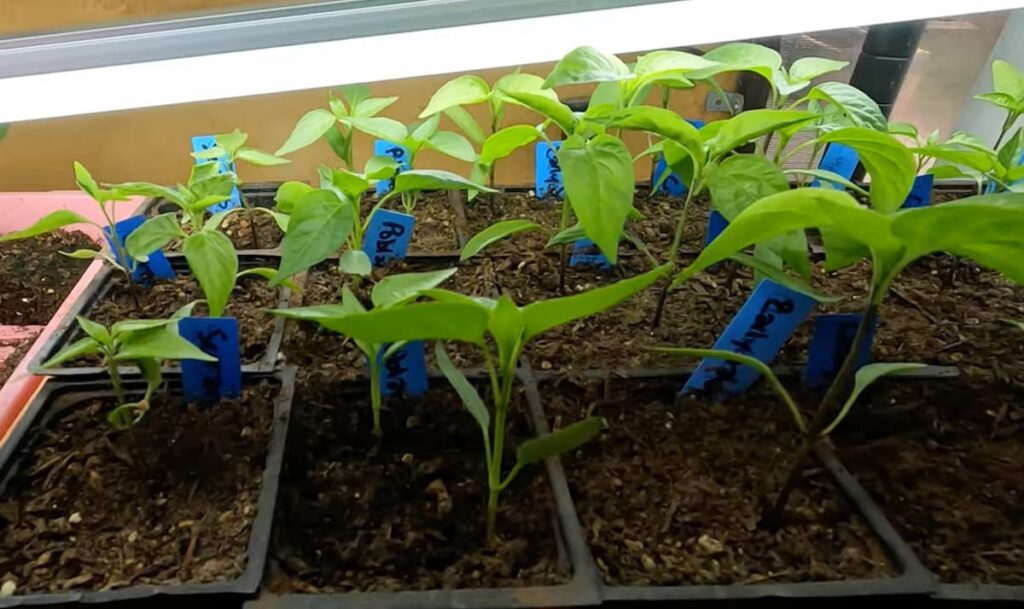
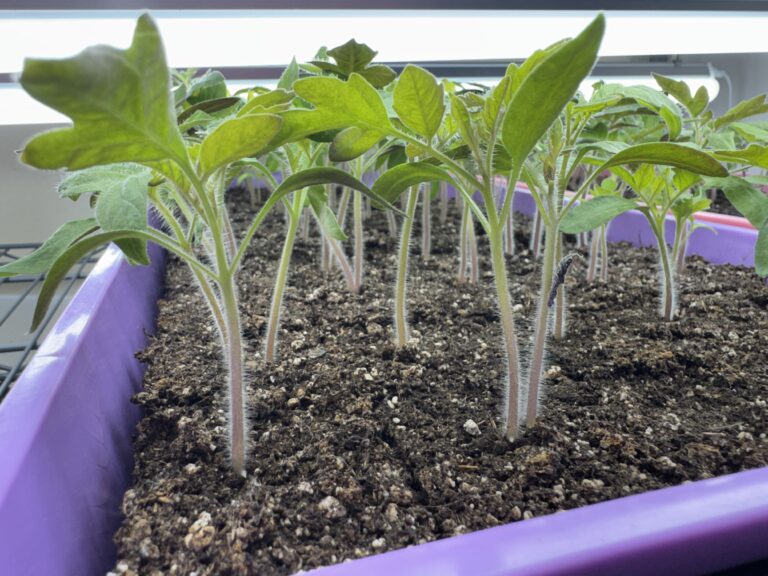
A seedling should be able to stand tall without help. If it flops over, it’s not ready to be transplanted no matter how many true leaves it has.
Healthy stems are:
- Thick in proportion to the leaf size
- Upright without support
- Slightly flexible but not weak
- Should be able to handle a breeze without bending or breaking
Leggy seedlings, caused by low light or overcrowding, struggle after transplanting because they lack the strength to anchor themselves in new soil. You will often see these struggling and may lose them completely. They are not as capable of handling the stresses of transplanting like a healthy seedling can.
Look at the Roots
Roots can tell you so much about the health of a plant.
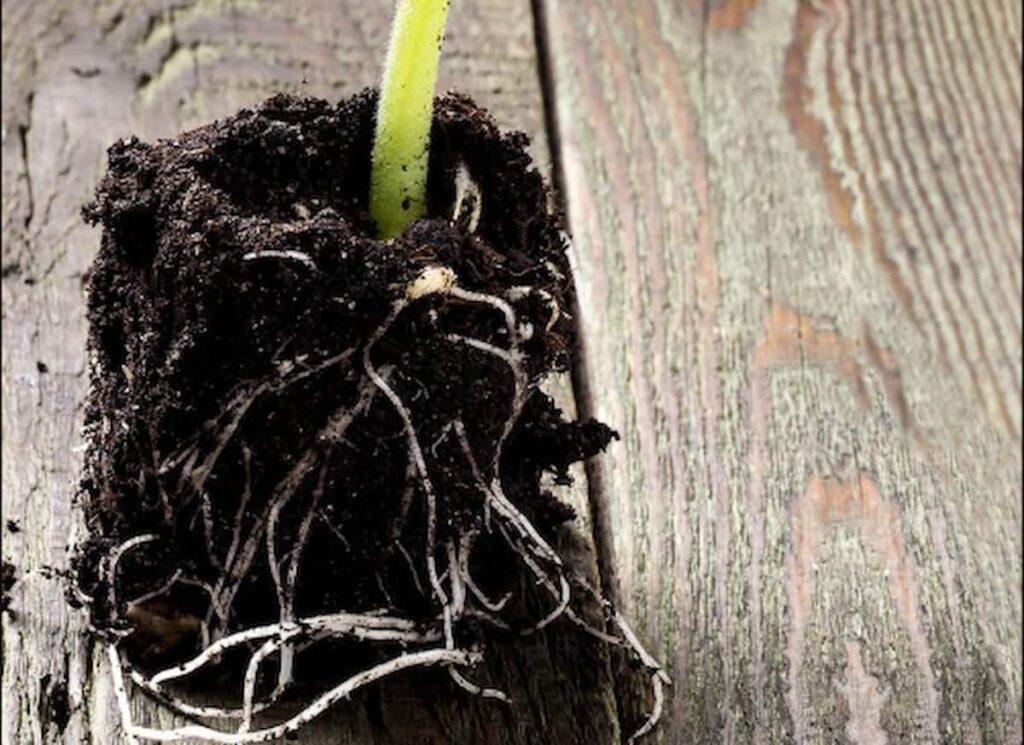
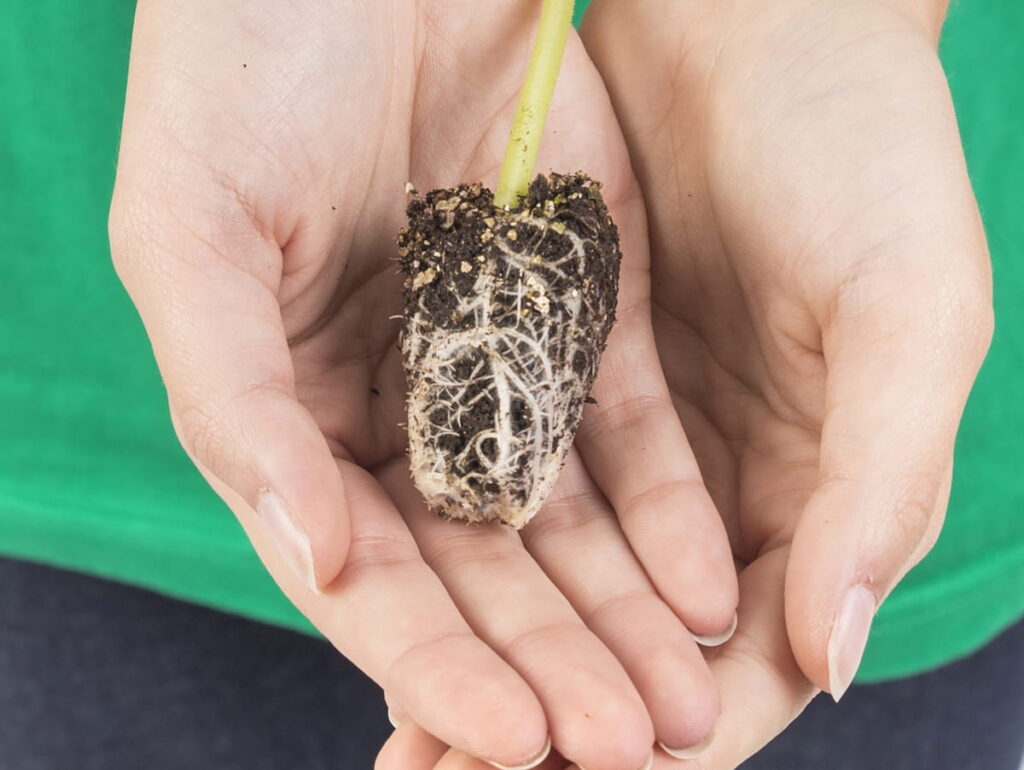
To check roots, gently squeeze the container, or gently lift the soil block, and slide the seedling out while supporting the soil. You’re looking for:
- White or light-colored roots
- Roots reaching the edges of the soil
- A loose web holding the soil together
If you see only a few short roots, the seedling needs more time to grow. If roots are tightly circling the pot, the plant is overdue and should be transplanted as soon as weather conditions allow.
How Big Should Seedlings Be Before Transplanting?
Height alone can be misleading and should not be a main factor that’s looked at.
That being said, most seedlings are ready when they are:
- Roughly 3 to 5 inches tall
- Compact and leafy with several sets of true leaves
- Have a nice balance between top growth and roots – the amount of roots can properly support the top
A short, sturdy seedling almost always outperforms a tall, spindly one once planted in the garden.
I’ve transplanted tomatoes a foot tall, and lettuce only two inches tall. Every plant is different. Look at the overall health of the plant to determine readiness, not just the height.
Environmental Readiness Matters Too
Even a perfect seedling isn’t ready if the outside environment isn’t ready for them.
Before transplanting, make sure:
- Soil temperatures meet the crop’s needs – do not plant a heat loving plant in cold soil
- Frost risk has passed – Check the Farmer’s Almanac website to determine your estimated last frost date
- Seedlings have been hardened off for 7 to 10 days
Hardening off introduces wind, sun, and temperature swings slowly. This process turns pampered indoor seedlings into outdoor-ready plants. Learn more about hardening off in my post How to Transplant Seedlings Without Losing Your Plants.
Signs Seedlings Are Not Ready Yet
Hold off if you notice:
- Only 1 or 2 true leaves
- Yellowing or pale leaves
- Wilting despite proper watering
- Slow or stalled growth
- Weak stems that bend easily
These are signs the plant needs more time or better growing conditions before being moved. Do not transplant a seedling that has any of these signs, or anything else that doesn’t quite look right. The seedlings are not strong enough to undergo the stress of transplanting. Back up a step or two, get them healthy, and then transplant them.
What Happens If You Transplant at the Wrong Time?
Transplanting too early can cause:
- Root shock
- Stunted growth
- Increased disease risk
Waiting too long can lead to:
- Root binding
- Nutrient deficiencies
- Reduced yields later in the season
Don’t get the idea that you need everything perfect. That’s not what this is about. It’s about giving seedlings their best chance to settle in quickly and keep growing without becoming stunted.
Neither one of these scenarios are necessarily going to kill your seedlings. The plants might not grow and produce like you hoped they would, though. What a mistake will provide is the perfect opportunity for you to learn and grow as a gardener.
You Are Now Ready to Assess Seedling Transplant Readiness
Seedlings don’t follow calendars. They do their thing, in their own time. As the gardener, it’s your job to learn how to read them.
When you focus on true leaves, root development, stem strength, and environmental readiness, transplanting becomes far less stressful. And you’ll start to see a lot more success.
Frequently Asked Questions
Q: How do I know if my seedlings are ready to transplant outside?
A: Look for 2 to 3 sets of true leaves, sturdy stems, visible root development, and proper outdoor conditions.
Q: Can I transplant seedlings with only cotyledons?
A: No. They only indicate the seed has sprouted. Cotyledons alone mean the plant is still too fragile to handle transplant stress.
Q: What happens if I transplant seedlings too early?
A: Early transplanting can slow growth, damage roots, and reduce overall plant health.
Q: How long can seedlings stay in small pots?
A: Most seedlings can stay 4 to 6 weeks, depending on growth speed. Check roots regularly to avoid root binding. Soil blocking can also help prevent root binding. Check out my post on how to soil block for more information.
Q: Do all seedlings need to be hardened off?
A: Yes, if they were started indoors they do. Hardening off helps prevent sun scorch, wind damage, and shock to the seedling. It helps maximize the growth and production of the plant over the growing season.
Pin It For Later ⤵️

This is such an easy to understand guide! Thank you for breaking this down so simply. This was super helpful.