When and How to Thin Winter Sown Seedlings Successfully
One day your milk jugs look empty and lifeless. The next, they’re bursting with tiny green leaves stacked shoulder to shoulder. If you’re staring at a container full of crowded seedlings and wondering if you’ve already messed up, take a breath. Overcrowding is not a failure of winter sowing. It’s proof that it worked. Let’s talk about how to thin winter sown seedlings correctly.
Why Winter Sown Seedlings Grow So Close Together
In nature, seeds don’t plant themselves in tidy rows. They fall wherever they fall and that’s often in clusters. Winter sowing mimics that exact process. The point of winter sowing is to more closely mimic the natural cycles of nature. When we plant, we sow thickly because:
- Not every seed will germinate
- Cold, wet weather will sort out the weak seeds
- Dense planting protects seedlings from wind and temperature swings
Crowded winter sowing containers are normal. They’re part of the winter sowing method, not a problem to fix immediately.
When to Thin Winter Sown Seedlings
One of the most common questions regarding overcrowded winter sown containers is when to thin winter sown seeds. Thankfully the answer is pretty simple.
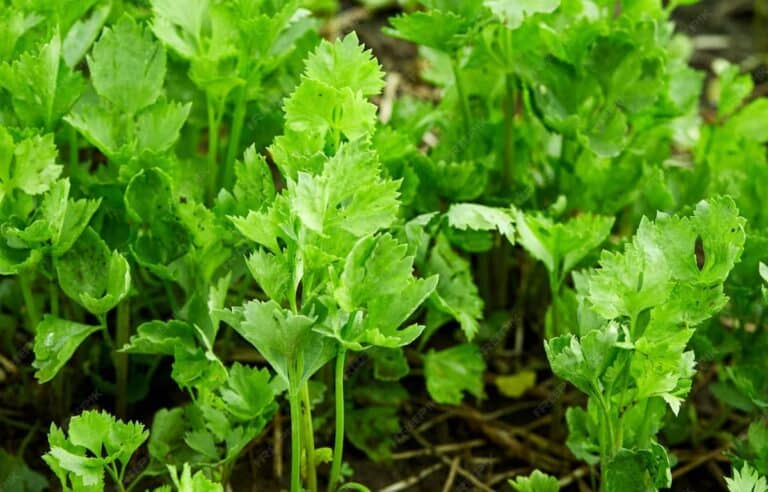
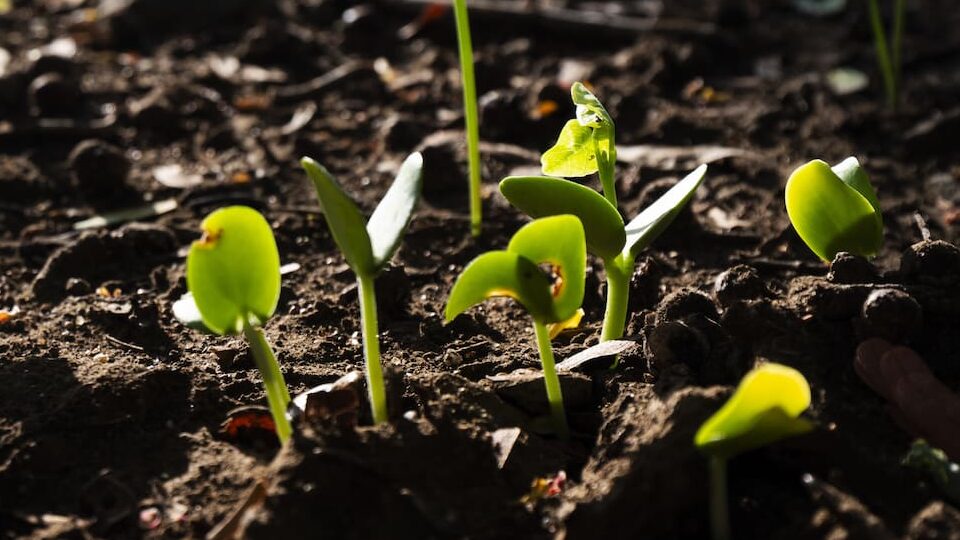
Wait until seedlings have at least one set of true leaves. The first leaves that appear are cotyledons. They’re small and look nothing like the leaves the plant will grow next. They’re just to get the seed up and going. True leaves look like miniature versions of the adult plant.
Thinning too early can disturb developing roots. Waiting for true leaves lets you see which seedlings are strongest before making any cuts.
Don’t worry about specific dates. Let your plants tell you when they’re ready. Remember, we’re letting nature take the lead here.
How Close Should Seedlings Be Spaced?
Spacing winter sown seedlings inside containers doesn’t need to match final garden spacing. In fact, it shouldn’t. I just toss some seeds in. I don’t count or delicately place them. I sprinkle over the top, knowing I can thin them later.
As a general rule, however, winter sowing spacing should be:
- Leafy greens: 1 to 2 inches apart
- Herbs: 1 to 2 inches apart
- Flowers: 2 inches apart
- Deep-rooted plants: sprinkle on, then thin early and generously
Your goal is to allow airflow and light, not to be perfect. When the seedlings are small, it really is hard to block airflow so don’t worry too much.
My main goal here is to emphasize that you don’t need perfect spacing.
How to Thin Winter Sown Seedlings Without Killing Them
This is where most stress comes from, but the method is surprisingly easy. Garden shouldn’t be stressful; it should be relaxing. Let’s take the stress away.
To thin winter sown seedlings without killing them:
- Choose the strongest seedlings to keep. The strongest seedlings produce the strongest plants.
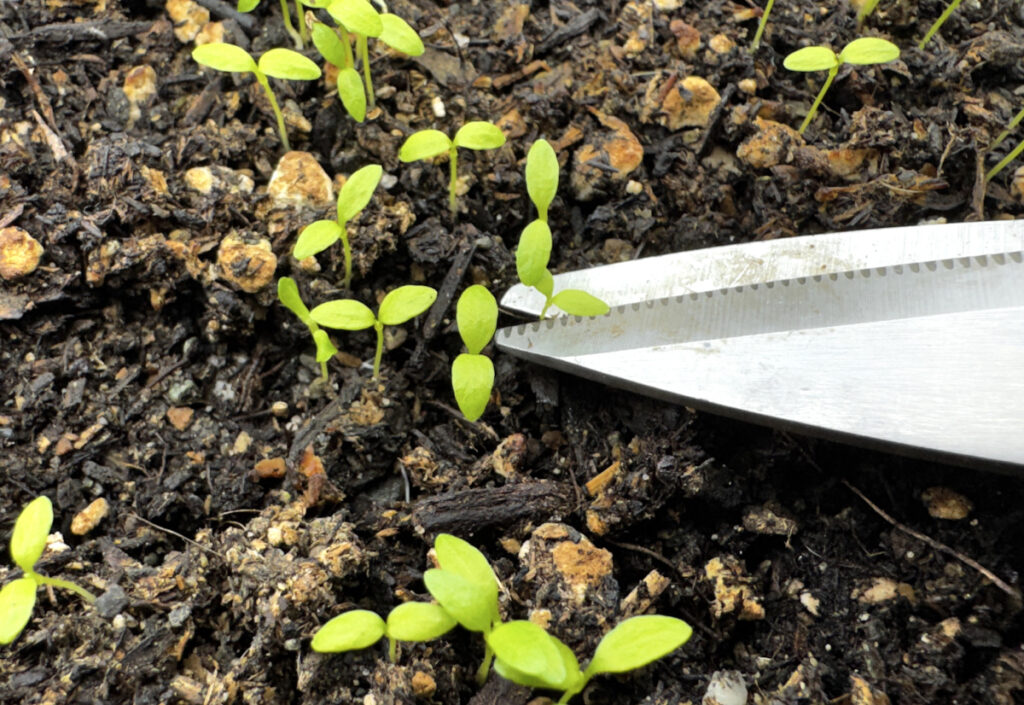
- Use scissors or pinch the plants. Do not pull the seedlings out or you will disturb the other seedlings you want to keep. The exception is if you want to keep the thinned seedlings to transplant.
- Cut or pinch unwanted seedlings at the soil level.
- Leave roots in place to decompose naturally. They will add nutrients back to the soil and are worth leaving in place.
Pulling seedlings disturbs the nearby roots of seedlings you want to keep. Cutting or pinching prevents this. If you plan to transplant the ones you’re thinning, you can very delicately pull them from the soil.
Thin in stages if needed. You don’t have to do it all at once.
Can You Transplant Thinned Winter Sown Seedlings?
Yes, sometimes. Winter sowing overcrowded seedlings doesn’t mean you have to destroy any seedlings.
Some good candidates for transplanting include:
- Lettuce
- Celery
- Onions
- Kale
- Brassicas
- Many annual flowers
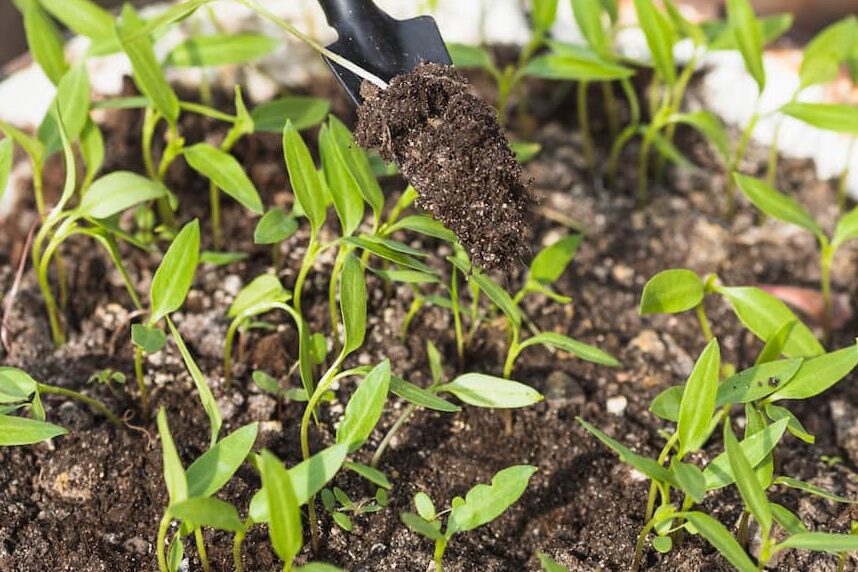
Gently lift seedlings with a spoon on a cloudy day. Try to disturb the seedlings you’re leaving as little as possible. Pot them up or plant them elsewhere immediately. If you experience some loss with these that’s normal. Not all seedlings will be strong enough to be transplanted successfully.
Spacing Your Seedlings at Transplant Time
When it’s time to move seedlings into the garden, spacing winter sown seedlings is very simple.
These plants are already cold-hardened. They don’t need to be hardened off. They also don’t need protection from the elements. Follow standard spacing recommendations on seed packets and trust that your winter sown seedlings will adapt quickly.
Plant to the soil level they were in before being transplanted, water well, and watch them grow.
Common Mistakes to Avoid
- Thinning everything the moment seedlings appear – wait at least until those first true leaves appear
- Pulling instead of cutting – unless planning to transplant the thinned seedlings, do not disturb the other seedlings you are leaving by pulling the ones you are not.
- Treating winter sown seedlings like fragile indoor starts – you’re winter sowing purposefully to make them strong.
- Feeling guilty about composting extras – we’re all guilty of it, but don’t feel bad. I promise you, their feelings are not getting hurt and you are not being wasteful.
Every experienced gardener has thinned hundreds of seedlings. It’s not a waste. It’s selecting for the strongest, sturdiest plants.
Final Thoughts
Winter sowing is great for creating strong roots, sturdy stems, and resilient plants. Thinning is simply removing the ones that do not fit that mold. These will only lead to disappointment later.
You’re not hurting your plants. Nor are you wasting anything. You’re giving the strongest ones a chance to grow. In return, they’ll give you great yields of vegetables and/or flowers.
Frequently Asked Questions About Spacing and Thinning Winter Sown Seedlings
Q: Do you need to thin winter sown seedlings?
A: Yes. Thinning winter sown seedlings helps prevent overcrowding, improves airflow, and allows roots to fully develop. While winter sown plants are tougher than indoor starts, they still compete for light, nutrients, and space. Thinning ensures the strongest seedlings will be able to thrive.
Q: When should I thin winter sown seedlings?
A: The best time to thin winter sown seedlings is when they have developed at least one set of true leaves. Thinning too early can disturb young roots, while waiting too long can cause plants to stretch and tangle together.
Q: How do you thin seedlings without killing them?
A: To thin seedlings without killing them, use scissors and cut unwanted seedlings at the soil level. This method avoids disturbing nearby roots and keeps remaining seedlings stress-free. Thin gradually if needed rather than removing too many at once.
Q: Can overcrowded winter sown seedlings be saved?
A: Yes. Overcrowded winter sown seedlings can usually be saved through thinning or transplanting. Many cool-season crops like lettuce, kale, onions, and brassicas tolerate being separated well. Even if some seedlings are lost, winter sown plants tend to recover quickly.
Q: How far apart should winter sown seedlings be?
A: The general rule is 1 to 2 inches of space between plants. However, I don’t find this necessary. Sprinkling seeds lightly over the soil surface is generally fine. Final spacing should be done when transplanting into garden beds, following the seed packet recommendations.
Q: Is it better to thin or transplant extra seedlings?
A: Thinning is usually the best option for most winter sown containers. However, extra seedlings can be transplanted if they are sturdy and handled gently. Transplant on a cool, cloudy day and water well afterward to reduce stress.
Q: What happens if you don’t thin winter sown seedlings?
A: If winter sown seedlings aren’t thinned, they may become leggy, develop weak stems, or fail to reach full size. Overcrowding can also increase the risk of disease due to poor airflow. Thinning early leads to healthier plants and better harvests later.
Q: Do winter sown seedlings need hardening off after thinning?
A: No. Winter sown seedlings are already hardened off by natural outdoor conditions.
Q: Can you thin winter sown seedlings more than once?
A: Absolutely. Many gardeners thin winter sown seedlings in stages. Start by removing the weakest plants, then revisit spacing as seedlings grow. This gradual approach keeps stress low and gives you flexibility as conditions change.