Why Are My Tomatoes Taking So Long to Ripen? 8 Common Reasons And Easy Fixes
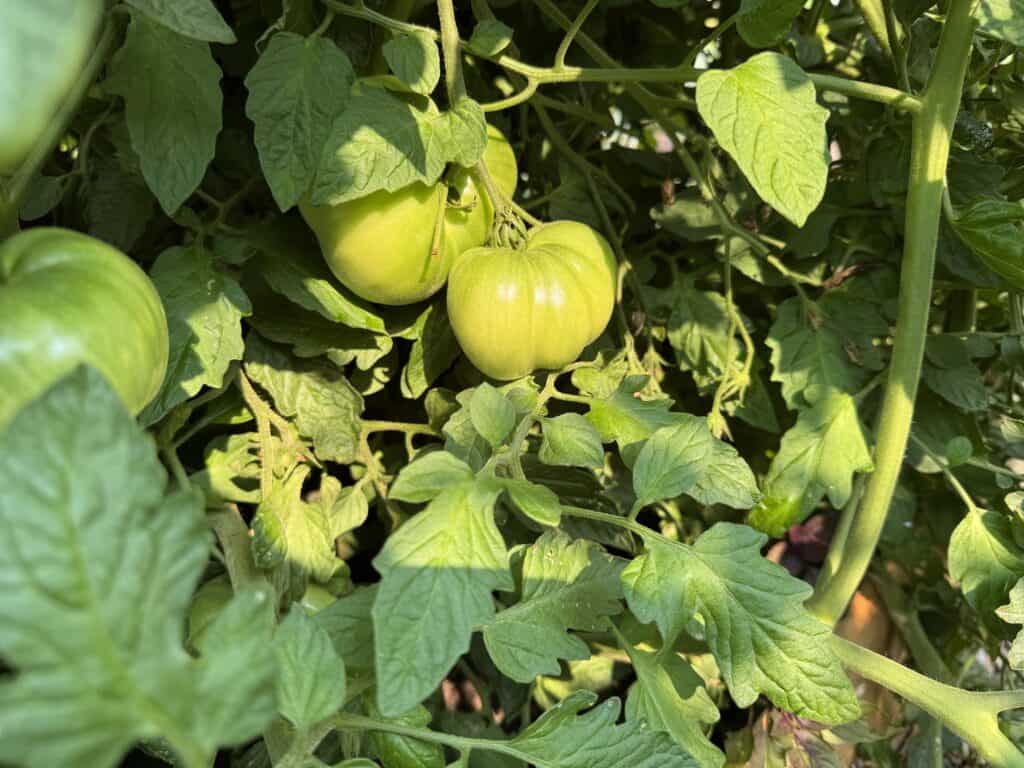
I check my tomato plants every day, waiting for that first bright red tomato. But for over a month, now there’s no red in sight. Instead, I have dozens of stubborn green fruits that seem frozen in time. Does this sound familiar?
If you’re wondering, “Why are my tomatoes taking so long to ripen?”, you’re not alone. This is one of the most common questions gardeners ask in late summer. Even knowing the answer, I still ask it every year, getting impatient as I see the green ones get larger and larger, but not turning red.
The good news is that slow ripening is usually caused by weather or growing conditions rather than a serious problem. In many cases, your tomatoes are perfectly healthy and simply need a little more time.
Let’s look at the biggest reasons tomatoes stay green and what you can do to encourage them to ripen.
*As an Amazon Associate I may earn from qualifying purchases at no cost to you.
How Long Should Tomatoes Take to Ripen?
After pollination, most tomato varieties take 20 to 30 days for mature green fruit to fully ripen.
However, that timeline depends on several factors:
- Variety
- Temperature
- Sunlight
- Plant health
- Soil fertility
Cherry tomatoes often ripen faster than large beefsteaks. My Chadwick cherry tomatoes are usually the first to ripen every year. Heirloom varieties may naturally take longer than hybrids, especially large slicing tomatoes.
Most of what I grow are heirloom varieties, so mine often take longer than my neighbors who have been selling ripe tomatoes from their farmstand for a couple weeks now. At first I was wondering, why are my tomatoes taking so long to ripen and theirs were already being harvested. But variety has a lot to do with it. They may also have a greenhouse and started sooner than I did. It was a good reminder not to compare my garden to someone else’s.
If you’ve recently transplanted late or experienced unusual weather, it’s normal for ripening to be delayed as well.
1. Temperatures Are Too Hot
Surprisingly, extreme heat is the number one reason tomatoes stop ripening.
Tomatoes produce two pigments during ripening:
- Lycopene (red)
- Carotene (orange)
Once daytime temperatures consistently climb above 85°F, the plant slows production of these pigments. When temperatures exceed 90°F, ripening can nearly stop altogether. You can try a shade cloth to help protect them from extreme heat.
You’ll often notice:
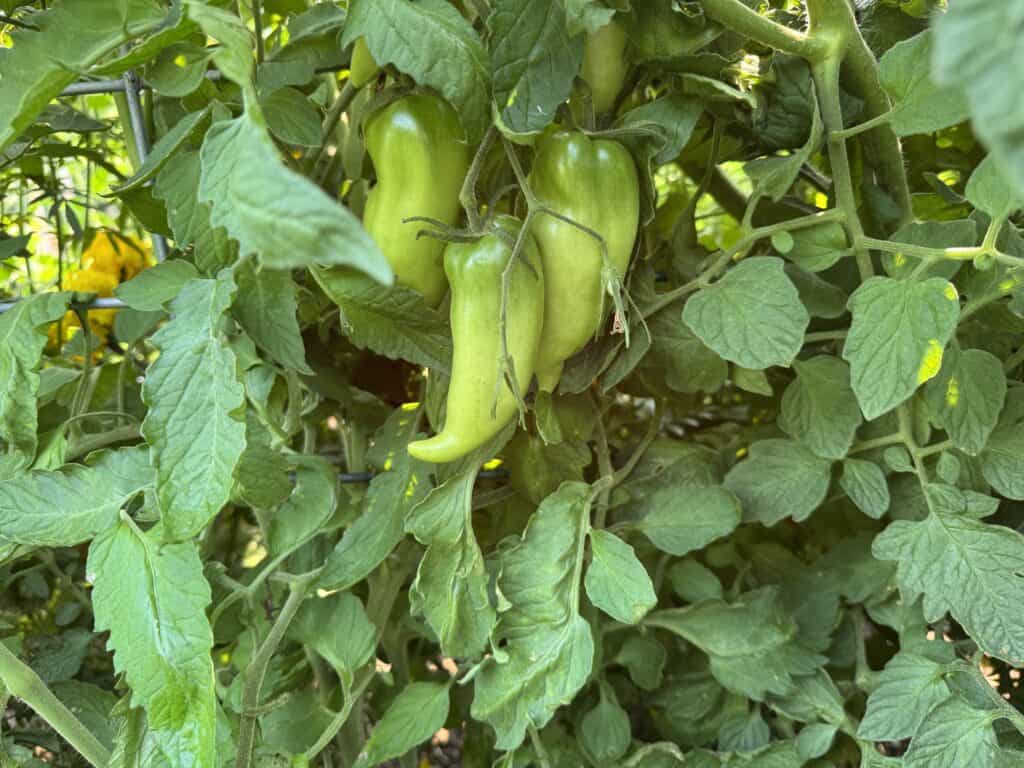
- Full-size green tomatoes
- Fruit that refuses to blush
- Healthy plants with no signs of disease
As temperatures cool back into the upper 70s and low 80s, ripening usually resumes naturally.
What to do
- Water consistently (but do not overwater or you can cause blossom end rot).
- Mulch around plants to keep roots cool.
- Be patient during heat waves.
It’s been pretty hot in my neck of the woods recently, and I know that has caused some delay for my tomatoes.
2. The Variety Naturally Takes Longer
Not every tomato ripens at the same speed.
Large heirloom varieties often require a lot more time than cherry tomatoes. Sometimes even several weeks.
Examples include:
- Brandywine
- Mortgage Lifter
- Cherokee Purple
- Pineapple
- Paul Robeson
Some large beefsteaks need 80 to 100 days from transplant before producing ripe fruit. I grow Cherokee Purples, along with Paul Robeson, and they both take longer to ripen than my paste tomatoes.
Always compare your plant to its expected “days to maturity,” remembering that this count begins after transplanting, not from when you originally sowed the seed.
3. Too Much Nitrogen
Nitrogen helps produce lush green leaves.
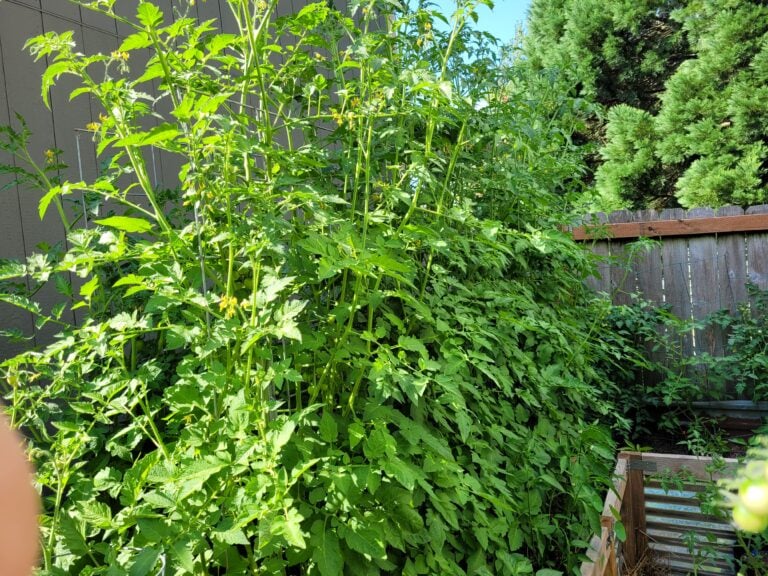
Too much of it tells the plant to keep growing foliage instead of focusing on fruit.
Signs include:
- Tall plants
- Dark green leaves
- Few ripe tomatoes
- Lots of leafy growth
Late in the season, switch to a fertilizer that’s lower in nitrogen and higher in phosphorus and potassium to encourage flowering and fruit ripening.
An organic tomato fertilizer can help provide the right balance without overstimulating leafy growth. Now is the time to focus on developing fruits. The plant should have the leaves it needs by now to shift its focus away from growing foliage.
4. Too Much Shade
Tomatoes love sunshine.
Most varieties need at least 6 to 8 hours of direct sunlight, though 8 to 10 hours produces the best harvest.
If nearby trees, fences, or buildings shade your plants during much of the day, ripening slows significantly.
Light is the plant’s energy source. Less sunlight means less energy available for finishing fruit.
If possible:
- Trim nearby branches.
- Remove unnecessary suckers that heavily shade fruit.
- Space plants properly each season.
If you’re growing in containers, moving them into a sunnier location can make a noticeable difference.
While this is ideal, I have grown in spaces where the plants did not get 6 hours of sunlight a day. My yields were smaller, but I still had a harvest. If your conditions are not ideal, do not despair. But it is important you know what to expect.
5. The Plant Has Too Much Fruit
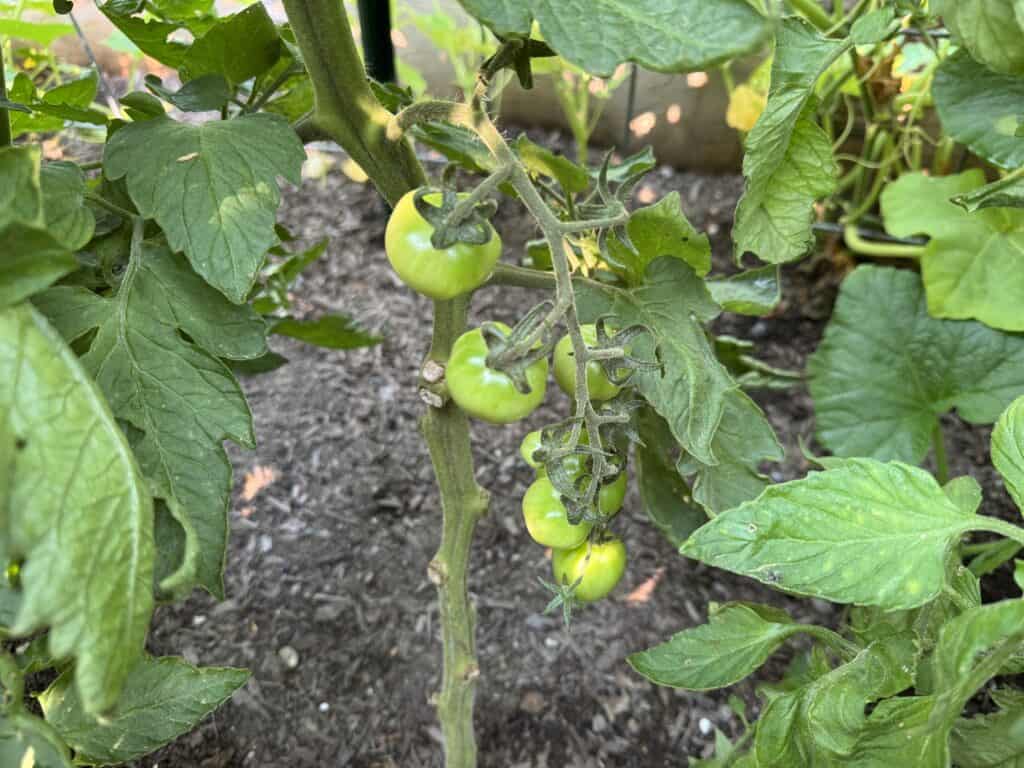
Sometimes your tomato plant is simply overwhelmed.
Large indeterminate varieties may be supporting dozens of tomatoes at once.
Instead of ripening all of them quickly, the plant spreads its energy among every fruit.
If frost is still several weeks away, simply wait.
If the season is winding down, consider:
- Removing new flowers
- Pinching tiny developing fruit
- Allowing the plant to focus on mature tomatoes
This is especially helpful during the last month of your growing season. In September I usually start taking off new flowers so my plants focus on the fruit already forming. My first frost is typically in mid-October, so I want all the tomatoes to be ripened and harvested by October to beat the frost. To learn more about frost dates see Growing Seasons for Beginners.
6. Inconsistent Watering
Tomatoes prefer deep, consistent watering.
Cycles of drought followed by heavy watering stress the plant and slow ripening.
Inconsistent watering may also contribute to:
- Blossom end rot
- Fruit cracking
- Reduced fruit quality
Aim for about 1 to 2 inches of water per week, adjusting for rainfall and extreme heat.
Adding 2 to 3 inches of mulch helps maintain even soil moisture while reducing temperature swings around the roots. This means less frequent watering, and more time back for you.
7. Cool Nights Are Slowing Things Down
Heat isn’t the only weather issue.
As summer begins transitioning toward fall, cool nighttime temperatures also slow ripening.
Once nighttime temperatures consistently fall below about 55°F, tomatoes begin maturing much more slowly.
There’s little you can do to change the weather, but row covers can sometimes help extend the season by a week or two.
8. Your Tomatoes Aren’t Quite Mature Yet
One mistake many gardeners make is assuming full-sized green tomatoes are ready to ripen.
Tomatoes first reach their mature green stage before changing color.
A mature tomato typically has:
- A glossy appearance
- Full size for the variety (this will vary depending on the variety)
- Slight softening when gently squeezed
- A lighter green or whitish cast on the bottom
Only after reaching this stage does the ripening process really begin.
Patience is often the best solution. Trust me, I know how hard that is!
Can You Make Tomatoes Ripen Faster?
While you can’t force nature, you can encourage faster ripening.
Try these tips:
- Remove new flowers late in the season.
- Prune excess foliage that’s heavily shading fruit.
- Water consistently.
- Avoid high-nitrogen fertilizer.
- Harvest mature green tomatoes before frost.
- Leave tomatoes on the vine until they begin showing color whenever possible.
Some gardeners also remove a few leaves around fruit clusters to improve sunlight and airflow. Avoid excessive pruning, though, since leaves also protect tomatoes from sunscald.
Should You Pick Green Tomatoes?
If frost is approaching, don’t leave mature green tomatoes outside.
Pick any fruit that’s reached the mature green stage and allow it to finish ripening indoors.
Place tomatoes:
- In a paper bag
- In a cardboard box
- On a kitchen counter away from direct sunlight
Adding a ripe banana or apple releases ethylene gas, which can help speed ripening naturally.
Avoid refrigerating green tomatoes, as cold temperatures reduce flavor and texture. They’ll become more like store bought tomatoes. And that generally leads to disappointment.
How to Tell When Tomatoes Are Ready
A ripe tomato should have:
- Full, even color
- Slight softness
- A sweet tomato aroma
- Easy separation from the vine
Every variety has its own ideal color. Common colors are yellow, orange, purple, or even green when fully ripe. The green ones can be especially hard to determine when ripe and ready to pick. I do not grow those, but I grow tomatoes in every other color.
Know what your variety should look like before assuming it’s not ready.
Final Thoughts
Watching green tomatoes linger on the vine can test any gardener’s patience, but slow ripening is usually nothing to worry about.
More often than not, the culprit is simply summer weather. Extreme heat, cool nights, or a naturally late-maturing variety can all delay the process.
Continue watering consistently, avoid overfertilizing with nitrogen, and give your plants time. Once temperatures become more favorable, you’ll often be rewarded with a wave of ripe tomatoes all at once.
And if frost threatens before they finish? Don’t worry. Mature green tomatoes can ripen beautifully indoors, allowing you to enjoy the harvest you’ve worked so hard to grow.
Related Reading
Keep your tomato plants healthy all season with these helpful guides:
- Why Are My Tomato Leaves Curling?
- Poor Pollination in the Vegetable Garden: Causes and Solutions
- Why Your Tomatoes Aren’t Producing Fruit
- How to Prune Tomato Plants
Frequently Asked Questions: Why Are Your Tomatoes Taking So Long to Ripen
Why are my tomatoes still green in August?
If your tomatoes are still green in August, don’t panic. In many areas, this is completely normal, especially for large heirloom or beefsteak varieties. Hot weather can actually delay ripening because tomatoes stop producing the pigments that turn them red when temperatures stay above about 85°F. If your plants are healthy and the fruit has reached full size, cooler weather will usually help them begin ripening.
How long does it take for tomatoes to ripen after they reach full size?
Once a tomato reaches its mature green stage, it typically takes about 20 to 30 days to fully ripen. The exact timing depends on the variety, weather, and growing conditions. Cherry tomatoes often ripen much faster than larger slicing tomatoes.
Can I make tomatoes ripen faster on the vine?
You can’t force tomatoes to ripen overnight, but you can encourage the process. Keep the soil evenly moist, avoid adding high-nitrogen fertilizer, and remove any new flowers late in the season so the plant can focus its energy on existing fruit. If the fruit is heavily shaded, selectively removing a few leaves around the tomatoes may also help.
Should I pick green tomatoes before frost?
Yes. If frost is expected, harvest any tomatoes that have reached the mature green stage, even if they haven’t started changing color yet. They can continue ripening indoors on your kitchen counter or in a paper bag with a ripe banana or apple.
Why are my tomato plants full of fruit but nothing is turning red?
This is often caused by weather rather than a problem with the plant. Prolonged heat, cool nights, excess nitrogen fertilizer, or simply growing a late-maturing variety can all delay ripening. As long as the fruit is healthy and continues developing, it’s usually just a matter of giving the plant more time.
Does removing tomato leaves help fruit ripen?
Removing a few leaves that are directly shading mature fruit can improve sunlight exposure and air circulation, which may help speed ripening slightly. However, avoid removing too many leaves. Healthy foliage protects tomatoes from sunscald and provides the energy the plant needs to finish ripening its fruit.
Is it better to let tomatoes ripen on the vine?
Yes. Tomatoes develop their best flavor when allowed to ripen on the vine. However, once a tomato has reached the mature green stage, it can finish ripening indoors with very little loss in quality, making this a good option if frost or severe weather is approaching.
What temperature is too hot for tomatoes to ripen?
Tomatoes ripen best when daytime temperatures are between about 70°F and 85°F. Once temperatures regularly exceed 85°F, the ripening process slows because the pigments responsible for red color are produced more slowly. At temperatures above 90°F, ripening may nearly stop until conditions cool.
Why are my cherry tomatoes ripening but my beefsteak tomatoes aren’t?
Cherry tomatoes naturally mature much faster than large-fruited varieties. Beefsteak and heirloom tomatoes often need several additional weeks before they begin changing color. It’s common to be harvesting cherry tomatoes while waiting for larger varieties to catch up.
Can I ripen green tomatoes indoors?
Absolutely. Place mature green tomatoes in a single layer on a countertop or inside a paper bag. Adding a ripe banana or apple can speed the process because they release ethylene gas, a natural plant hormone that encourages ripening. Check them every couple of days and remove any fruit that has fully ripened.