Best High-Yield Soil Mix For Raised Beds
If you’re gardening in a raised bed, especially a small one, there’s more pressure on your soil so it will need to work harder for you. In a large in-ground garden, plants can spread their roots and search for nutrients. In a small bed, everything they need must be right there from the start. A simple, well-balanced soil mix can produce strong plants, steady growth, and higher yields all season. A good soil mix for raised beds contains the right ratio of topsoil, compost, and aeration material to produce thriving plants that will give you high-yields.
*As an Amazon Associate I may earn from qualifying purchases at no cost to you.
What Makes a Good High-Yield Soil Mix For Raised Beds?
High-yield soil isn’t about just adding one ingredient. Instead, it’s about balancing everything your plants will need. You need to balance nutrients, water retention and drainage, air absorption, and create the right texture.
First, your soil needs to hold moisture without staying soggy. Vegetables need consistent water, but roots will struggle if the soil stays wet too long. Too much moisture will cause roots to rot and prevent them from being able to access the nutrients in the soil.
Second, it needs nutrients that are easy for plants to access. Compost is the best choice for adding nutrients into the soil.
Third, the soil must stay loose. Roots need space to grow, and compacted soil will limit plant size and production.
Finally, healthy soil includes organic matter that supports beneficial microbes. Microbes and soil life (like earthworms) help break down nutrients and improve overall plant health. Read about How Earthworms Are Good for the Garden and Soil to learn all about the amazing things these organisms do for your plants.
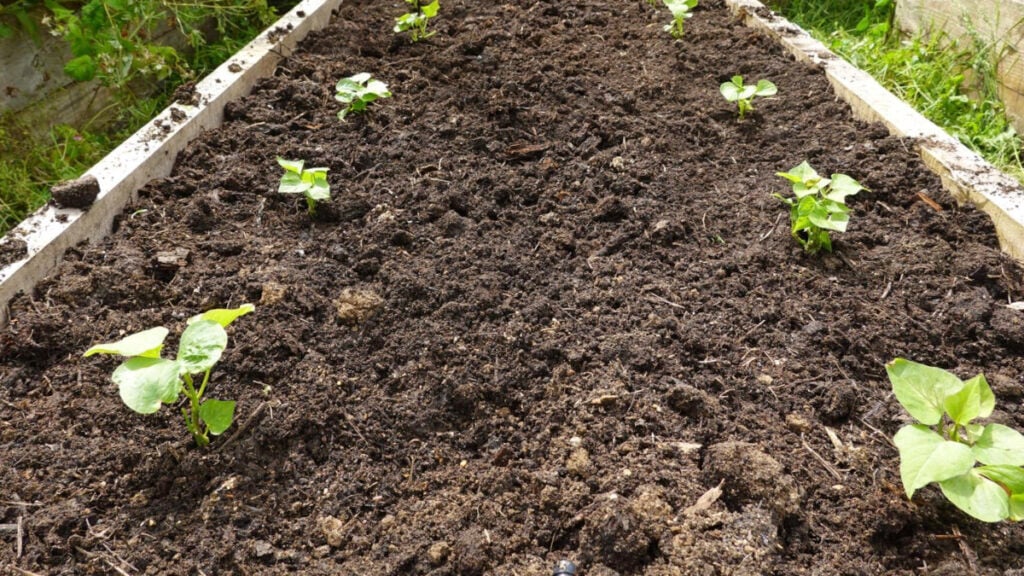
The Ideal Soil Mix Ratio for Small Raised Garden Beds
A simple soil mix that works well for most small raised garden beds is:
- 40% compost
- 40% topsoil
- 20% aeration material
This ratio gives you a strong balance of nutrients, structure, and drainage.
Compost is what is going to feed your plants. It provides a rich source of nutrients and typically comes in ratios that are perfect for your plants. It also is pure organic matter, which invites microbial life, earthworms, and other soil creatures.
Topsoil provides structure and stability. Pure compost is going to be too much and will not provide the stability your plants needs. Topsoil will help with that.
Aeration materials keep everything from compacting over time. Air must be able to penetrate the soil. And water must be able to drain out. Without those two things, plants will become stressed. They will be susceptible to diseases, wilt, and may even die. It’s important to add materials that help keep the soil loose and allow air and water to move through it.
If you live in a rainy climate, like me, you can slightly increase the aeration portion. I would increase it to about 25% and decrease compost to 35%. In hot, dry areas, adding a little more compost can help with moisture retention.
Best Ingredients for a Productive Soil Mix
Compost (Your Nutrient Base)
Compost is the most important part of your soil mix. It slowly releases nutrients and improves soil structure at the same time.
You can use homemade compost, bagged compost, or a mix of both. You can often find composted manure from a local farm if you do not make your own. I’ve grown a lot of food in composted horse manure that I got for free from a local farm.
Worm castings are also a strong addition if you want to boost soil fertility. I highly recommend adding some if you can.
Topsoil (The Foundation)
Topsoil gives your mix body and helps anchor plant roots.
Look for screened, loose topsoil without large clumps or debris. Avoid anything labeled as “fill dirt,” which often lacks nutrients and structure. Fill dirt often as a lot of rocks, as well. You want your top soil to anchor plants, but not prohibit growth. If it has a lot of clumps or large pieces of wood/debris/rocks then the roots of your plants will struggle to move through the soil.
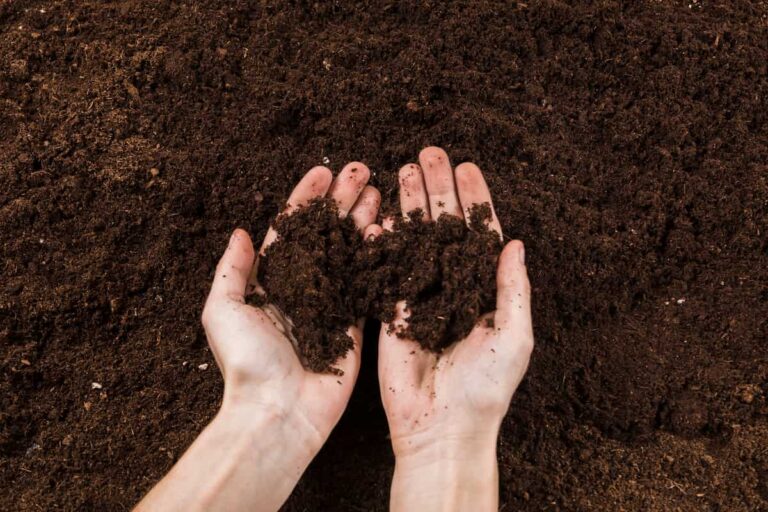
Good topsoil should crumble easily in your hand and drain well.
Aeration Materials (Prevent Compaction)
Aeration materials keep your soil from becoming dense over time.
Good options include:
- Perlite for lightweight drainage
- Vermiculite for moisture retention
- Coarse sand for structure and drainage
Most gardeners will do well with perlite or a perlite and vermiculite blend. I’ve used both to great success in raised beds. And you generally do not need to add this year after year.
I know ingredients can get expensive, but once you’ve mixed it once, it’s only maintenance from there.
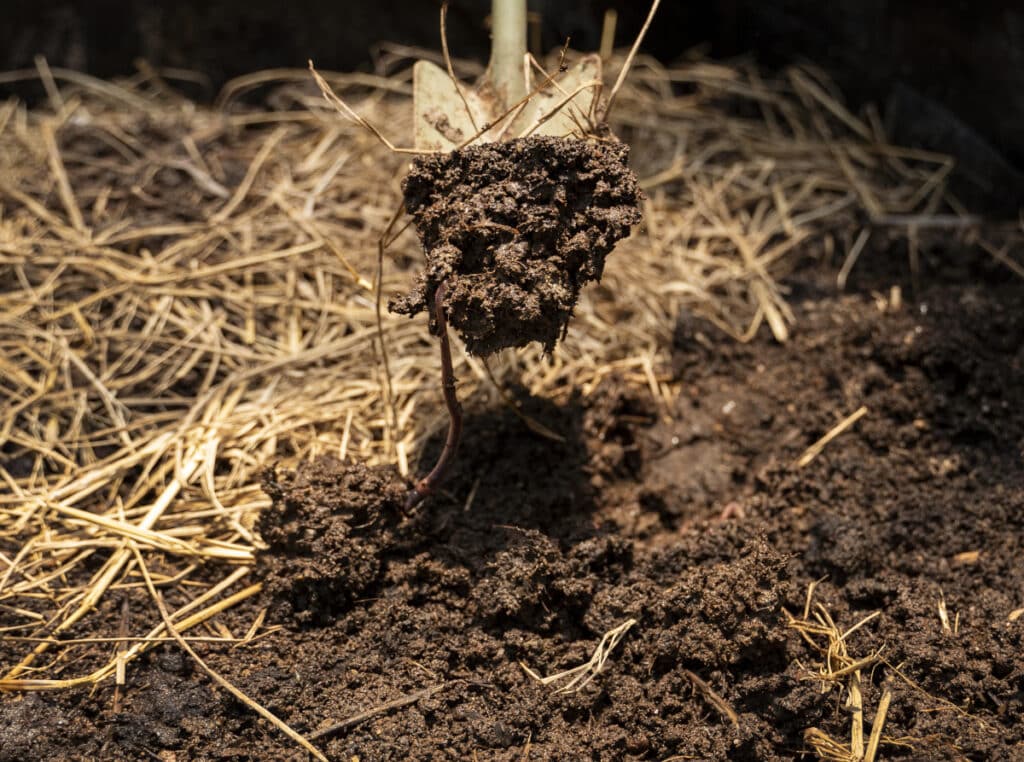
How to Mix Soil for Small Garden Beds
Start by measuring your materials by volume, not weight. A simple bucket works well. For example, use 4 bucket fulls of compost, 4 bucket fulls of top soil, and 2 bucket fulls of your chosen aeration materials (or blend of materials).
- Add your compost and topsoil to a large tarp or wheelbarrow
- Mix thoroughly until the texture looks uniform
- Add your aeration material and blend again
- Lightly moisten the mix so it holds together but doesn’t feel wet
When filling your bed, avoid packing the soil down. Let it settle naturally with watering. It’s best to let the soil sit in the garden bed for 2-3 weeks so it can settle. Otherwise, it will settle the plants along with it, which can cause disturbance. Some plants are especially sensitive to that. Corn for example; it generally does not do well until planted after the soil has the chance to settle.
If you’re preparing beds in early spring, this guide on How To Tell If Soil Is Ready To Plant
will help you determine when to plant and if you may need to make adjustments.
How to Boost Soil for Even Higher Yields
Once your base mix is in place, you can improve it even more with a few simple additions.
You can mix in small amounts of:
- Bone meal for root development
- Blood meal for leafy growth
- Kelp meal for trace minerals
After planting, apply mulch to help retain moisture and regulate soil temperature. Mulch is one of the best things you can do for your soil. And as a bonus, because it helps with maintaining the soil moisture in your beds, you do not need to water as often.
Common Soil Mistakes in Small Garden Beds
It’s very easy to make mistakes when building your own soil mix for raised beds. Here are the most common ones to avoid.
Using Native Soil
One of the biggest mistakes is using native garden soil by itself. It often compacts quickly and drains poorly in raised beds.
Not Enough Compost
Another common issue is not using enough compost. Without it, plants will struggle to get the nutrients they need. You can supplement with organic fertilizers, but compost does more than just feeds the plants. It feeds the life in the soil which help plants take up those nutrients. Not even organic fertilizers will do that. While they can help with plant growth, compost is always going to be your best choice to get high-yields and healthy plants.
Poor Drainage
Poor drainage is another problem. If water sits on the surface or water logs your soil, roots can suffer. Roots need air to be able to take up nutrients from the soil. The soil life also needs oxygen. When soil absorbs too much water without being able to drain it out, the water presses air out of the soil. Plant roots start to rot and they cannot take up nutrients efficiently. Yields will suffer, and the plant may not even make it. If it does, the stress will make it more susceptible to disease and pest issues.
Not Refreshing the Soil Each Year
Finally, many gardeners forget to refresh their soil. Even good soil needs to be maintained over time. Read How to Prepare Soil for Planting for instructions on how to renew your soil for maximum growth.
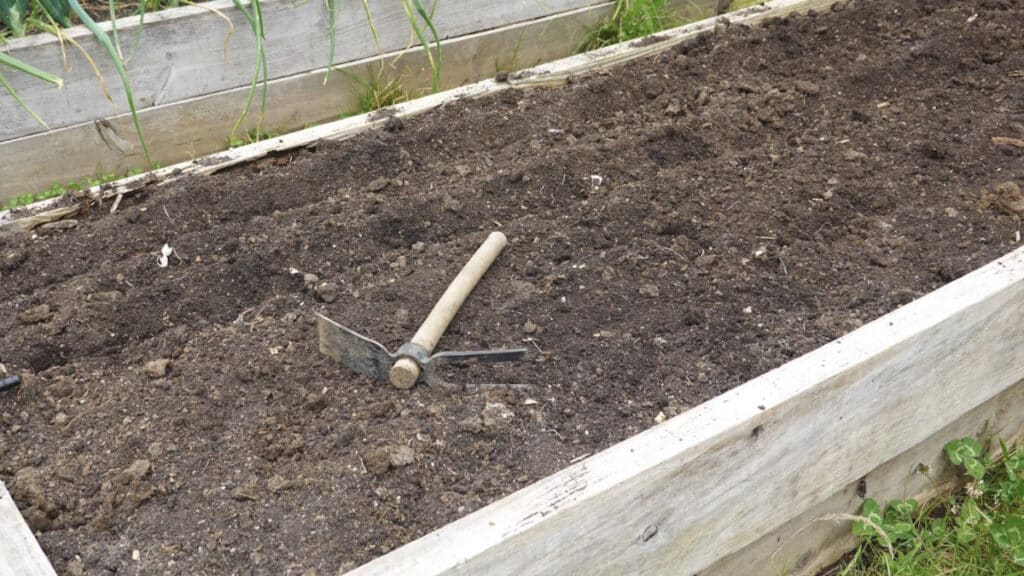
How to Maintain Fertile Soil All Season
Healthy soil needs ongoing care. Unfortunately, it’s not a one and done thing most of the time.
Mid-season, it’s a good idea for you to side-dress plants with compost to keep nutrients available. If you want to use an organic fertilizer, this would be a good time to use it.
Consistent watering is also important. Uneven watering can cause stress on plants. Stress limits plant growth and reduce yields. Learn more about How to Tell if Your Plants Are Stressed.
At the end of the season, add another layer of compost and mulch to rebuild the soil for the next planting cycle.
Frequently Asked Questions
Q: What is the ideal soil ratio for raised beds?
A: The ideal soil ratio for raised beds is 40% compost, 40% topsoil, and 20% aeration material. This balance ensures the soil holds moisture, drains well, and delivers nutrients efficiently to support healthy plant growth.
Q: What is the difference between raised bed soil and garden soil?
A: Raised bed soil is lighter and designed to drain well while still holding moisture. Garden soil is often heavier and can compact easily, especially in small spaces. Using garden soil alone in a raised bed usually leads to poor root growth and lower yields.
Q: Can I use potting soil in a raised bed?
A: You can use potting soil in a raised bed, but it works best when mixed with compost and topsoil. On its own, potting soil dries out quickly and may not provide enough nutrients for long-term vegetable growth.
Q: How deep should soil be in a small garden bed?
A: Soil in a small garden bed should be at least 8 to 12 inches deep for most vegetables. Root crops like carrots, parsnips, and potatoes grow better with 12 to 18 inches of depth for proper development.
Q: How do I make my soil more fertile naturally?
A: The simplest way is to add compost regularly. Compost improves nutrient levels and supports beneficial soil life. You can also add organic materials like worm castings or aged manure to increase fertility over time.
Q: How often should I add compost to my garden bed?
A: Adding compost once at the start of the season and again mid-season works well for most gardens. A thin layer on top of the soil is enough to keep nutrients available without overloading the bed. Another layer in the fall after harvest will help set up the bed for maximum growth in the next growing season.
Q: What is the fastest way to improve garden soil in a raised bed or container?
A: The fastest way to improve garden soil in a raised bed or container is to mix in compost and an aeration material like perlite or vermiculite. This quickly boosts nutrients, improves drainage, and loosens compacted soil for better root growth.
Q: Why is my garden soil hard and compacted?
A: Soil becomes compacted when it lacks organic matter, is walked on, or is compressed by something heavy on it. Heavy clay soils are especially prone to this. Adding compost and aeration materials helps loosen the soil and improve drainage.
Q: Should I put anything at the bottom of a raised bed?
A: You can add organic materials like sticks, leaves, or grass clippings at the bottom to save on soil costs. This method also helps improve soil over time as the materials break down. Cardboard is also a great choice for weed suppression before you fill the bed with soil. It will break down overtime and benefit the soil.
Q: Can you reuse soil from last year?
A: Yes, you can reuse soil from last year by refreshing it with compost before planting. This restores nutrients and improves soil structure, making it suitable for another growing season.
Q: What type of compost is best for vegetable gardens?
A: A mix of compost sources is usually best. Kitchen scraps, yard waste, and well-aged manure all provide different nutrients. Finished compost should be dark, crumbly, and smell earthy like soil.
Q: How do I know if my soil drains well enough?
A: Water the soil and watch how quickly it absorbs. If water pools on the surface or drains very slowly, the soil likely needs more aeration material. Well-draining soil should absorb water evenly without staying soggy.