How To Grow Cucumbers Vertically In Small Spaces for Big Yields
If you’ve ever tried growing cucumbers in a small garden, you know how quickly those vines can take over when left to grow along the ground. It’s generally thought that cucumbers need a lot of space for you to grow them. The good news? Cucumbers can be grown anywhere, even in small spaces like a patio or small garden. The trick is to grow cucumbers vertically. This simple strategy saves space, reduces disease, and makes harvesting a breeze. In this guide, I’ll walk you step by step through everything you need to know to grow healthy, productive cucumbers in a small garden using vertical methods.
*As an Amazon Associate I may earn from qualifying purchases at no cost to you.
Why Grow Cucumbers Vertically?
Vertical gardening isn’t just a trendy concept; it’s a practical solution for gardeners with limited space. Here’s why cucumbers benefit from growing up instead of out:
- Space-saving: By training vines upward, you free up soil for other vegetables or flowers. This is especially helpful in tiny urban gardens or raised beds.
- Healthier plants: Upright vines get better air circulation, which reduces the risk of fungal diseases like powdery mildew and downy mildew.
- Cleaner fruit: When cucumbers hang off the ground, they stay cleaner and are less prone to rot and insect damage.
- Easier harvesting: Instead of crawling around in a tangle of vines, you can pick cucumbers at eye level. This also reduces the chance of accidentally snapping vines when reaching for fruit or missing one and letting it get overripe.
- Higher yields: Proper trellising encourages vines to focus energy on producing fruit instead of sprawling along the soil.
For more ideas on making the most of a small garden, check out How To Begin Companion Planting Your Garden. This guide pairs beautifully with vertical cucumber growing because it can help you plan a garden that can grow more food by maximizing the space you have.
Types of Cucumbers to Grow
Not all cucumbers are ideal for vertical gardening. Some are bushy and short, while others are natural climbers. The best cucumbers to grow vertically in small spaces are varieties that produce long, flexible vines and plenty of tendrils. Here’s what works best:
- Vining slicers: These cucumbers grow long and slender and produce large fruits for salads and sandwiches. Examples include ‘Marketmore 76’ and ‘Straight Eight.’
- Picklers: Perfect for homemade pickles, pickling cucumbers like ‘National Pickling’ or ‘Boston Pickling’ are compact but prolific.
- Burpless or thin-skinned varieties: These are easier to eat fresh and often do well on trellises.
When choosing seeds, also consider your climate and growing season. Some cucumbers are faster maturing, which is helpful in regions that have short summers.
Building the Right Trellis
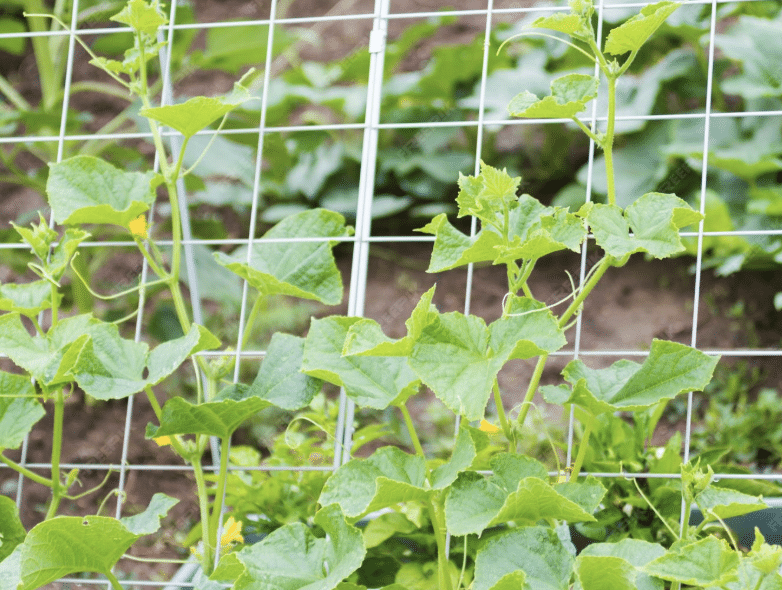
The trellis is the heart of vertical cucumber gardening. A well-designed support keeps vines upright and fruit off the ground. Here are some options:
- Wooden lattice panels: These are sturdy and simple. You can lean them against a fence or attach them to posts.
- String or netting trellis: Lightweight, inexpensive, and easy to adjust. Use strong garden twine or nylon netting and tie it securely to stakes or a frame.
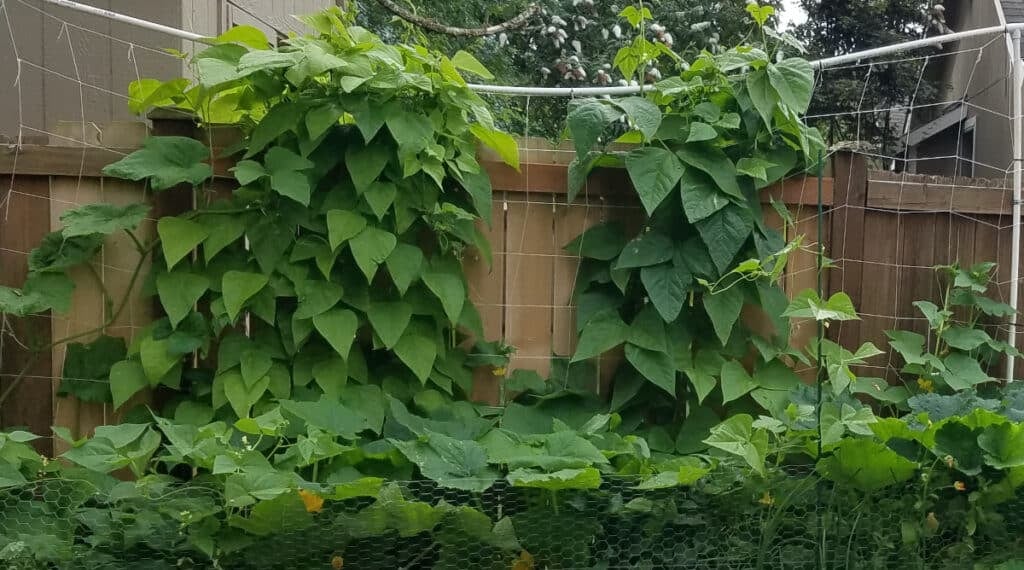
- Cattle panels or wire fencing: These make excellent tall trellises. Secure them vertically with posts and anchor them well — cucumber vines can get surprisingly heavy when loaded with fruit.
- A-frame trellis: Two panels leaning together in an A-shape provide stability and support for multiple plants.
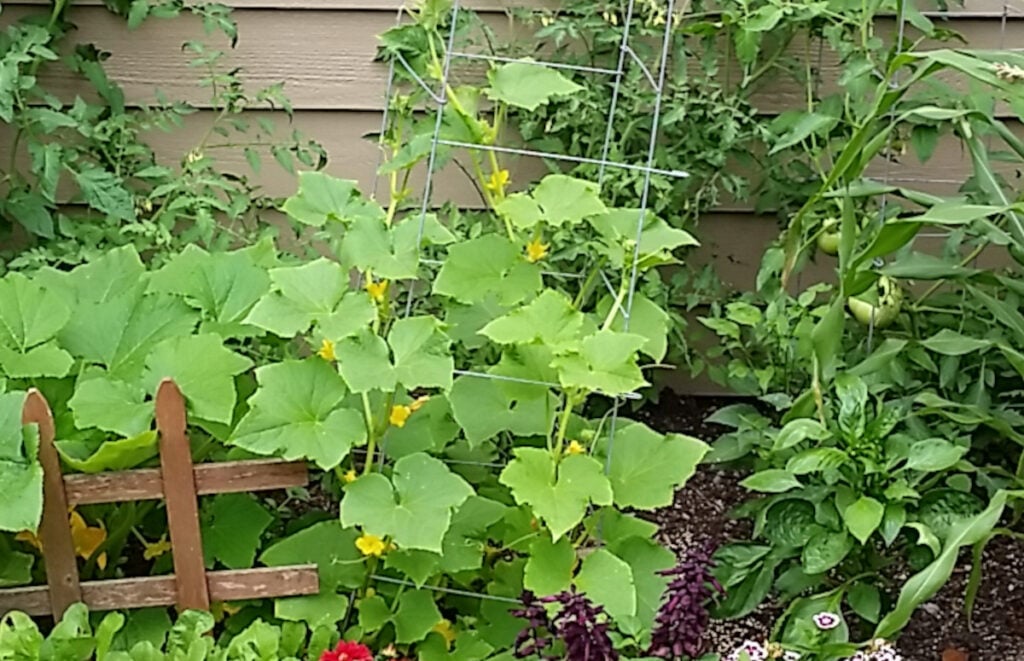
- Tomato Cages: In a pinch, growing cucumbers with tomato cages is possible. I’ve done this before when I didn’t have another option. Train the cucumber vine to wind around the cage as it grows up. Otherwise, the cucumber will quickly grow out the top.
Trellis height: Aim for at least 5–6 feet so vines can climb freely. If you have limited vertical space, even 4 feet can work — just be prepared to gently fold or prune vines when necessary. You will not hurt the plant by pruning the vines to the length you need them to be. In fact, this can help focus the plant on producing more fruit instead of putting more energy into growing it’s vines.
Spacing: Keep plants at least 12–18 inches apart at the base. Overcrowding can cause poor air circulation, making plants more susceptible to disease. Learn more about Why Airflow Is Important For Healthy Plants for more details on why this is so important.
Tip: If you’re gardening in containers, you can install a trellis directly into each pot. This will keep each plant upright and contained while saving garden space. If your trellis is too wide, you can set the pot at the base of the trellis and let the plant climb upward.
Planting Your Cucumbers
Planting is pretty straightforward, but there are things you can do to help boost their success. Follow these steps:
- Soil preparation: Cucumbers thrive in well-draining soil that is rich in organic matter. Mix in compost or aged manure to boost your soil fertility. For container gardening, make sure to use a high-quality potting mix, but still add in extra compost.
- Planting depth: Sow seeds about 1 inch deep. If using seedlings, plant them slightly deeper than they were in their nursery pots to encourage strong root growth. Cucumbers won’t grow roots long it’s stem, like tomatoes and peppers, but burying them slightly deeper will help stabilize them.
- Placement: Plant at the base of your trellis. If possible, orient the trellis so the plants get full sun (6–8 hours per day). Cucumbers love the sun, and sunlight promotes fruit production. If you can’t give them full sun, give them as much as possible. Just know the plant’s production will go down, but you should still get some fruit.
- Water immediately: After planting, water deeply to settle the soil around the roots. Consistent moisture is key for cucumber success.
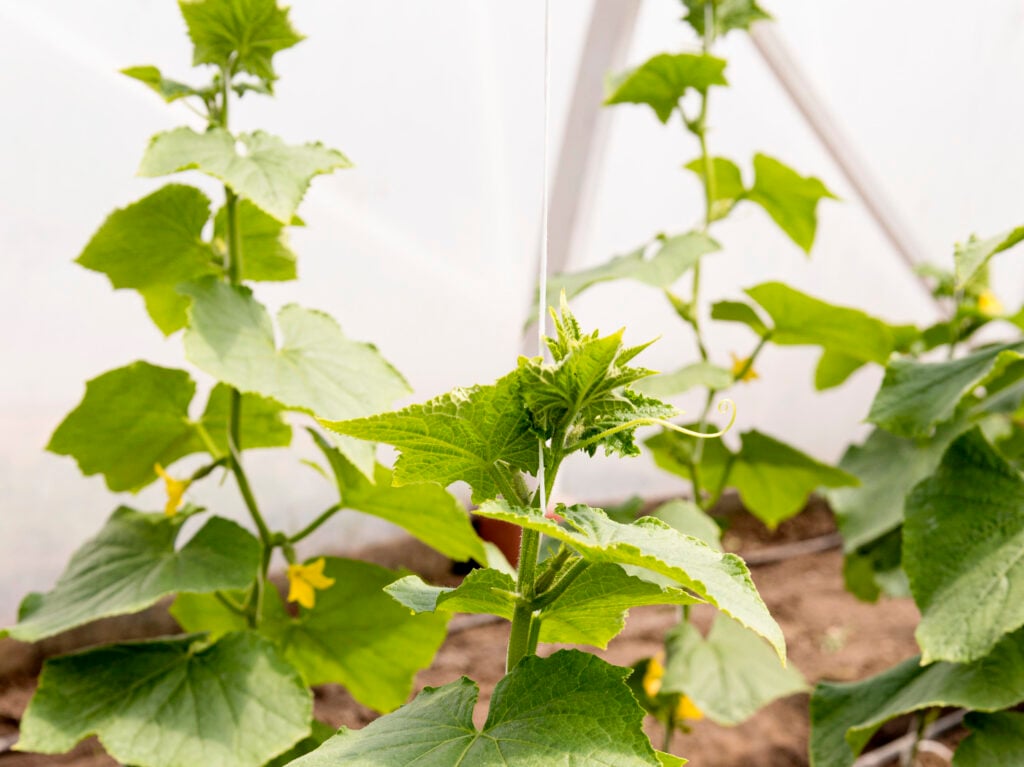
Once seedlings are a few inches tall, you can start training the vines to climb. Gently wrap tendrils around the trellis or tie stems loosely with soft garden twine. Never force a vine; cucumbers are delicate, and rough handling can stunt growth or break the vine.
Training Your Vines
Training vines is an ongoing process throughout the season. Just when you think they’re good, another vine shoots out and you have to train it to go up the trellis.
- Early guidance: Start training once the first true leaves appear. Encourage the main vine to climb straight up and secure lateral shoots to the trellis.
- Tie when necessary: Use garden twine, soft fabric strips, or old pantyhose to tie heavy vines loosely to the trellis. If the tendrils are wrapping around the trellis, tieing isn’t necessary.
- Pruning: Remove extra shoots and side branches that crowd the center of the plant. This allows sunlight to reach the leaves and improves air circulation. It also encourages the plant to put energy into flowers and fruit instead of creating more vines.
Vertical training not only saves space but also improves the quality and shape of your cucumbers. Fruit will grow straighter and is less likely to bend or twist.
For more tips on managing vine growth in compact spaces, see Common Mistakes When Growing Tomatoes in Small Spaces — many of the principles overlap with cucumber vines.
Watering and Fertilizing
Cucumbers need frequent, consistent watering. Their roots tend to dry out quickly, especially when grown in containers or up a trellis. Here’s how to keep them hydrated:
- Deep watering: Water at the base of the plant 2–3 times per week, more often during hot, dry spells. Avoid overhead watering to reduce fungal problems like powdery mildew. While watering consistently is important, you don’t want to overwater. Stick your finger in the soil 2-3 inches. If it’s dry you need to water deeply. If it’s still quite moist, skip watering and check it the next day.
- Mulching: Apply a 2–3 inch layer of straw, shredded leaves, or wood chips to retain moisture and regulate soil temperature. This is important whether you’re growing in a bed or container.
- Fertilizing: Cucumbers are heavy feeders. Once blossoms appear, apply a balanced fertilizer or organic compost tea every 2–3 weeks.
Tip: Avoid high-nitrogen fertilizers, which promote leafy growth at the expense of flowers and fruit.
Pest and Disease Management
Growing cucumbers vertically reduces disease risk, but you still need to keep watch. These are some issues that your cucumbers can still develop:
- Powdery mildew: Common on cucumber leaves. Prevent by ensuring good air circulation and watering early in the day so foliage dries quickly. Watering at the base is better than watering higher where water splashes onto the leaves.
- Cucumber beetles: Inspect leaves and vines regularly. Floating row covers or some netting over the trellis/container can protect young plants until flowering.
- Aphids and spider mites: Spray lightly with water or use insecticidal soap if infestations appear.
Vertical growth makes spotting pests easier. The higher foliage is more visible than sprawling vines on the ground.
Harvesting Your Cucumbers
Knowing when and how to harvest is essential for continued production:
- Size: Most cucumbers are ready at 6–8 inches for slicing varieties and 3–5 inches for picklers. Check your seed packet for specific guidance.
- Frequency: Pick cucumbers every 1–2 days once they start producing. Frequent harvesting encourages the plant to produce more fruit.
- Method: Use scissors or pruners to cut the fruit from the vine. Avoid pulling, which can damage the plant.
Remember, cucumbers grow fast, so check your vines daily during peak season. Vertical cucumbers are easy to see and pick, which reduces waste and encourages repeat harvesting.
Common Mistakes and How to Avoid Them
Even with vertical gardening, mistakes happen. Here’s what to watch for:
- Ignoring early training: Letting vines sprawl for the first few weeks makes it harder to train them later. Start guiding tendrils or tieing the vines on the trellis early.
- Overcrowding: Planting seedlings too close leads to poor air circulation and disease. Stick to the recommended spacing listed on the seed packet.
- Weak trellis: Thin or unstable supports can collapse under the weight of mature vines. Always secure your structure well.
- Inconsistent watering: Cucumbers are sensitive to drought stress. Uneven soil moisture can cause bitter or misshapen fruit.
- Incomplete pollination: Incomplete pollination happens when pollinators are unsuccessful pollinating a flower. If you see fruit shrivel up, or start to develop but one end looks pinched together, pollination was not successful. In that case, using a clean paint brush or a Q-tip to hand pollinate is a great option to boost fruit production.
Learning from these mistakes early sets you up for a productive season.
Final Thoughts
Choosing to grow cucumbers vertically is a win-win for small spaces. With the right trellis, careful planting, and consistent care, you’ll enjoy clean, straight, healthy cucumbers all summer long. Whether you’re gardening in raised beds, containers, or an apartment balcony, growing up instead of out gives you more room, more air circulation, and more fruit.
Frequently Asked Questions About Growing Cucumbers Vertically
Q: Do cucumbers need a trellis to grow?
A: Cucumbers do not strictly need a trellis to grow, but they benefit greatly from one. When left to sprawl on the ground, vines take up a large amount of space and fruit is more likely to develop rot, pest damage, or irregular shapes. Growing cucumbers vertically keeps the plant healthier, improves airflow, and makes harvesting much easier.
Q: What is the best height for a cucumber trellis?
A: Most vining cucumbers grow between 6 and 8 feet long during a single season, so a trellis that stands at least 5 to 6 feet tall works well for home gardens. This height gives vines enough room to climb while still keeping fruit within comfortable reach for harvesting and pruning.
Q: Can you grow cucumbers vertically in containers?
A: Yes, cucumbers grow very well vertically in containers as long as the pot is large enough and includes a sturdy support structure. A trellis, cage, or netting anchored inside the container helps keep vines upright and prevents the plant from becoming top-heavy or tipping over as fruit develops.
Q: How do you train cucumber vines to climb a trellis?
A: Training cucumber vines is mostly about early guidance. Once seedlings produce a few true leaves, gently guide the main vine toward the support structure. The plant’s tendrils will naturally grab onto the trellis. If needed, you can loosely tie the vine with soft garden ties to help it stay in place until it begins climbing on its own.
Q: Do cucumbers produce more when grown vertically?
A: In many cases, yes. Vertical growing improves light exposure and air circulation, which helps plants stay healthier for longer and continue producing fruit. While total yield depends on variety and care, vertically trained cucumbers often produce cleaner, straighter fruit and can remain productive deeper into the season.
Q: What types of cucumbers grow best on a trellis?
A: Vining cucumber varieties are the best candidates for vertical growing because they naturally produce long, flexible stems and strong tendrils. Bush varieties can still be grown with support, but they tend to stay compact and do not benefit from tall trellises in the same way that climbing types do.
Q: How far apart should cucumbers be planted when using a trellis?
A: When growing vertically, cucumbers can be spaced slightly closer than when grown on the ground. A spacing of about 12 to 18 inches between plants allows enough airflow while still making efficient use of limited garden space.
Q: Should you prune cucumbers when growing them vertically?
A: Pruning is optional, but it can help improve airflow and keep vines manageable in small gardens. Removing crowded side shoots and older leaves near the base of the plant helps reduce disease risk and makes it easier to guide the main vine up the trellis.
Q: What happens if cucumber vines outgrow the trellis?
A: If vines reach the top of the trellis, you can gently guide them back down or train them sideways along the top support. Some gardeners also prune off the growing tip to encourage the plant to focus energy on fruit production instead of extending further upward.
Q: Is it better to grow cucumbers vertically or on the ground?
A: Both methods can produce a harvest, but vertical growing is usually the better option for small gardens. It saves space, keeps fruit cleaner, reduces disease pressure, and simplifies maintenance. Ground growing can work in larger spaces, but it often requires more weeding and makes harvesting more difficult.