How To Successfully Grow Summer Squash In Small Spaces
Summer squash is one of the most productive vegetables you can grow. There’s a reason everyone jokes about leaving zucchini on a neighbor’s doorstep. This is true even if you only have a patio, balcony, or a small raised bed. Many gardeners avoid it because they assume it requires a large garden. But with the right variety, container size, and pruning strategy, you can successfully grow summer squash in small spaces and harvest consistently all season.
*As an Amazon Associate I may earn from qualifying purchases at no cost to you.
Choosing the Best Summer Squash for Small Gardens
When space is limited, variety selection matters more than anything else.
Look for bush zucchini rather than vining types. Bush varieties grow in a compact mound instead of sending long runners across your beds. When you have a small space, you want compact varieties.
Good compact options include:
- Bush zucchini varieties
- Scallop squash types like ‘Sunburst’
- Compact yellow crookneck varieties
Seed packets often describe plants as “compact,” “bush,” or “container friendly.” Those are the types you want to look for whether you are growing in containers on a balcony, or a small garden bed.
Grow Summer Squash in Small Spaces With Containers
Growing summer squash in containers is one of the most reliable ways to manage plant size.
Summer Squash Container Size
Each plant needs:
- A minimum 5-gallon container
- 7 to 10 gallons is ideal for best production
- At least 12 inches of soil depth
A container that is too small restricts root development and reduces production. Larger containers also buffer moisture better, which helps prevent stress. Read more about growing a High Yield Container Garden.
These are ideal conditions. Do not take this to mean that if you have a 3 or 4 gallon container that you can’t grow squash. Using a smaller container size means you will need to compromise on plant size and fruit production. You will still get squash, just not as mush as you would with an ideal container size.
How Many Squash Per Container
Plant only one squash plant per container. Even compact bush types develop a wide root system. Squash compete aggressively for nutrients. Planting more than one in a container will stress your plants and reduce, if not eliminate, production. It also leaves plants much more susceptible to pests and disease.
Soil Requirements
Use a high-quality potting mix, not garden soil. Garden soil compacts in containers. Compaction reduces oxygen around roots. Just like in a traditional garden bed, plants in containers also need oxygen to take up nutrients and grow. Summer squash prefers well-draining soil with organic matter.
Fertilizing
Summer squash is a heavy feeder. Use:
- A balanced organic fertilizer at planting
- A liquid fertilizer every 2 to 3 weeks during active growth
If leaves appear pale or growth slows, nitrogen deficiency may be the cause.
Adding compost to your potting soil mix before planting can also help with nutrient availability. It can also reduce your dependence on liquid fertilizers. You will likely still need some, but you may not need as much.
Sunlight and Water Requirements
Summer squash requires:
- At least 6 to 8 hours of direct sunlight daily
- Consistent soil moisture
Inconsistent watering causes plant stress. The result is often seen as blossom end rot and poor fruit development. Containers dry out faster than in-ground beds, so check moisture daily during hot weather. Check it every 2-3 days when the weather is cooler.
If you are unsure if environmental conditions, including watering, are stressing your plants, my article on How to Tell If Your Plants Are Stressed explains the warning signs in detail.
Grow Summer Squash in Small Spaces with Raised Beds
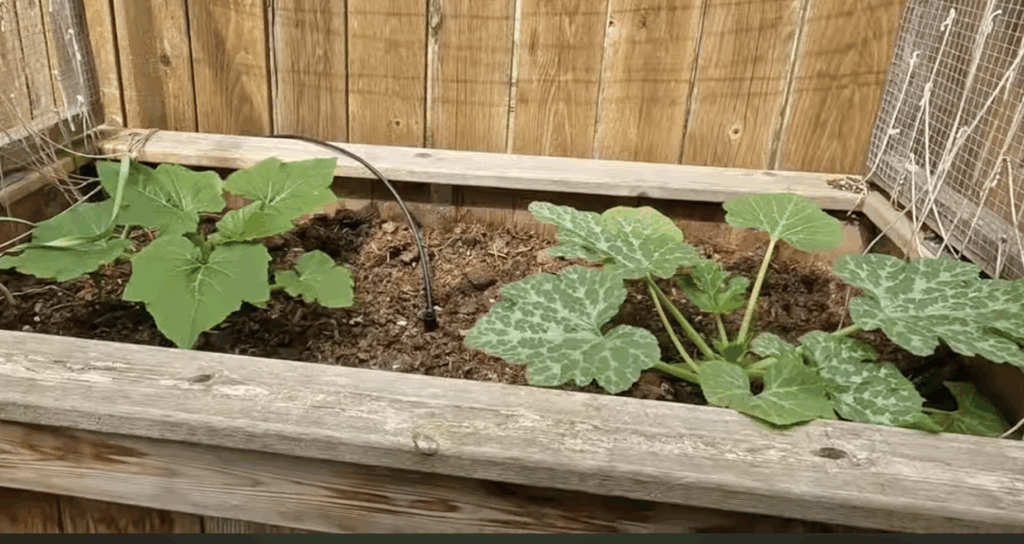
Growing summer squash in a small garden or raised bed requires a slightly different strategy than containers, but the same principles apply. Space management, soil quality, and airflow will determine how successful your plants are.
Spacing in Small Garden Beds
Even compact bush varieties need adequate room.
Plan for:
- 2 square feet for each plant
Crowding increases humidity around leaves, which raises the risk of powdery mildew and reduces pollination success. It will also increase the risk of pest pressure.
In small beds, it is usually better to grow fewer plants and maintain healthy spacing rather than trying to maximize plant numbers. Besides, if you plant more than 1 or 2 plants you will probably end up with more than you can possibly use!
If you use square foot gardening methods, one bush squash per 2 to 4 square feet is your goal.
Soil Preparation in Raised Beds
Summer squash performs best in:
- Loose, well-draining soil
- Soil rich in organic matter
- A slightly acidic to neutral pH between 6.0 and 7.0
Before planting, mix compost into the top 6 to 8 inches of soil and mulch with 2-3 inches of mulch. Wood chips and straw are great choices. Raised beds often drain faster than in-ground gardens. Organic matter and mulch help retain consistent moisture.
How Many Plants in a Small Raised Bed?
In a 4×4 raised bed, 1 to 2 squash plants are usually good for the average family. More than that can lead to overcrowding, and reduced airflow. It can also lead to too many squash!
Remember that a single healthy plant can produce multiple fruits per week during peak season. Yield is determined more by plant health than plant count.
Watering in Garden Beds
Raised beds dry out faster than traditional in-ground gardens, but more slowly than containers.
Water deeply when the soil feels dry 2 inches below the surface. Aim to keep moisture consistent throughout flowering and fruit development. Inconsistent watering can lead to plant stress, blossom end rot or misshapen fruit.
See my guide How to Tell If Your Plants Are Stressed to learn more about inconsistent watering. My article Common Tomato Diseases and How to Fix Them goes over blossom end rot in more detail. It occurs in squash for the same reason as tomatoes.
Drip irrigation or soaker hoses work well in small beds because they:
- Deliver water directly to the root zone
- Keep foliage dry
- Reduce fungal disease pressure
Fertilizing in Raised Beds
Because raised beds are intensively planted, nutrients can become depleted over time.
Before planting:
- Add 2-3 inches of compost and mix it into the soil
At planting:
- Incorporate a balanced organic fertilizer if you were not able to amend with compost
During the growing season:
- Side dress with compost
- Apply liquid fertilizer every 2 to 3 weeks only if growth slows
If leaves appear pale, yellow, or if production declines, nitrogen deficiency may be contributing. Look at your watering habits. Then add fertilizer if everything else looks good.
Managing Plant Size in Tight Spaces
In small garden beds, simple pruning helps manage size and airflow.
You will want to:
- Remove older lower leaves that touch the soil
- Harvest regularly to prevent oversized fruit
- Gently guide leaves away from neighboring plants
If you notice signs of stress such as wilting, yellowing, or stunted growth, review environmental conditions. My article on How to Tell If Your Plants Are Stressed explains how to identify and correct common issues early.
Vertical Growing Summer Squash
Vertical growing summer squash is possible, especially with smaller varieties. You can use vertical growing with containers and small garden beds.
Trellis ideas include:
- A sturdy tomato cage
- A short trellis
- Bamboo stakes
As the plant grows, gently tie the main stem to the support. Remove lower leaves that touch the soil to reduce disease pressure and help increase airflow.
Vertical growing is a great option to better utilize space when you don’t have very much of it. It also improves airflow, which reduces fungal issues such as powdery mildew. If you want a deeper explanation of how airflow impacts plant health, see my post on Why Airflow Is Important for Healthy Plants.
Pollination in Small Spaces
One challenge of growing summer squash in small spaces, especially balconies, is limited pollinator activity.
Squash plants produce:
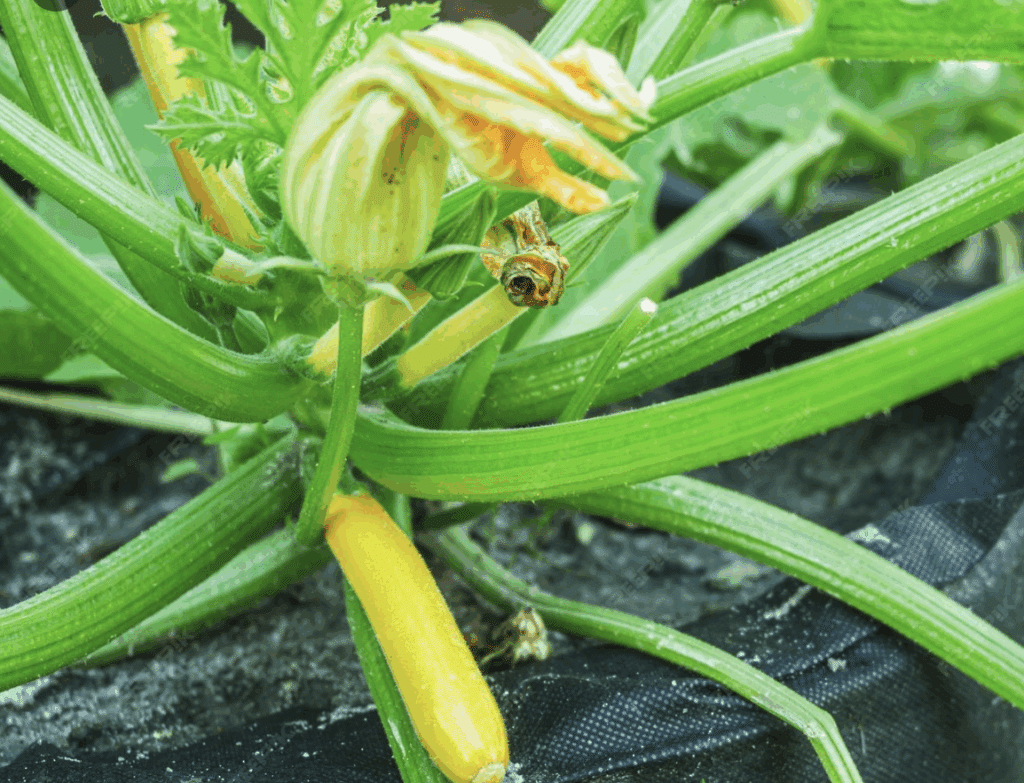
- Male flowers on long thin stems
- Female flowers with a small immature fruit at the base
If fruit begins to grow and then shrivels, the female flower was not pollinated. If you get a fruit that is misshapen, pollination was incomplete.
How to Hand Pollinate Squash
It’s actually quite easy to hand pollinate squash. You can use a clean paint brush, Q-Tip, or even a paper towel if that’s all you have.
To hand pollinate:
- Identify a freshly opened male flower in the morning. Flowers will close by mid-day and will not open again.
- Remove the petals of the male flower to expose the pollen-covered anther. This is the stem-like thing in the middle of the flower that is covered with yellow dust (pollen).
- Take your brush, Q-Tip, or other utensil and brush it along the anther. You should see the pollen collect on your utensil.
- Gently brush it onto the stigma of a female flower. The stigma is the stem-like feature in the middle of the female flower. Make sure to brush all sides of the stigma for complete pollination.
This simple step dramatically increases yield in patios and balcony gardens. It only takes a minute to do. The only tricky part is that it must be done in the morning. You also must have a male and female flower open at the same time.
It’s common to get more male flowers than female, and for them to develop before the plant gets its first female flower. Don’t worry if that’s what you see. The female flowers will come!
Preventing Common Problems in Small Gardens
Tight growing quarters can increase disease pressure.
Powdery Mildew
Improve spacing and airflow. Avoid overhead watering, especially late in the day when the water does not have time to evaporate off leaves before evening hits. Remove infected leaves promptly or it is likely to spread.
Squash Vine Borers
In some regions, vine borers attack squash stems. Cover young plants with a row cover or other mesh material until flowering begins, then remove for pollination.
Hand pollinating is a great option in this case.
It’s also important to know that healthy plants resist pests more effectively. It may not eliminate them, but it will help a lot. Good quality soil is also important. If you want to strengthen seedlings early on, my guide on 15 Tips for Seed Starting will help you give seedlings a strong start.
Harvesting for Continuous Production
Harvesting often tells the plant to continue producing fruit. If you don’t harvest and let the fruit on the plant get too big, the plant thinks it’s done producing and will focus on ripening the fruit to produce seeds. It will stop putting energy into producing more fruit.
Harvest fruit when:
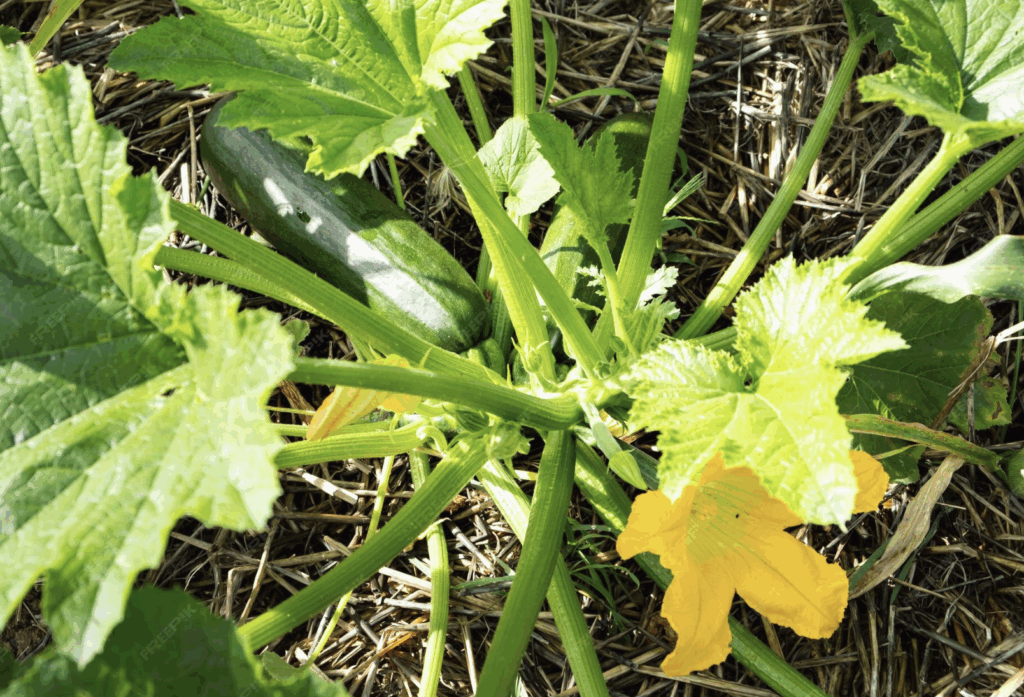
- Zucchini are 6 to 8 inches long
- Yellow squash are still tender and glossy
Frequent harvesting signals the plant to continue producing. Check plants every day during peak season. Gardeners joke about seeing a small zucchini and then checking later that day and now it’s huge. Summer squash grow fast. This is good for you and for production. But if you don’t check the plant often, you’re likely to see the fruit get to big.
At that point, your plant will so production and the fruit is mostly just good for baking with. The texture is not as soft and the seeds are large and hard. It’s not very pleasurable to eat it as is, but you can make things like my Orange Zucchini Bread.
Don’t get discouraged if it happens to you. It happens to all gardeners. Just harvest as soon as you see it and adjust how you use it.
One or two well-maintained plants can provide several pounds of squash per week in mid-summer, even in a small space.
Storing Your Summer Squash
Summer squash is not shelf stable, but can be kept in the refrigerator for a week, up to 2 weeks before being used.
There are no safe canning recipes for summer squash.
If you have a freeze dryer, you can freeze dry summer squash. That will make it shelf stable.
You can freeze summer squash, but not in whole form. If you try to freeze it whole, or even chopped, it will be mushy when thawed. If you want to freeze any of the summer squash, shred it first and drain the water. Shredded squash is often used in recipes, like my Orange Zucchini Bread mentioned in the last section. It will perform just as well in recipes when thawed as when used freshly shredded.
Small Spaces Can Successfully Grow Summer Squash
You can successfully grow summer squash in small spaces. When you choose compact varieties, use appropriately sized containers, and manage airflow and nutrition you can grow summer squash in small garden beds and containers.
Small space vegetable gardening tips often focus on limiting plant size. But in reality, productivity is really about root health, sunlight, and consistent care. When those factors are in place, even a patio garden can produce a steady supply of fresh summer squash throughout the entire growing season.
Frequently Asked Questions
Q: How much space does a summer squash plant need?
A: A traditional vining summer squash plant can spread 3 to 5 feet wide. However, bush varieties grown for small gardens typically need about 2 feet of space.
If you are growing in containers, plan for one plant per 5 to 10 gallon container. Proper spacing improves airflow, reduces disease pressure, and increases overall yield.
Q: Can you grow summer squash in a 5-gallon bucket?
A: Yes, you can grow summer squash in a 5-gallon bucket, but it should be a compact bush variety. The bucket must have multiple drainage holes and at least 12 inches of soil depth.
Q: Does summer squash grow well in containers?
A: Summer squash grows very well in containers when three conditions are met:
- Full sun for 6 to 8 hours daily
- Consistent watering
- Regular fertilization
Containers often reduce pest exposure and make it easier to control soil quality. However, they dry out faster than in-ground beds, so monitoring moisture is essential.
Q: How many summer squash plants should I grow?
A: In a small household garden, 1 to 2 plants are usually sufficient. Each healthy plant can produce multiple fruits per week during peak season.
Growing too many plants in a limited space often leads to overcrowding and disease issues rather than increased harvest.
Q: Why is my squash plant flowering but not producing fruit?
A: This is usually a pollination issue.
Squash plants produce separate male and female flowers. If pollinators are limited, especially on patios or balconies, female flowers may not receive enough pollen. The small fruit at the base of the flower will begin to grow and then shrivel.
Hand pollination in the morning often solves this problem quickly.
Q: Can I grow summer squash vertically?
A: Yes, especially compact or semi-bush varieties. In fact, it’s an excellent choice for a small space.
Use a sturdy cage or stake system to support the main stem. Tie the stem loosely as it grows. Remove lower leaves that touch the soil to reduce disease risk.
Vertical growing improves airflow and makes harvesting easier in tight spaces.
Q: What is the best soil for growing summer squash in containers?
A: Use a high-quality potting mix that drains well but retains moisture. Avoid using garden soil in containers because it compacts and reduces oxygen around roots.
Adding compost improves nutrient availability and microbial activity, which supports steady growth and fruit production.
Q: Why are my squash leaves turning yellow?
A: Yellow leaves can result from several factors:
- Nitrogen deficiency
- Overwatering or poor drainage
- Natural aging of lower leaves
If new growth remains green and vigorous, occasional yellowing of older leaves is normal. If the entire plant looks pale, apply a balanced fertilizer and evaluate your watering practices.
Q: How often should I water summer squash in containers?
A: Check soil moisture daily during warm weather. Water when the top 2 inches of soil feel dry.
Deep, consistent watering (but not overwatering) encourages strong root growth and prevents blossom end rot. Shallow, frequent watering can lead to weak root systems and inconsistent fruit development.
Q: When should I harvest summer squash?
A: Harvest zucchini at 6 to 8 inches long and yellow squash while still tender and glossy.
Frequent harvesting encourages continued production. Leaving fruit on the plant too long signals the plant to slow down, or even stop, new fruit development.