Is It Too Late to Plant a Fall Garden? Here’s What Still Has Time
There is a particular moment every gardener has experienced. You look at the calendar, look at your garden, and realize that summer somehow disappeared.
Maybe the tomatoes are still producing, like mine are. The zucchini is slowing down, even if they haven’t given up quite yet. You have a few garden beds opening up, but September is already here (or almost gone) and you’re wondering if it is too late to plant a fall garden.
The good news is that “late” doesn’t necessarily mean “too late.”
Whether you can still plant a fall vegetable garden depends on three things: your first frost date, how many days a crop needs to mature, and how well that crop handles cold weather.
Once you understand those three pieces, you can make a pretty good decision about what is still worth planting, even when you’re getting a late start.
The First Thing to Check: Your First Frost Date
Before you decide whether it is too late to plant a fall garden, find out approximately when your first fall frost normally occurs. The Farmer’s Almanac is a good resource in the U.S. to find your first frost date if you do not know what it is.
Your first frost date isn’t a guarantee. Weather varies from year to year, and your actual garden may experience frost a little earlier or later depending on elevation, exposure, nearby buildings, and other microclimate factors.
But it gives you a useful starting point.
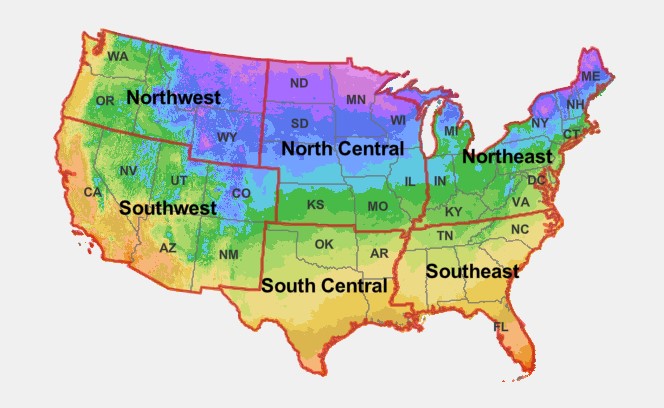
You can use the USDA Hardiness Zone Map to understand your general growing climate, but remember that hardiness zones are not the same thing as first frost dates. Learn more about what hardiness zone do tell you and how to use them in my post What Are Growing Zones.
For fall gardening, you’re really interested in the number of growing days you have left before temperatures become consistently too cold for the crop you’re trying to grow.
My post on Growing Seasons for Beginners goes into more depth on frost dates, seasons, and the days to maturity for plants.
Why your first frost date matters
Let’s say you have approximately 45 days until your typical first frost.
A vegetable that needs 70 days to mature probably isn’t the best choice.
But a radish that matures in around 25 days? That’s a completely different story.
And there’s another important detail: many fall crops don’t need to be harvested before the first frost.
Kale, spinach, carrots, Brussels sprouts, and several other cool-season vegetables can tolerate cold weather. Some can actually become sweeter after exposure to cool temperatures.
That’s why counting backward from your first frost is much more useful than simply looking at the calendar. Grow by the weather, not the date on a calendar.
Here’s the Simple Math for a Late Fall Garden
When you’re wondering, “Is it too late to plant a fall garden?” start with this:
Days until first frost starting from today’s date = your planting window
But don’t treat that calculation as an absolute, think of it as a planning tool.
If you have 60 days until your expected first frost and a crop takes approximately 45 days to mature, you have a reasonable amount of time to plant that crop.
If you have 30 days left and the crop needs 75 days, it’s probably not the right choice for you plant right now. It’s better to wait until next year for that one.
Give yourself some extra time
Fall growing conditions aren’t the same as summer.
As the days get shorter, plants receive less sunlight and temperatures drop. That can slow growth considerably.
For that reason, I like to give fall crops a little breathing room rather than planting something with a maturity date that lands exactly on the expected frost date.
The closer you get to your first frost, the more important those extra days become.
What Can You Still Plant in a Fall Garden?
You may not have enough time for everything you’d plant in a spring garden, but there are plenty of vegetables that can still produce a worthwhile harvest late in the season.
If you have about 60 days
You still have quite a few options.
Depending on your climate, you may be able to plant:
- Beets
- Carrots
- Bush beans
- Turnips
- Swiss chard
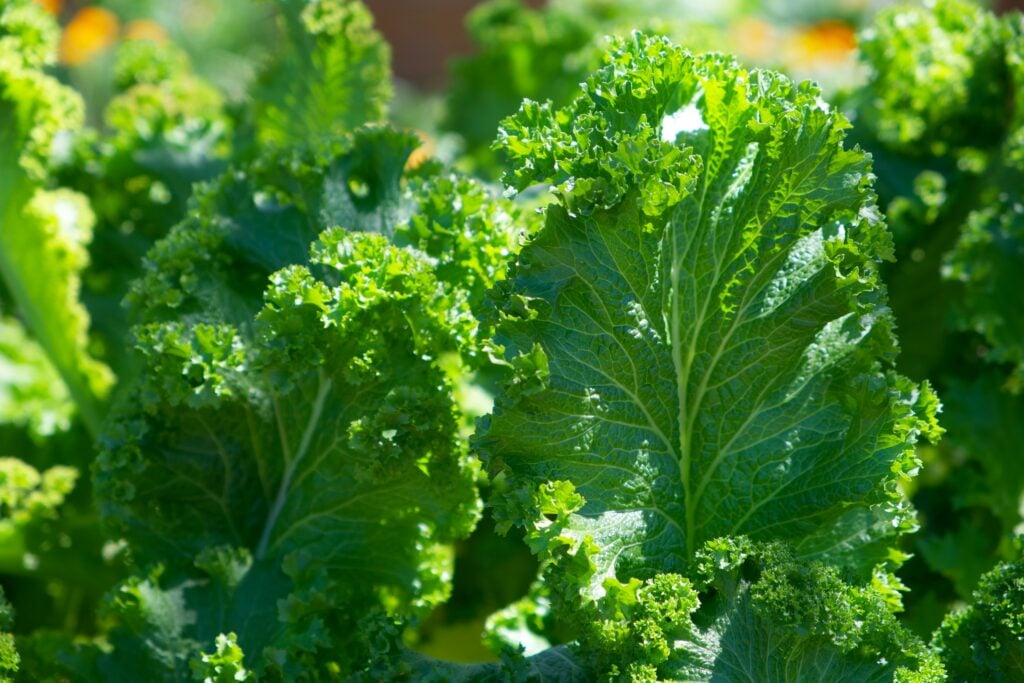
- Kale
- Collards
- Broccoli
- Kohlrabi
- Cabbage
- Cauliflower
Some of these crops are more frost tolerant than others, so don’t rely solely on the days-to-maturity number.
If you have about 30–45 days
Now you want to focus more heavily on quick-growing crops.
Good choices can include:
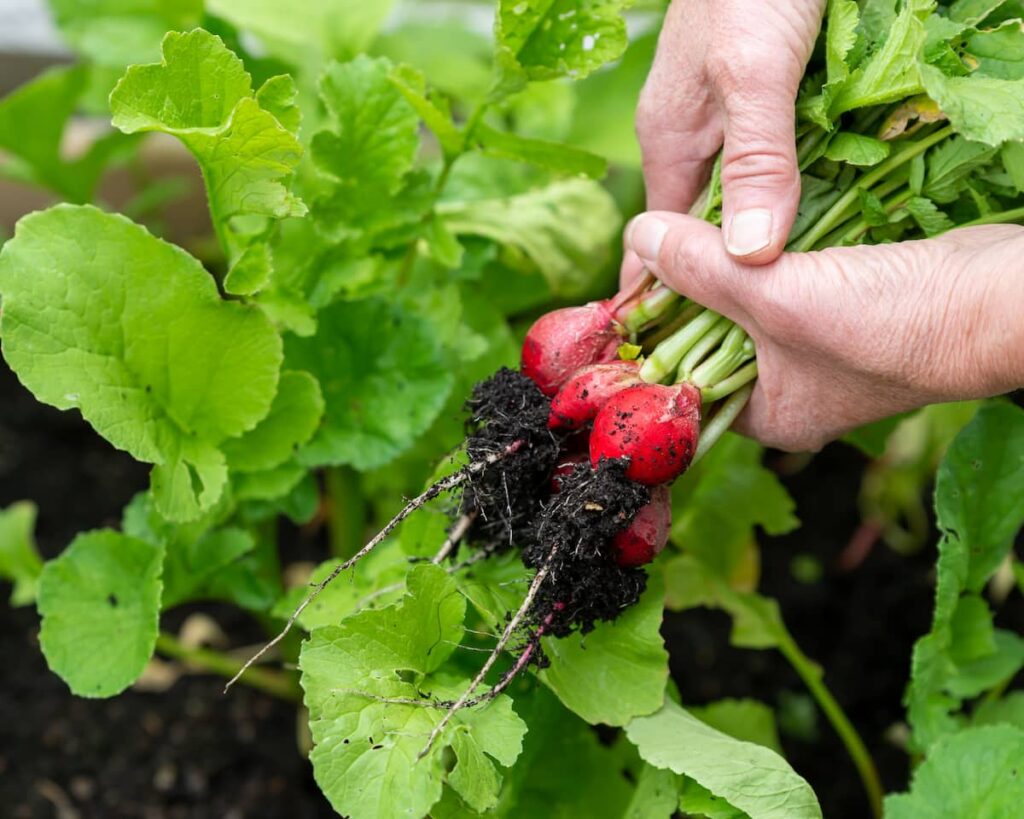
- Radishes
- Baby turnips
- Baby carrots
- Leaf lettuce
- Arugula
- Spinach
- Mustard greens
- Baby kale
- Some varieties of Swiss chard
This is also where baby vegetables become your friend. Baby vegetables are just vegetables picked before they fully mature, so they are a smaller size.
You don’t necessarily need to grow a giant head of lettuce or a full-sized carrot for your fall garden to be successful.
A crop harvested young can still give you fresh food before winter comes and shuts the garden down for the year.
What About Planting in October?
This is where your location makes a huge difference.
In a mild climate, October can still be very productive.
In a colder climate, October may be more about harvesting what’s already growing and protecting existing crops rather than starting long-season vegetables from seed.
But don’t automatically write off October.
Cold-hardy greens can sometimes keep producing well after the first frost.
If you’re planting this late, look for crops that:
- Germinate quickly.
- Mature quickly.
- Tolerate cold.
- Can be harvested young.
- Don’t require a long period of warm weather.
That combination gives you much better odds than trying to squeeze a summer crop into the last few weeks of the growing season.
Don’t Forget About Transplants
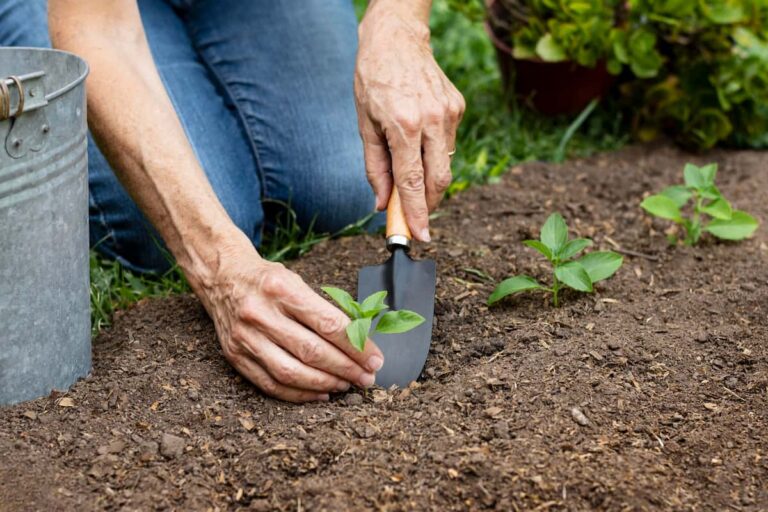
One of the easiest ways to extend a late planting window is to use transplants instead of seeds.
A seedling that has already spent several weeks growing in a nursery has a significant head start over a seed you put into the ground today.
This can make a huge difference when you’re gardening late in the season.
For example, if you have 40 days before your expected first frost, planting a healthy broccoli transplant is a very different proposition from starting broccoli from seed.
The plant has already completed part of its growing cycle.
But there’s a catch
Not every transplant will appreciate being planted late.
Look for healthy, compact plants rather than large, root-bound specimens that have been sitting in a nursery container for too long.
And give newly transplanted crops adequate water while they establish their roots.
Your Empty Summer Garden Beds Are an Opportunity
One of my favorite things about fall gardening is that you don’t necessarily need additional garden space.
You can use the space your summer vegetables are finished with.
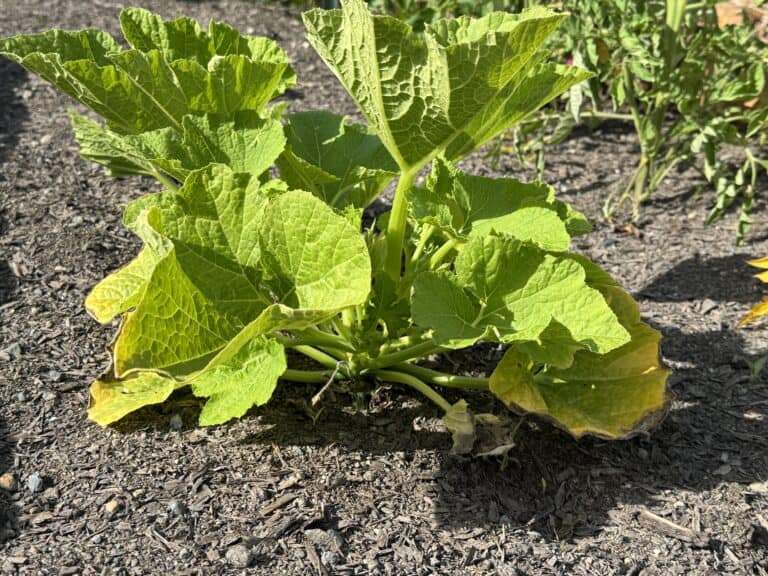
Once tomatoes, cucumbers, squash, and beans stop producing, remove the spent plants and assess the soil.
This is a perfect time to think about what happened in that bed during the summer.
If your vegetable garden suddenly stopped producing earlier than expected, for example, don’t simply clear the bed and move on. Figure out what happened. If there was pest or nutrient issues, that could affect the new crop you are trying to plant now.
That information can help you avoid carrying the same problem into your fall crops.
Don’t Plant a Fall Garden in Exhausted Soil
Fall vegetables still need healthy soil.
You don’t need to completely rebuild your garden bed every time you plant another crop, but if summer vegetables have been growing heavily in the same space all season, it’s worth paying attention to the condition of the soil.
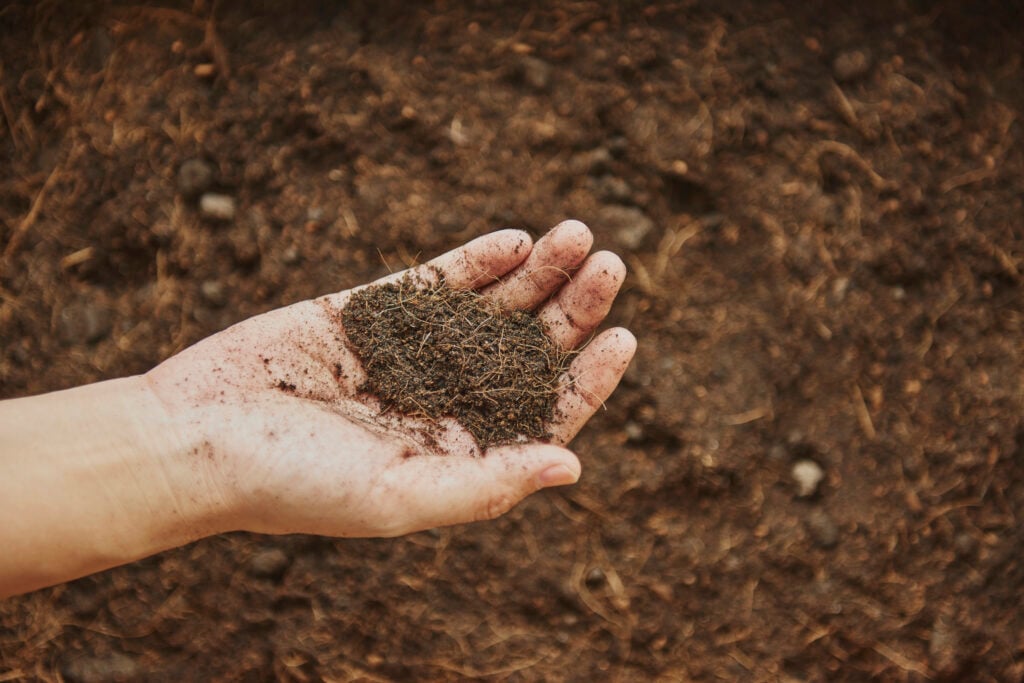
Remove old plant debris, pull obvious weeds, and add compost if your soil needs organic matter.
Then plant.
This is one reason I like succession planting in small gardens. Instead of thinking about a garden as something you plant once in spring and harvest until frost, you’re treating the same piece of soil as a productive space throughout the growing season.
What If You’re Really Late?
Let’s say it’s late September or even October and you’re reading this thinking:
“Okay, but what can I actually plant right now?”
Don’t panic.
Start by checking your first frost date.
Then look at the maturity time of the crops you’re considering.
Finally, prioritize cold-tolerant, fast-growing vegetables.
You might not get a giant harvest, but that doesn’t mean planting is pointless.
A row of spinach that gives you several harvests is still useful.
A handful of fresh radishes is still food.
A container of lettuce on the patio is still a productive garden.
I’ve done all of these things. There’s still a thrill to be picking your own food out of your garden, even when it isn’t coming in by the bucket load.
And if you’re gardening in a small space, this matters even more because you’re trying to get as much food as possible from the space you already have.
Should You Start Seeds or Buy Plants?
Here’s my general rule:
The later it gets, the more valuable a head start becomes.
Early in the fall planting window, seeds may be the perfect choice.
Later in the season, transplants may give you a better chance of getting a harvest before serious cold arrives.
You can also combine the two. There’s no rule that says you have to choose one or the other.
Plant quick-growing crops from seed while using transplants for vegetables that need more time.
For small-space gardeners, this can be particularly useful because you can tuck a few fall crops into whatever spaces open up instead of committing an entire garden bed.
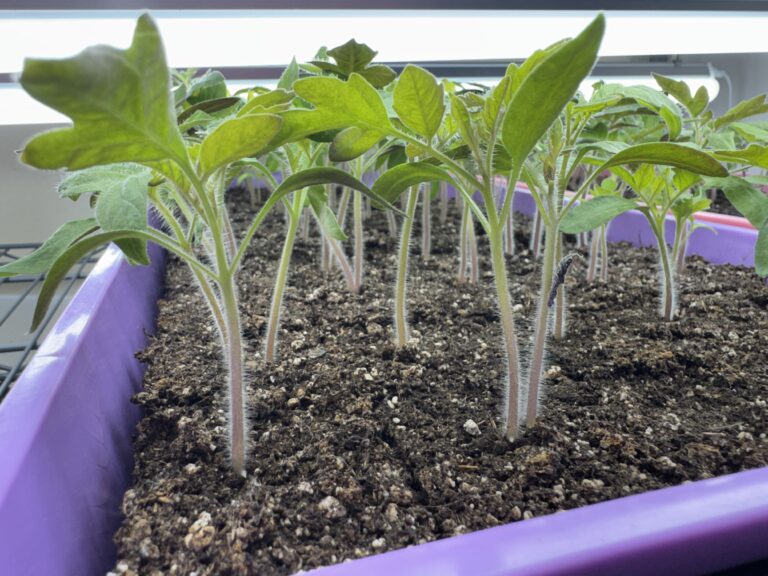
A simple seed-starting tray, quality seed-starting mix, and inexpensive plant labels can also make it easier to start your own fall transplants earlier in the season.
How to Protect a Late Fall Garden
If you’ve planted late, you don’t necessarily have to watch your hard work wilt and succumb to cold when the temperature drops.
A simple layer of frost cloth or row cover can provide additional protection for many crops.
The important thing is to understand that frost protection isn’t the same thing as turning winter into summer.
Row cover can help protect plants from brief cold snaps and frost, but it won’t make a tender summer vegetable continue growing indefinitely through freezing temperatures.
For a late fall garden, use protection strategically.
Cover crops that are worth saving, meaning they have the ability to continue successfully producing as it gets colder.
Don’t spend the time or money protecting a plant that won’t tolerate your winter conditions.
A Fall Garden Can Be Smaller Than Your Summer Garden
This is something I think beginning gardeners sometimes overlook.
Your fall garden doesn’t need to look like your summer garden. That’s okay, and for me it’s actually preferable. After spending the a good chunk of time growing, harvesting, and preserving through the summer, it’s nice to have a smaller garden in the fall. It’s like stepping down but not giving up harvesting your own food altogether, yet.
You don’t need rows of tomatoes, towering cucumbers, or sprawling zucchini.
Fall gardening is often about small, productive crops that fit into the spaces you’ve already created.
That makes it especially useful for small suburban gardens.
A few rows of spinach.
A patch of lettuce.
Some radishes.
A couple of rows of carrots.
A few kale plants.
That’s enough to make the garden productive well into the cooler months.
And if you’re trying to get more food from a small garden, that succession matters. Your garden doesn’t have to get bigger to become more productive. That’s one of the best things about us gardeners, our ability to be creative with the space we have.
So, Is It Too Late to Plant a Fall Garden?
Maybe, but probably not as late as you think.
Instead of asking whether the calendar says it’s too late, ask:
- How many days until my first expected frost?
- How many days does this crop need to mature?
- Can I harvest it young?
- Does it tolerate frost?
- Am I planting seeds or established transplants?
- Can I protect it from an early cold snap?
Those questions will give you a much better answer than a blanket planting calendar.
And remember, the goal of a late fall garden isn’t necessarily to grow everything.
It’s to grow something that can realistically produce a harvest before winter.
If you have two weeks left, plant something that can grow in two weeks.
If you have six weeks, your options expand.
If you have two months, you have considerably more possibilities.
That’s the beauty of fall gardening. There is rarely one universal planting deadline.
Your first frost, your climate, your garden, and the crop you’re growing all matter.
So if you’ve been staring at your empty garden bed wondering whether you’ve missed your chance, check the calendar, count backward from your frost date, and see what’s still possible.
You might have more gardening season left than you thought.
Frequently Asked Questions: Is It Too Late to Plant a Fall Garden?
Is September too late to plant a fall garden?
September is not automatically too late to plant a fall garden. Your remaining growing season and first frost date are more important than the month itself. In many areas, September is still a productive time to plant fast-growing greens, radishes, root vegetables, and other cool-season crops.
What vegetables can I plant late in the fall?
Fast-growing, cold-tolerant vegetables are generally the best choices for late planting. Radishes, spinach, lettuce, arugula, mustard greens, baby kale, and some varieties of turnips can be useful choices when you have limited time remaining.
Can I plant a vegetable garden in October?
You can in some climates, but what you can grow successfully depends heavily on your first frost date and local winter temperatures. In colder areas, October planting may be better suited to very cold-tolerant greens or overwintering crops.
How late can you plant vegetables before frost?
There isn’t one universal cutoff. A better approach is to compare the crop’s expected days to maturity with the number of growing days remaining before your first frost, while allowing additional time because cool fall weather can slow growth.
Should I plant fall vegetables from seed or transplants?
Both can work. Seeds are useful for quick-growing crops when you still have plenty of time, while transplants can give slower-growing vegetables a valuable head start when the season is getting short.
What can I plant 30 days before my first frost?
Look for fast-growing crops that can be harvested young and tolerate cool temperatures. Radishes, baby greens, lettuce, spinach, and some quick-growing root crops can be possibilities depending on your local conditions and variety.