Proven High Yield Container Gardening Tips for Small Spaces
If you’ve ever wished you could grow a bounty of fresh vegetables but don’t have a big yard, container gardening might be your secret weapon. From a sunny balcony to a small patio or even a wide windowsill, you can grow cherry tomatoes, peppers, lettuce, herbs, and more — all in pots, buckets, or raised containers. And the best part? With the right approach, you can practice high yield container gardening that can out produce some people do from a full garden bed.
Why Container Gardening Works So Well
Container gardening is all about controlling the plant’s environment. You choose your soil, your sunniest spots, and exactly what you want to grow. You can move plants to follow the sun, more easily protect them from heat or frost, and adjust water and nutrients as needed. For anyone with limited space, this really is a game-changer. Containers warm up faster in spring, which means heat-loving crops like tomatoes and peppers can get a head start. Plus, with the right planning, you can fit more plants into a small area and still give them room to thrive.
Getting Started: Containers, Soil, and Sun
Picking the Right Container
When it comes to planting containers, size matters. Bigger containers allow roots to grow larger, which means bigger plants and higher fruit production. For tomatoes and peppers, I like using 5-gallon buckets at a minimum or wide nursery pots. I’ve grown tomatoes really well in 15-20 gallon fabric grow bags.
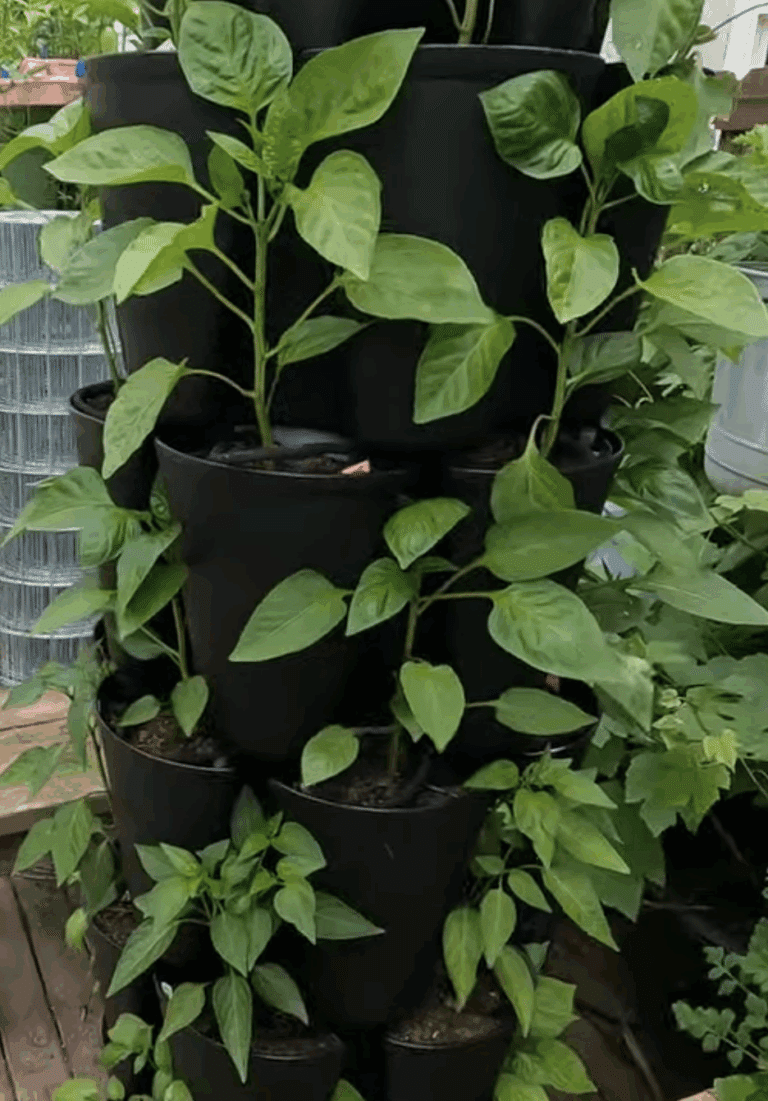
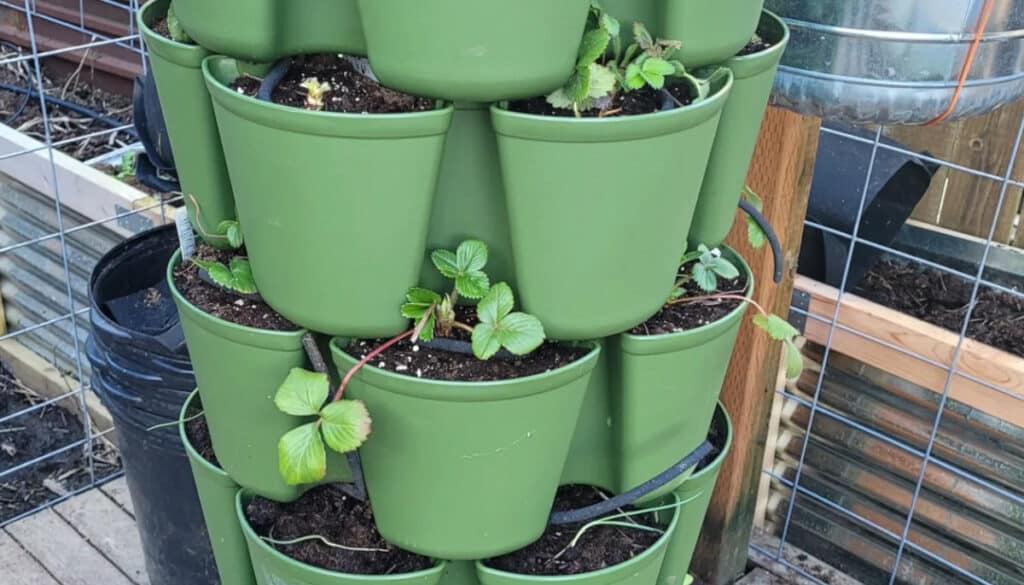
Leafy greens and herbs do well in shallower containers because their roots do not grow as deep. I love GreenStalk planters when you are growing in small spaces. I’m sure other vertical planters work well, but I’ve only used GreenStalks and I have grown so much food in them.
Make sure every pot has drainage holes — waterlogged roots are the fastest way to stress your plants. Read more about the stress in plants and how to recognize it in How To Tell If Your Plants Are Stressed Before It’s Too Late!
The Best Soil Mix
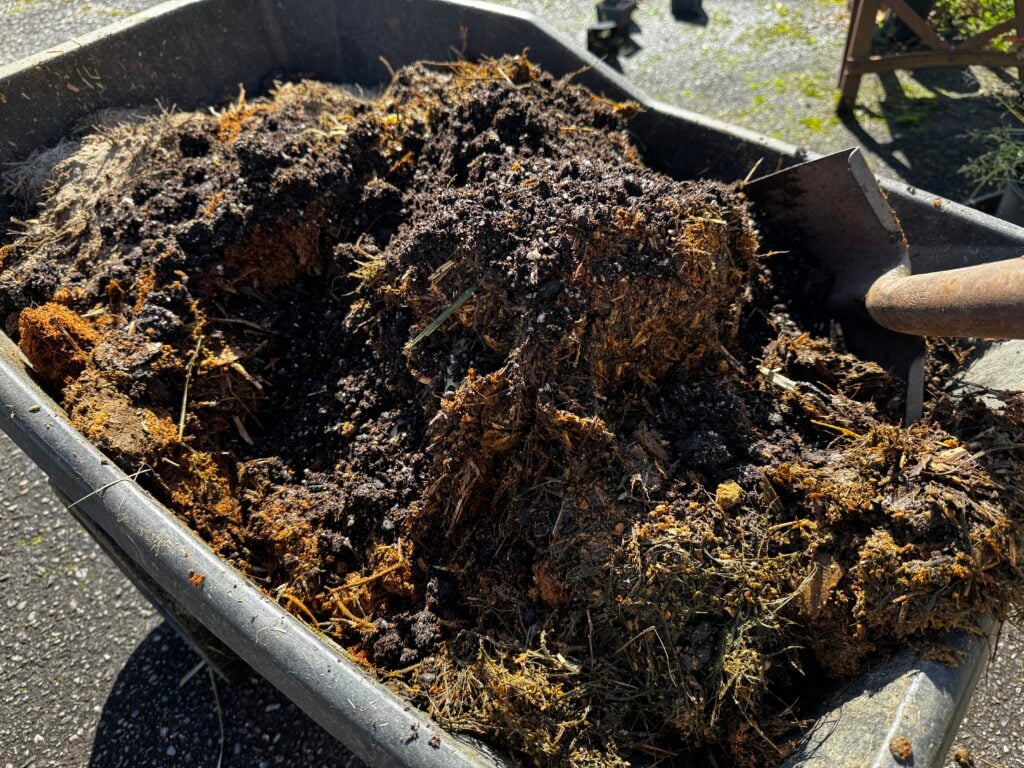
Garden soil is too heavy for pots and doesn’t drain well. For containers, I recommend a mix that holds moisture but still lets air reach the roots. A good potting mix looks like this:
- organic matter such as compost or worm castings for nutrients
- peat moss or coco coir to retain moisture
- perlite or vermiculite to keep the soil loose and aerated
The amount of each will be the same ratio that I discuss in How to Grow Peppers In Containers For High Yields.
- 35% compost
- 35% peat moss or coco coir
- 30% aeration material
Sunlight and Placement
Most vegetables need at least 6–8 hours of sun a day. Watch how your balcony or patio catches sunlight through the day and place your containers accordingly. If sunlight is limited, leafy greens, herbs, and some peppers can still thrive in partial shade. Rotating your pots every week or two helps ensure all sides of the plant get an adequate amount of sun.
What to Grow for the Biggest Harvest
Not every vegetable is suited for containers, but many thrive and produce well. Here are my favorites that I’ve grown and had a lot of success with:
- Cherry tomatoes — compact, easy to grow, and keep producing throughout the season.
- Peppers — bell, jalapeño, or mini sweet peppers do well in pots.
- Leafy greens — lettuce, spinach, kale, and arugula can be harvested multiple times if you snip leaves carefully. Read more detailed instructions on how to do this in The Best Cut and Come Again Vegetables.
- Herbs — basil, parsley, cilantro, thyme — are easy to grow and very useful in the kitchen. Many of the herbs I mention in 9 Best Herbs for Beginners are great for growing in containers.
- Bush beans and radishes — fast-growing, space-efficient crops that are perfect for succession planting to increase your harvest.
These crops are forgiving and productive, which helps beginners see results quickly and stay motivated.
Make the Most Out of Your Small Space
Even a tiny patio can produce a lot if you plan intentionally.
Succession Planting
Instead of planting everything at once, stagger your plantings by a couple of weeks. When you succession plant, the next batch of vegetables is ready to harvest just as the first batch is done. This keeps your containers producing continuously without leaving empty space.
Lettuce, spinach, kale, radishes, turnips, bush beans, and arugula are all great options for succession planning. Pretty much anything that grows fast is a good candidate for succession planting.
Vertical Gardening
I love using trellises and other vertical gardening option for high yield container gardening. I’ve grown pounds of vegetables and herbs vertically.
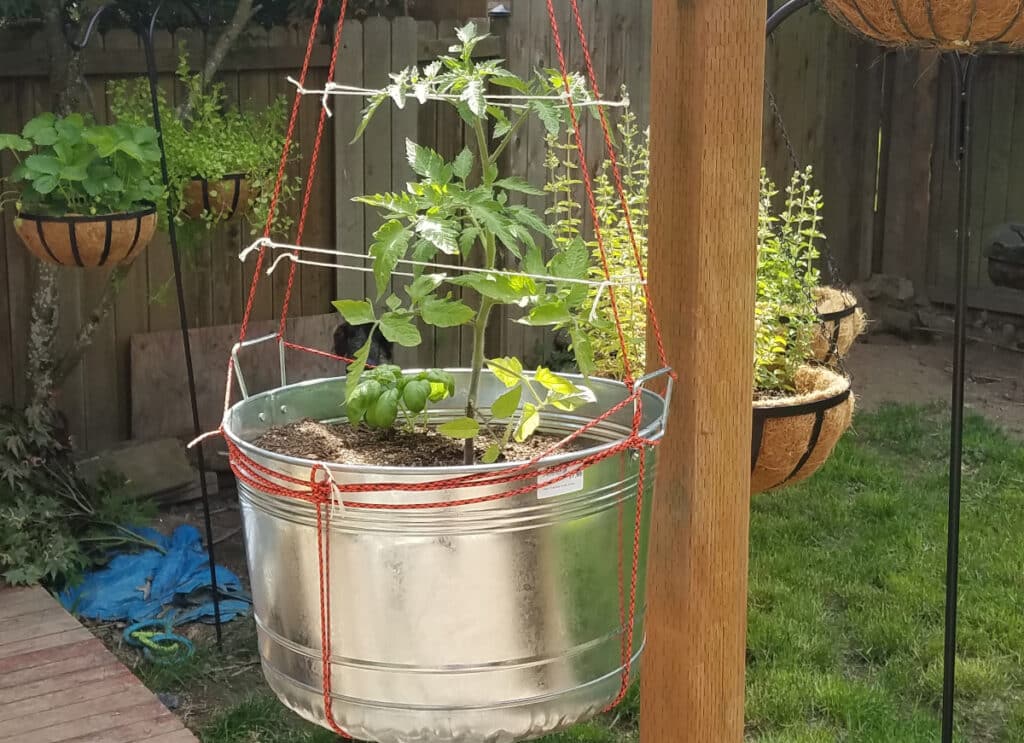
Trellises, hanging baskets, and wall planters are lifesavers for small spaces. Climbing beans, cucumbers, and even certain tomatoes can grow vertically, freeing up space at the base for other crops.
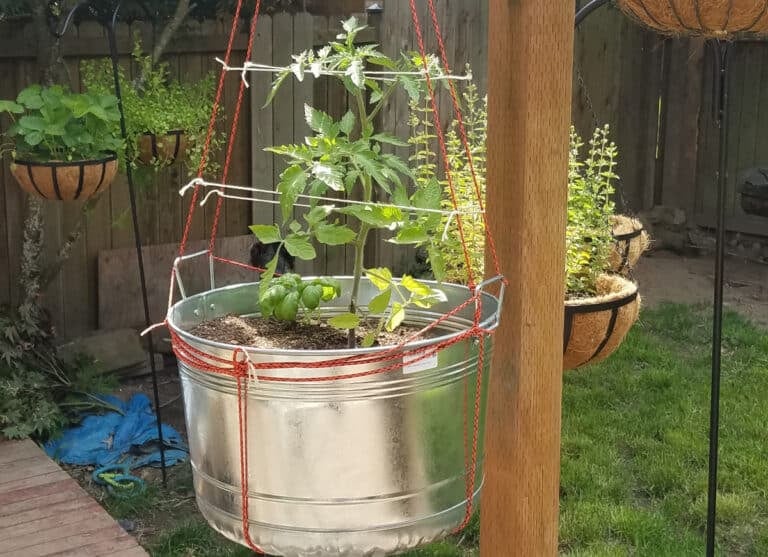
Lots of different things can be turned into hanging baskets. The funnest thing I used was 1 bushel metal tub. Shepard’s hooks are great if you have a small patch of ground to put them in. I particularly loved growing herbs like thyme and oregano as well as strawberries with shepard’s hooks. You can’t hang large baskets on them, so if you use these stick to smaller plants. Lettuce and arugula would also be great options.
Get creative! There so many things you can do to grow up instead of out.
Daily Care for a Productive Container Garden
Container gardening requires more hands-on time than an in ground garden, but does not mean it’s hard. Here’s what has worked for me:
- Watering: Containers dry out fast. Check daily, water deeply, and let excess drain out.
- Fertilizing: Nutrients wash out of containers when watering, so feed regularly with liquid fertilizer or slow-release pellets.
- Pruning and Harvesting: Remove any yellow leaves that appear, pinch off dead flowers to encourage more fruit production, and harvest leafy greens and herbs regularly to encourage new growth.
Following these basic steps and checking on your plants daily will keep them healthy and productive all season.
Common Mistakes to Avoid
Even experienced gardeners make mistakes with container gardening. Some of the most common ones are:
- Using garden soil — it compacts easily and holds too much water.
- Choosing containers that are too small — roots get crowded, and plants stop growing.
- Skipping watering or overwatering — both stresses plants and reduce yields.
- Ignoring sunlight — plants need sun to thrive and resist disease.
Many of the common mistakes in container gardening are the same ones I go into more detail on in 10 Mistakes Growing Tomatoes in Containers. Avoiding these mistakes early saves you time, frustration, and lost harvests.
Final Thoughts
Container gardening makes growing your own food possible, no matter where you live or how small your space is. By choosing the right containers, using a nutrient-rich potting mix, planting beginner-friendly crops, and caring for them consistently, you can enjoy a high-yield harvest all season long.
Succession planting and vertical gardening take your small space to the next level, turning a balcony or patio into a productive oasis. I loved walking out onto my patio and being surrounded by a large garden that I fit into a such a small space.
Now it’s your turn.
FAQ: High‑Yield Container Gardening for Beginners
Q: What vegetables grow best in containers for beginners?
A: For a beginner-friendly, high-yield container garden, start with crops that are compact and forgiving. Cherry tomatoes, peppers, leafy greens like lettuce and spinach, and herbs such as basil or parsley are all great options. Bush beans and radishes are fast-growing and work well for succession planting, giving you a continuous harvest with minimal space.
Q: How do I maximize yield in a small container garden?
A: A few smart strategies can make a big difference. Start with the right container size — bigger pots mean bigger roots, which means bigger harvests. Use a nutrient-rich, well-draining potting mix. Try vertical gardening with trellises or wall planters to free up space. Succession planting is another trick: stagger sowing so that when one crop finishes, another is ready to harvest. Regular watering, fertilizing, and pruning also keep your plants productive.
Q: How often should I water container vegetables?
A: Containers dry out faster than garden beds, so check your soil daily. Water deeply until it drains out the bottom, then let it dry slightly before the next watering. Most vegetables need consistent moisture, but avoid letting roots sit in water — that can cause root rot.
Q: Can I grow high-yield vegetables in a small balcony or patio?
A: Absolutely! Container gardening is perfect for small spaces. Use vertical growing techniques like trellises, hanging baskets, or stacked pots. Choose crops suited for containers, like cherry tomatoes, peppers, leafy greens, and herbs. Even with a tiny space, you can get multiple harvests throughout the season.
Q: What kind of soil should I use for high-yield container gardening?
A: Use a mix that holds moisture but drains well. A combination of peat moss or coco coir, perlite, and compost works beautifully. Adding slow-release fertilizer or compost ensures your plants have a steady nutrient supply for bigger, healthier harvests. Skip garden soil — it’s too heavy for pots.
Q: How do I keep my container garden productive all season?
A: Consistency is key. Water regularly, fertilize as needed, and prune or harvest crops frequently to encourage new growth. Rotate containers for sunlight, try succession planting, and take advantage of vertical space. By paying attention to your plants’ needs and staying on top of maintenance, you’ll see your container garden produce more food than you might expect.