How to Can Chili Beans: Perfect Every Time
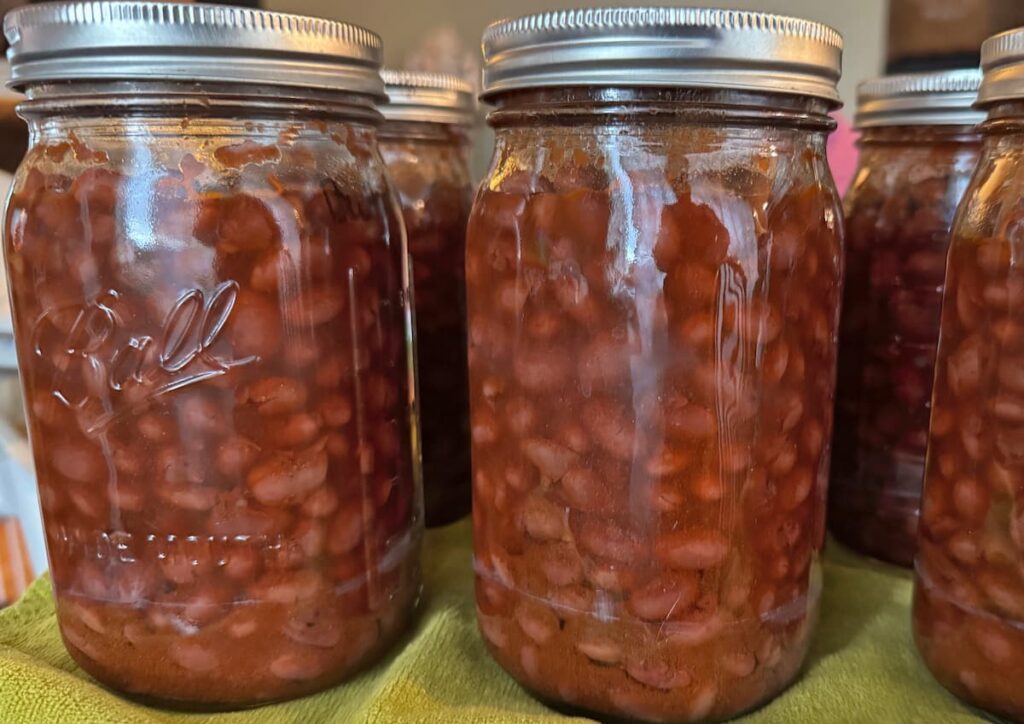
A few years ago I tried pressure canning for the first time and realized it wasn’t nearly as scary as I had thought. Back then, I started with making broth but since have expanded to many different things. One of my favorite things to can are beans, chili beans being one of my top choices. Let me walk you through how to can chili beans and you will always have them on hand whenever you have the craving for chili.
*As an Amazon Associate I may earn a small commission from qualifying purchases at no cost to you.
Why Should You Make Homemade Seasoned Black Beans?
First off, if you’ve never made your own homemade chili beans you’re in for a treat! They are full of delicious seasonings that the beans soak up during the canning process. They really give the beans, and therefore your chili, a bold flavor boost.
Perfect for DIYers, homesteaders, and preppers alike, you’ll appreciate having this staple in your pantry. By the end of this post you’ll also have the skills to make and have these beans whenever you need them. No more reliance on the grocery stores.
This is the perfect recipe for Canuary, if you participate in that event. I love it, and beans are one of my favorite things to can.
Elevate Your Beans By Growing Your Own
It’s great to learn how to make and can chili beans yourself, but it’s even better when you’re able to grow your own. If you’ve ever had home grown tomatoes, you know store bought can’t be it. The flavor of beans is so much better when they’re homegrown as well.
Kidney beans are actually quite easy to grow, even if you don’t have a large space to grow in. Read Growing Beans for Drying and Canning to learn how you can grow your own and take your chili beans to the next level.
Ingredients and Equipment To Can Chili Beans
You’ll need about 5 pounds of dried red or pinto beans to start. After being soaked overnight and boiled before canning, you’ll end up with about 3 cups of beans per quart jar. If you want to can in quart jars, double the amounts below.
Ingredients Per Quart Jar
- 1 Tbsp tomato paste
- 1 Tbsp + 1 tsp chili powder
- 1 tsp salt
- About 3 cups of soaked, boiled red or pinto beans
Per Pint Jar:
- 1/2 Tbsp tomato paste
- 2 tsp chili powder
- 1/2 tsp salt
- 1 1/2 cups soaked, boiled red or pinto beans
Equipment
- Pressure canner with rack – I use this Presto Canner and I love it!
- 20 Pint or 10 quart jars – the recipe can vary depending on how many beans you put in each jar so have this amount ready
- A wet paper towel or clean cloth to wipe jar rims
- Canning lids (either regular or wide mouth depending on your jars) – I like to use wide mouth jars for beans, I find it’s easier to get the beans out. Either way, have enough lids for all of your jars. I love ForJars brand lids.
- Canning rings – either regular mouth or wide mouth to match your lid size
- Canning Tongs
- A table or counter surface to let your jars cool for 24 hours
Tips for Pressure Canning Safely
Before we get started, I wanted to talk about canning safely. This recipe is a low acid food (ph > 4.6), therefore it must be pressure canned. You cannot pressure can in an Instant Pot or pressure cooker, you must use an actual pressure canner. I have a Presto 16 quart canner and it works great for me.
If your pressure canner uses a rubber gasket or other rubber parts, like the Presto models, check them before canning to ensure they are not cracked or stiff. It’s best practice to replace the rubber parts every year. However, I replace the parts when they need it, which is usually every few years.
Most pressure canners come with a dial gauge to monitor the pressure. The gauge must be checked every year to make sure it is accurate. Some county extension offices will check them for a small fee. I recommend forgoing the dial gauge and getting a weighted gauge if your canner didn’t come for one. I have this weighted gauge for my canner and love it. The benefit of a weighted gauge is that it uses physics to calculate the pressure in the canner. There’s no need to get it checked so it eliminates the hassle of a dial gauge. I highly recommend them.
Follow the directions exactly. Things like using the exact headspace and cleaning the jars can’t be missed. Venting before building pressure, and letting the canner slowly release the pressure are extremely important. Don’t skip any of the steps or your final product may not turn out safe.
Finally, inspect all jars before using and verify the lids are still sealed. Do not use any jar that shows signs of bulging, gas build-up, or looks or smells odd. If in doubt, throw it out.
How to Can Chili Beans
Preparing the Beans for Canning
The preparation process for dry beans requires an important rehydration and pre-cook step to ensure safe canning.
1. Select and Sort the Beans
Start by picking through your dried beans. Discard any shriveled, discolored, or damaged beans, as well as any small stones or foreign matter. Rinse the sorted beans thoroughly under cool water.
2. Rehydration (Soaking)
The rehydration step is crucial. This ensures the beans are adequately moist for proper heat penetration during the pressure canning process.
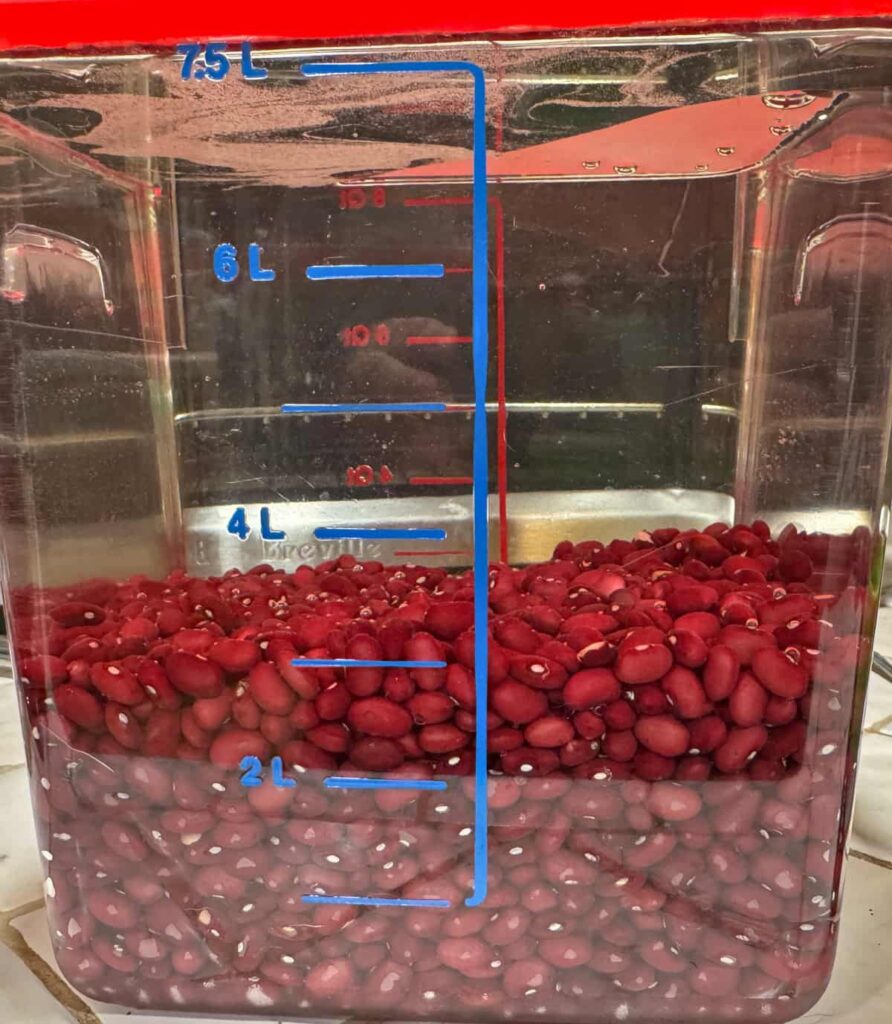
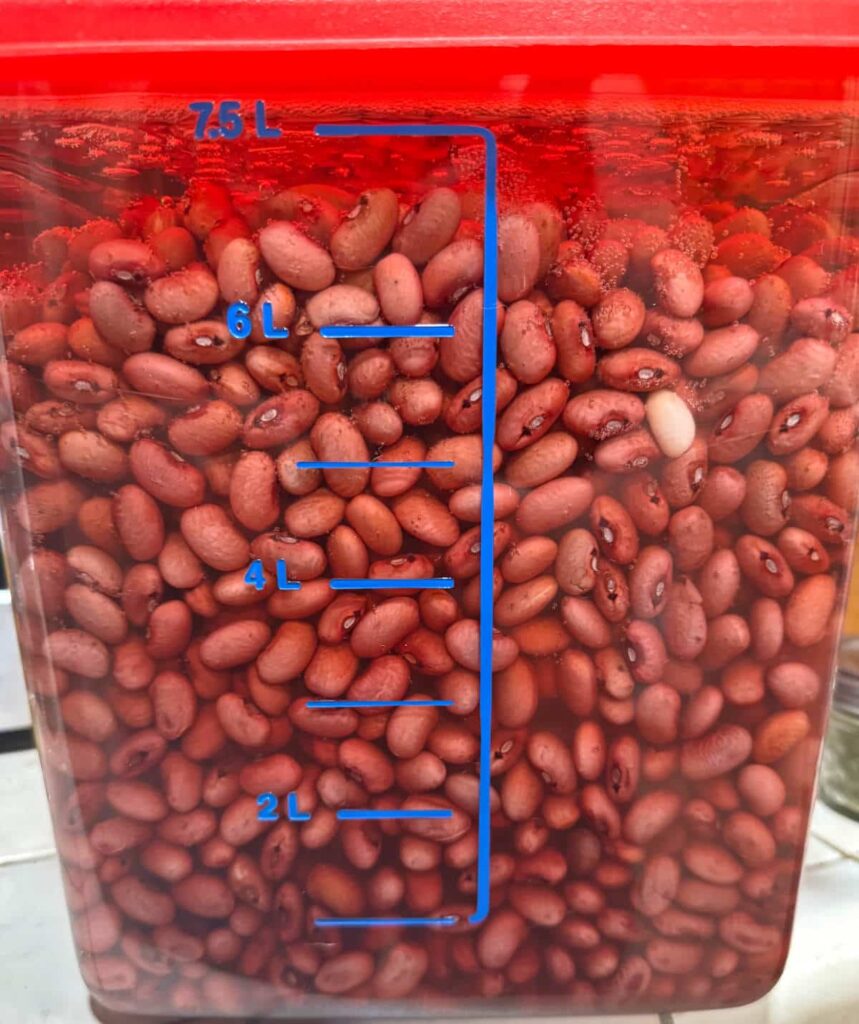
- Place the sorted and washed beans in a large pot or large container. I like to use a rubbermaid container like this to soak my beans. About 5 pounds of beans will yield 16-20 pints or 8-10 quarts.
- Cover the beans with fresh water (they will expand, so use about 3-4 times the amount of water).
- Allow the beans to soak for 12 to 18 hours (I leave the container on the counter).
- After soaking, drain and discard the soaking water.
3. Pre-Cooking (Boiling)
After the beans rehydrate, you must boil them. Don’t skip this step; it is part of the scientifically tested process for safely pressure canning dry beans
- Cover the drained, soaked beans with fresh water.
- Bring the water and beans to a boil and boil for 30 minutes to an hour, or when you see the bean skins start to crack.
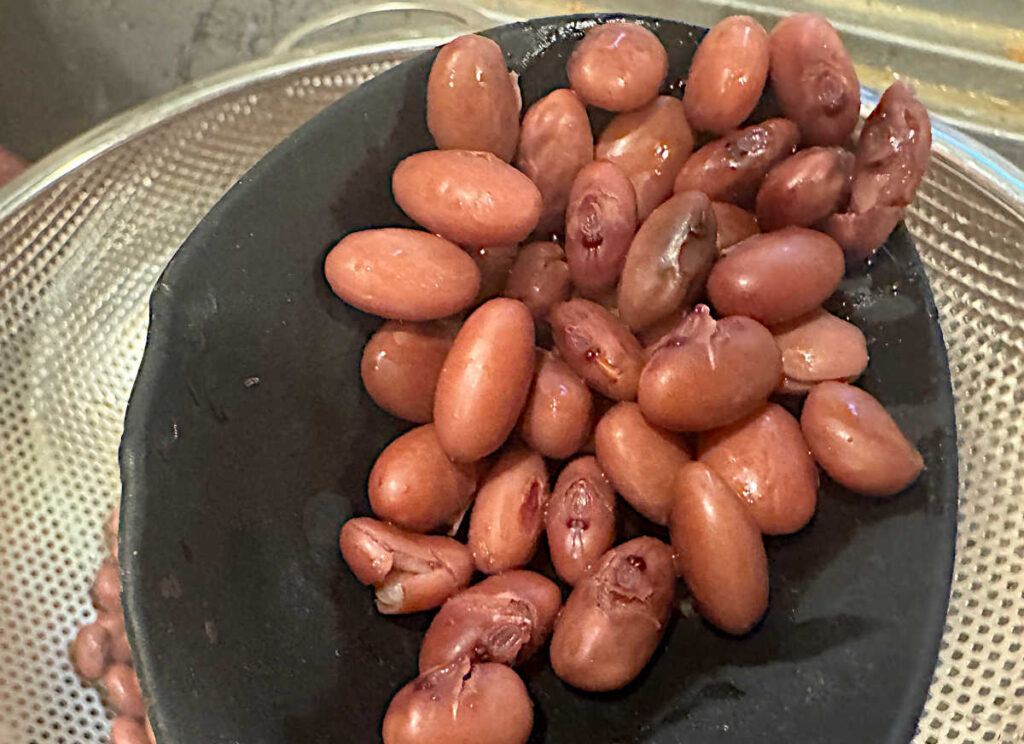
- The boiling process will create froth in the pot. You can skim this off or leave it, it’s up to you.
- This pre-cooked mixture of hot beans and hot liquid is now ready to be packed into your canning jars.
Safety Note on Preparation:
Do not place raw, dry beans directly into the jar and cover with water (sometimes called “raw pack”). Scientists determine safe pressure canning times by using beans that have already soaked and boiled for a minimum of 30 minutes. Starting with dry or under-hydrated beans can result in an unsafe product that may not reach the required sterilizing temperature in the center of the jar.
4. Hot Packing the Jars
- While the beans are hot, ensure your jars are clean and warm.
- Use a spoon to loosely fill half of the hot jar with the hot beans
- Add the seasonings.
- Loosely add more beans to the jar, leaving a 1-inch headspace at the top (the space between the beans/liquid and the rim of the jar).
- Remove any air bubbles using a non-metallic utensil. I usually use a chopstick but any thin, non-metalic utensil will work. Non-metalic is important to avoid any potential micro scratches in the glass. Check and adjust the liquid level to maintain the 1-inch headspace.
- Wipe the rims of the jars clean with a clean, damp cloth or paper towel.
6. Pressure Canning the Beans
- Prepare Canner: Place the canner rack in the bottom of the pressure canner. Add the amount of hot water recommended by your canner manufacturer (usually 2 to 3 inches).
- Load Canner: Using the jar lifter, carefully place the hot jars onto the rack in the canner. Lock the canner lid into place, but do not put the weight or pressure regulator on yet.
- Vent the Canner: Turn the heat to medium-high. Once the canner is steaming, allow steam to escape steadily from the vent pipe for 10 full minutes. This is called venting and is crucial to ensure all air is removed from the canner. If the air isn’t removed, then the pressure inside the canner will not be correct.
- Place your canner weight or pressure regulator on the vent pipe once the 10 minutes are up.
- Allow the pressure to rise to the correct amount for your altitude. I’m below 1,000 feet so my pressure is set at 10 lbs with a weight, or 11 lbs with a dial gauge. If you are above 1,000 feet you’ll can at 15 lbs pressure with a weighted gauge, or 12 lbs pressure with a dial gauge.
- Once the correct pressure is reached, begin your timing:
- Pint Jars: Process for 75 minutes.
- Quart Jars: Process for 90 minutes.
- Adjust the heat as necessary to keep the pressure steady for the entire time. If the pressure drops below the required level at any point, you must bring it back up and restart the processing time from the beginning.
7. Depressurize and Cool the Jars
After the processing time is over, you must let the canner depressurize on its own. Rushing this process will cause siphoning of liquid out of the jars and may make them unsafe.
- Cool Down: After the processing time is complete, turn off the heat and allow the canner to cool naturally until the pressure returns completely to zero (the gauge reads ‘0’ and/or the safety plug drops). Do not rush the cooling process by removing the weight or opening the vent. This can cause liquid to siphon out of your jars.
- Open Canner: Once the pressure is at zero, wait an additional 10 minutes before slowly removing the weighted gauge or opening the vent. Unfasten the lid, lifting it away from your face to avoid steam burns.
- Remove Jars: Wait 5 more minutes, then use the jar lifter to carefully move the jars to a towel lined countertop or another surface they can sit undisturbed. Leave space between the jars so air can move in between for proper cooling.
- Final Seal: Let the jars cool undisturbed for 12 to 24 hours. You may hear the ping sound as the lids seal, but that is not always the case.
- Check Seals: After 12-24 hours, remove the screw bands. Press the center of each lid. If the lid is firm and doesn’t flex, the jar is sealed.
- Store: Wash sealed jars, label with the contents and date, and store in a cool, dark, dry place. If you have any unsealed jars they must be refrigerated and used within the week.
Frequently Asked Questions
Q: What Kind of beans are used for chili beans?
A: Kidney beans are the most common bean used for chili beans, but you can use small red beans or pinto beans in a pinch. They all will taste great.
Q: Do canned beans need to be drained for chili?
A: No, I never drain my beans before adding them to chili. The liquid contains most of the seasonings, draining it would lose a lot of flavor and your chili would taste dull. The liquid also adds needed moisture to the chili so it does not dry out.
Q: Do I have to soak the beans before cooking?
A: Yes. This ensures the beans are adequately moist for proper heat penetration during the pressure canning process. It also cuts down on the gas-producing compounds in the beans, which you’ll thank me for later!
Q: Can I use a boiling water bath canner instead of a pressure canner?
A: No. Beans are a low-acid food (pH above 4.6). To safely preserve low-acid foods and destroy the risk of Clostridium botulinum spores, they must be processed in a pressure canner at high temperatures.
Q: Why do the beans have to be partially cooked (“hot packed”) before canning?
A: Partially cooking the beans and using hot liquid (the “hot pack” method) helps prevent the beans from absorbing too much liquid during the canning process, ensures a better texture, and helps create a better vacuum seal in the jars.
Q: How full should I fill the jars?
A: Fill the jars with the beans and liquid, leaving 1 inch of headspace (the empty space between the food/liquid and the top rim of the jar). This headspace is crucial for a proper seal and safety during processing.
Q: Why did the liquid in my jars disappear after processing?
A: It could be that the beans absorbed a lot of the liquid, or it could be due to siphonage. Common causes of siphonage include:
- Failing to de-bubble the jars properly.
- Packing the jars too tightly.
- Having too much fluctuation in pressure/temperature during processing (i.e., cooling the canner too quickly).
- Processing at too high of a pressure.
- As long as the lid is sealed, the food is still safe to eat, but you should use jars with significant liquid loss first.
Q: How long will home-canned chili beans last?
A: For best quality, home-canned goods should be used within 12 to 18 months. However, as long as the seal remains intact, they are safe indefinitely from a food safety perspective, but the quality will degrade over time.
Q: How should I store the canned chili beans?
A: Store sealed jars in a cool, dark, dry place (like a pantry or cellar). Avoid storing them near heat sources (like the stove or oven) or in direct sunlight.