How to Grow Tomatoes in Small Spaces (Best Practices & Varieties)
Tomatoes are one of the most popular crops for home gardeners. They are productive, versatile in the kitchen, and available in many varieties. Many people assume they need a large garden to grow tomatoes successfully, but that is not true. I’ve successfully grown lots of tomatoes in containers, raised beds, and on patios. The key to success is understanding what tomato plants need. They require enough soil, consistent watering, strong support, and good sunlight. When those needs are met, small space tomato gardening can produce impressive yields.
If you are still planning your garden layout, you may also find it helpful to read How to Plan a Vegetable Garden before deciding where to place your tomato plants.
Pin It For Later ⤵️
Why Tomatoes Grow Well in Small Spaces
Tomatoes adapt well to container growing because their roots can thrive in a controlled soil environment. When the soil has good drainage, enough nutrients, and steady moisture, tomato plants will grow vigorously even when space is limited.
Another reason tomatoes work well in small gardens is their vertical growth habit. Instead of spreading across the ground, tomato plants can be trained to grow upward using cages, stakes, or trellises.
This vertical growth allows gardeners to make better use of limited space.
Container growing also gives gardeners more control over soil quality. Healthy soil is one of the most important factors for strong plant growth. If you are unsure about your soil quality or want to improve it, you might also find this guide helpful: How to Tell if Soil Is Ready to Plant.
Understanding your soil helps prevent common problems that reduce tomato yields.

Best Tomato Varieties for Small Spaces
The variety you choose will directly determine how well tomatoes perform in a small garden. Some tomato plants grow very large and require a lot of room. Others stay compact and are much easier to manage in containers.
The best tomatoes for small spaces usually fall into three categories: determinate, dwarf, and compact indeterminate varieties.
Determinate Tomatoes (Compact Plants)
Determinate tomatoes grow to a certain size and then stop growing taller. These plants produce most of their fruit during a shorter harvest period. They are an excellent option if you are planning on preserving your tomatoes.
Because they stay relatively compact, determinate tomatoes are often one of the best tomatoes for small gardens and containers.
Some good determinate varieties include:
- Roma
- Patio
- Bush Early Girl
- Celebrity
- Tiny Tim
These plants are easier to manage in containers and usually require less pruning than larger tomato varieties.
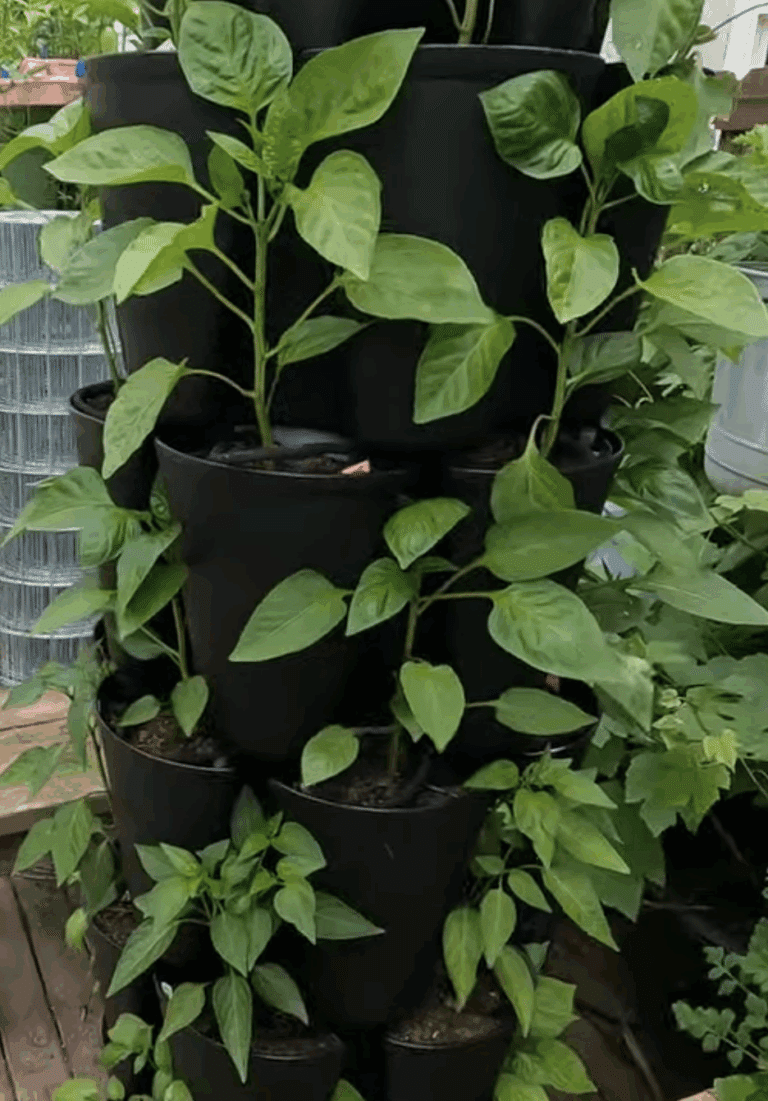
Determinate tomatoes also work well in raised beds if space is limited. I grew roma tomatoes in a 2×8 foot raised bed for many years with great success. I’ve also grown Martino’s Roma tomatoes in Greenstalk planters and had more success than I had anticipated. The plants still grew several pounds of fruit per plant, even in the more limited space of the vertical planter.
Dwarf Tomato Varieties
Dwarf tomato plants are bred specifically for gardeners who need compact plants. These varieties stay smaller but still produce full-sized fruit.
Dwarf plants often have thicker stems and strong branching, which helps them perform well in containers.
Popular dwarf tomato varieties include:
- Tasmanian Chocolate
- Rosella Purple
- Dwarf Sweet Sue
- Dwarf Arctic Rose
Because of their compact size, dwarf tomato plants are excellent choices for patios, balconies, and small backyard gardens. They will not produce as much as a full sized plant, but they are a great option when you have a very small space. Some tomatoes are better than none!
Indeterminate Tomatoes for Vertical Growing
Indeterminate tomatoes grow continuously throughout the season and can produce fruit for several months. These plants grow larger than determinate varieties, but they can still work in small spaces if they are trained vertically. You can also prune them so they do not grow longer than the size you want them to be.
Some productive indeterminate varieties include:
- Sungold
- Sweet 100
- Juliet
- Gardener’s Delight
- San Marzano
These varieties are known for producing large numbers of tomatoes, which makes them good choices for gardeners who want high yield tomatoes for small spaces.
However, indeterminate plants require strong support and regular pruning to keep them manageable.
Choosing the Right Containers
Size is one of the most important factors when growing tomatoes in containers. Even in small spaces, you cannot skimp on container size. Whether your growing determinate vs indeterminate tomatoes also makes a difference.
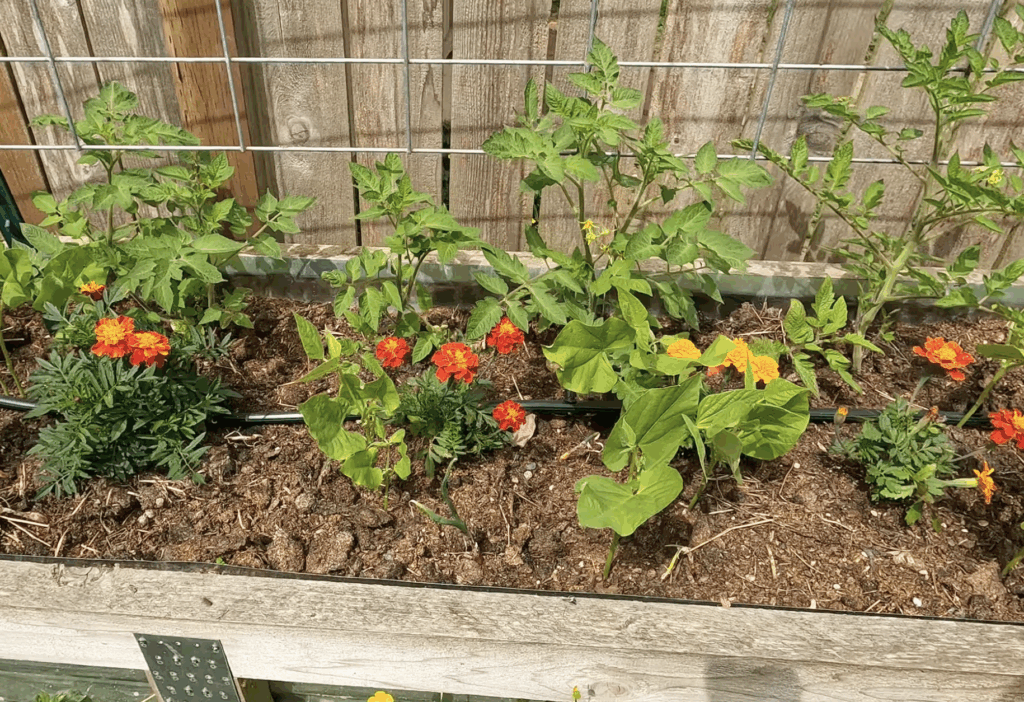
Tomatoes need enough soil to support their root systems and maintain consistent moisture levels. A container that holds at least 5 gallons of soil is the minimum size for most tomato plants. Larger containers often produce better results.
5 gallon buckets from your local hardware store work fine. I’ve grown many tomatoes in them. Determinate tomatoes tend to do the best in this size. Indeterminate will do better in something larger if you can.
The ideal container sizes include:
- 10–15 gallon pots
- fabric grow bags
- large plastic containers
- half barrels
These are the grow bags I used for my tomatoers, and they have held up nicely over the last few years.
Larger containers hold moisture longer and give plant roots more room to grow. They also lose nutrients slower from leaching.
Many gardeners also choose grow bags because they provide good drainage and prevent roots from becoming restricted. Grow bags also allow more airflow which helps the roots grow stronger. I’ve grown in all of these, including the 5 gallon buckets, and have harvest many pounds of tomatoes from them all.
Soil for Container Tomatoes
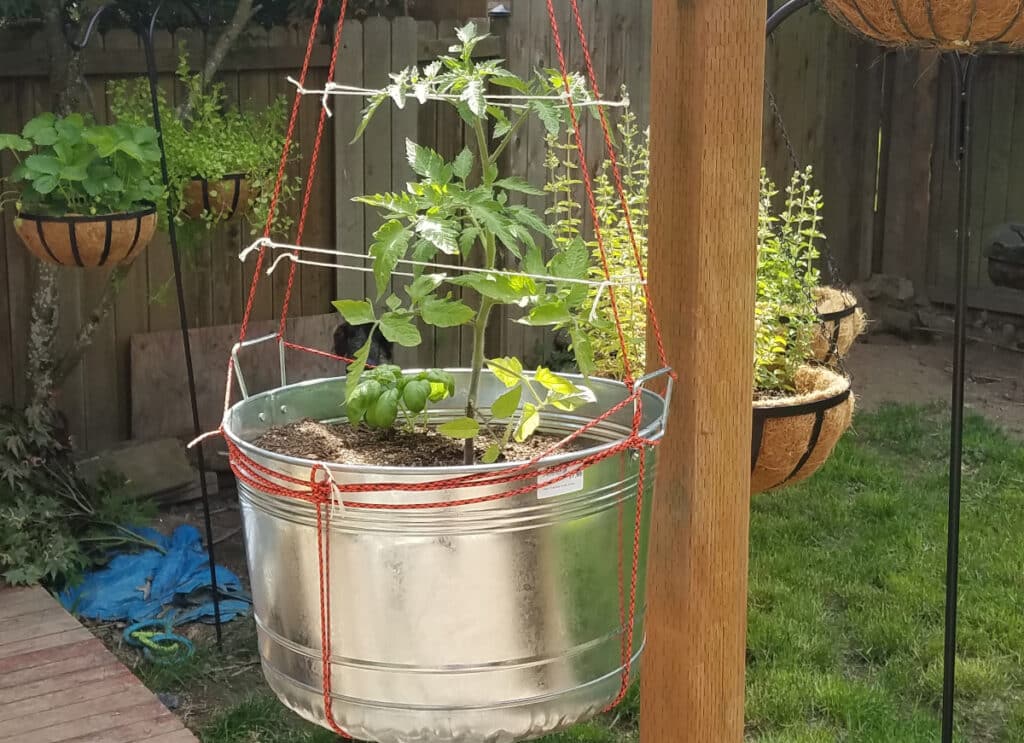
Tomatoes grow best in high-quality potting mix rather than regular garden soil. Potting mixes are designed to drain well while still holding enough moisture for plant roots. Good drainage prevents root rot and other problems that can occur in containers.
Garden soil does not drain well in containers. You want to use a good potting mix to grow the best, and highest-yield, tomatoes.
A strong soil mix often includes:
- compost
- worm castings
- organic fertilizer
Healthy soil supports beneficial microbes that help plants absorb nutrients. The same microbial life in the soil will be in your containers as well. This is, they help the plant take up nutrients and are essential to healthy tomatoes.
Improving soil health is one of the most effective ways to grow stronger plants. If you want a deeper understanding of soil health and preparation, you may also find this guide helpful: How to Prepare Soil for Planting in the Spring. These principles apply to containers just as much as in-ground and raised beds.
Especially when growing in containers, the principles of healthy soil apply.
Planting Tomatoes in Containers
Tomatoes are one of the only plants that can grow new roots along their stem. Gardeners can take advantage of this when planting.
To encourage strong root development:
- Remove the lower leaves from the seedling.
- Plant the tomato deeply in the soil.
- Bury a portion of the stem underground.
This method allows the plant to develop additional roots along the buried stem. It’s common for people to plant a tomato sideways to really expand the root system. If you have room in the container, it’s a great option.
A larger root system helps the plant absorb more water and nutrients, which supports stronger growth and better fruit production.
Read more about Proven Tips for High Yield Container Gardening to get even more out of your container planted tomatoes.
Supporting Tomato Plants
Tomato plants require support to keep stems upright and prevent fruit and leaves from touching the soil. They are vining plants, but if you let them grow along the ground they will be susceptible to quite a few diseases. See Common Tomato Diseases to learn more about the diseases tomatoes are vulnerable to.
Two common support methods are cages and trellises.
Tomato Cages
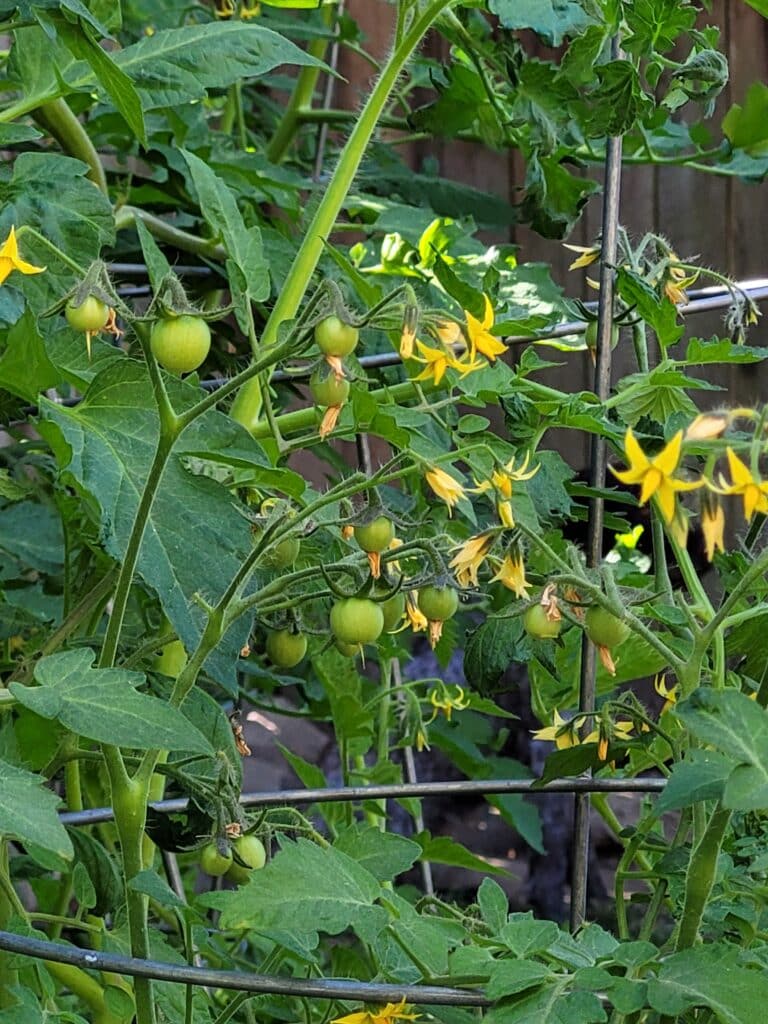
Tomato cages work well for determinate or compact plants. They provide simple support and usually require little pruning. They’re also fairly cheap. Buying a few is not a big financial investment.
Cages are easy to install and work well for container gardening.
Trellises and Stakes
Indeterminate tomato plants will need vertical supports such as trellises or strong stakes, unless you prune them not to grow super tall. Most people don’t want to do that, but it is an option if you want to grow them and have very little vertical space.
Training plants upward helps save space and improves airflow around the leaves. See Why Is Airflow Important for Healthy Plants for more information.
Vertical growing is one of the most effective strategies for small space tomato gardening. You’d be surprised at how many healthy tomato plants you can grow on a patio or balcony when you utilize trellis systems and vertical growing.
Watering Tomatoes in Containers
Tomatoes grown in containers need consistent watering. Containers dry out faster than garden soil, especially during warm weather.
It is best to check soil moisture regularly and water deeply when the top 2 inches of soil become dry.
Signs that a tomato plant needs water include:
- drooping leaves
- dry soil surface
- slowed growth
Adding mulch to the top of containers can help reduce water loss and keep soil temperatures stable. I highly recommend doing this to keep your plants healthy and keep maintenance lower for you.
Fertilizing for Healthy Growth
Tomatoes are considered heavy feeders. They need regular nutrients to produce flowers and fruit throughout the season.
A balanced fertilizer applied at planting helps establish strong early growth.
After that, a light feeding every two to three weeks can help maintain healthy plants.
Many gardeners prefer organic fertilizers such as:
- compost tea
- fish emulsion
- organic tomato fertilizer
My favorites are compost tea and fish emulsion. They are all natural, balanced, and tomatoes seem to love them. Healthy plants produce more flowers and larger harvests regardless of where they are grown.
Pruning Tomatoes in Containers and Small Spaces
Pruning helps keep tomato plants manageable and improves airflow around the leaves.
Indeterminate tomatoes benefit the most from pruning. Small shoots called suckers often grow between the main stem and branches. Removing these suckers allows the plant to focus its energy on fruit production instead of growing more leaves.
Most gardeners keep one or two main stems for indeterminate varieties.
Determinate tomatoes also grow suckers which should be pruned. These tomatoes don’t grow very big, however, so they do not need as much pruning as their indeterminate cousins.
Harvesting Tomatoes
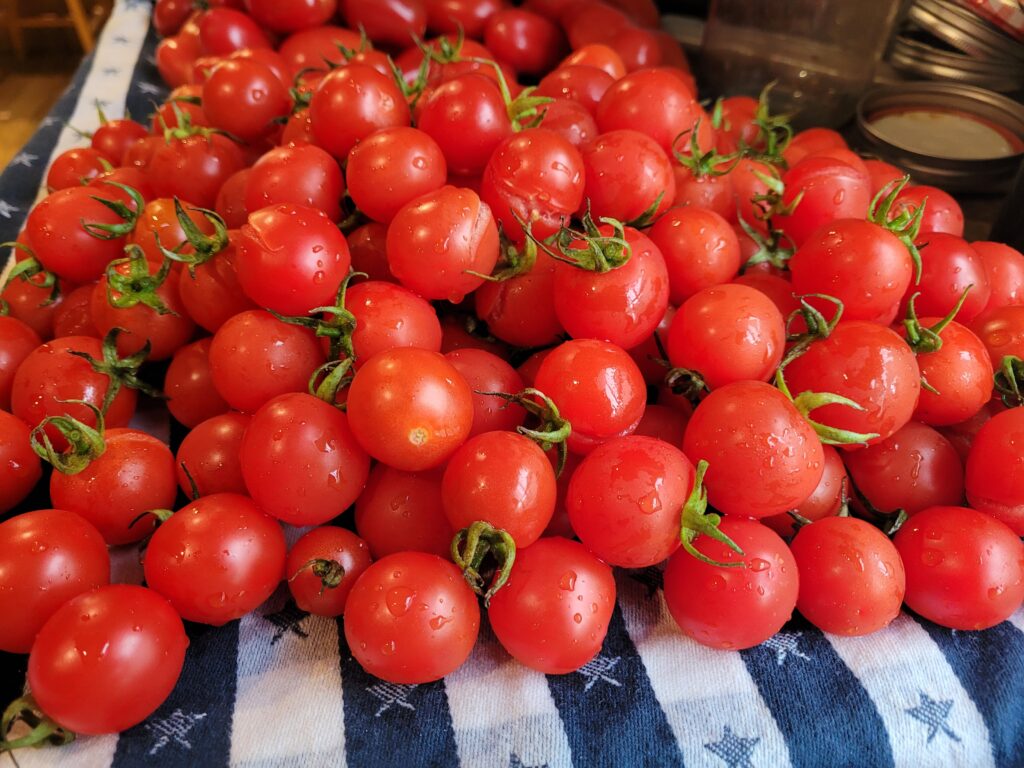
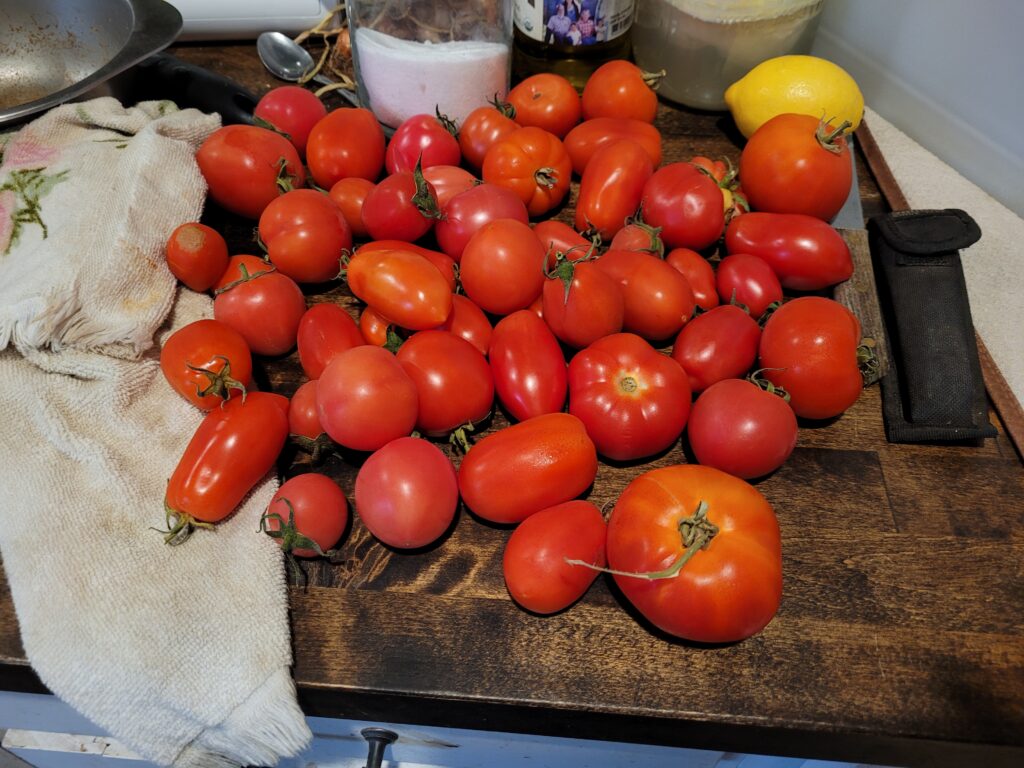
Tomatoes taste best when they ripen on the plant and are picked in the afternoon.
A ripe tomato typically has full color and feels slightly soft when gently squeezed. Most tomatoes will also detach easily from the vine when they are ready to harvest.
Regular harvesting encourages your plants to keep producing fruit.
Even a few well-maintained plants can provide a strong, steady supply of tomatoes throughout the growing season.
Quick Tips for Growing Tomatoes in Small Spaces
If you want to grow tomatoes in small spaces successfully, focus on a few basic practices that support healthy plants and steady fruit production.
Choose compact varieties.
Determinate and dwarf tomato plants stay smaller and are easier to manage in containers or small gardens.
Use large containers.
Tomatoes grow best when containers hold at least 5 gallons of soil. Larger containers between 10 and 15 gallons usually produce stronger plants and higher yields.
Plant tomatoes deeply.
Tomato stems can grow roots along buried sections. Planting seedlings deeper encourages a stronger root system.
Provide strong support.
Tomato cages, stakes, or trellises keep plants upright and prevent stems from bending under the weight of the fruit.
Place plants in full sun.
Tomatoes need at least 6–8 hours of direct sunlight each day to grow well and produce fruit.
Water consistently.
Container plants dry out faster than garden beds. Check soil regularly and water deeply when the top inch becomes dry.
Feed plants during the growing season.
Tomatoes are heavy feeders and benefit from regular fertilizing throughout the season.
Frequently Asked Questions
Q: Can tomatoes grow well in small spaces?
A: Yes. Tomatoes are one of the easiest crops to adapt to small gardens. As long as the plants receive plenty of sunlight and are grown in containers large enough to support their roots, they can produce just as well as plants grown in traditional garden beds. The key is choosing varieties that stay manageable and training the plants upward with cages or trellises so they don’t take over the space.
Q: What size container is best for growing tomatoes?
A: Tomatoes perform best in containers that hold at least five gallons of soil, but larger containers usually produce better results. A ten to fifteen gallon pot allows the roots to grow freely and helps the soil hold moisture longer between waterings. When containers are too small, the soil dries out quickly and plants can struggle to stay healthy.
Q: How often should tomatoes be watered in containers?
A: Container tomatoes need consistent moisture because the soil dries out faster than garden beds. During mild weather, watering every day or two is often enough. In hotter conditions, plants may need water daily. The easiest way to tell is to check the soil. If the top inch feels dry, it is time to water. Deep watering helps the entire root system stay hydrated.
Q: What tomatoes grow best in small gardens or containers?
A: Compact varieties are usually the easiest to manage in small spaces. Determinate tomatoes, patio varieties, and dwarf tomatoes stay smaller and do well in containers. Cherry tomatoes are another good option because they are productive and adaptable. Many gardeners grow varieties like Patio, Tiny Tim, or Bush Early Girl when space is limited.
Q: How much sunlight do tomatoes need to grow well?
A: Tomatoes need plenty of sunlight to grow strong plants and produce fruit. In most cases they need at least 6-8 hours of direct sun each day. If plants receive less light than that, they may grow tall and weak and produce fewer tomatoes. When growing in containers, placing pots in the sunniest location available makes a big difference in how well the plants perform.
Q: Do tomato plants in pots need fertilizer?
A: Yes. Tomatoes are heavy feeders, and nutrients in containers are used up more quickly than in garden soil. Adding fertilizer at planting helps plants get established, and feeding them regularly during the growing season supports steady growth and fruit production. Many gardeners use organic fertilizers or compost to keep the soil fertile throughout the season.
Q: Why are my tomato leaves turning yellow in containers?
A: Yellow leaves are often a sign that something in the growing conditions needs adjustment. The most common causes are inconsistent watering, lack of nutrients, or not enough sunlight. Overwatering can also lead to yellow leaves because roots need oxygen in the soil. Checking moisture levels and making sure plants receive enough light usually solves the problem.
Q: Do tomatoes in containers need support?
A: Most tomato plants benefit from some type of support. Even smaller varieties can become heavy once fruit begins to develop. Cages, stakes, or trellises help keep plants upright and prevent stems from bending or breaking. Support also improves airflow around the leaves, which helps keep plants healthier during the growing season.
Pin It For Later ⤵️