Common Tomato Diseases and How to Fix Them
Everybody loves growing tomatoes. They grow fast, drink deeply, and can be overachievers. It’s also common knowledge that home grown tomatoes taste immensely better than store bought. But their speed and lush growth also make them magnets for fungal and bacterial problems. The good news? Most common tomato diseases and symptoms are predictable. Prevention is key, but treatment is possible in most cases. This guide is a handy reference to tell you what you’re dealing with and how to treat it.
Pin It For Later ⤵️
How to Identify Tomato Plant Diseases (Before It Spreads)
Before you panic and pull a plant, take a closer look at what you’re dealing with.
When learning how to identify tomato plant diseases, ask these questions:
- Are spots circular or irregular?
- Do they start on lower leaves or new growth?
- Is there yellowing around the spots?
- Is the stem affected?
- Has the weather been wet and humid?
Most tomato fungal diseases begin on the lower leaves where airflow is limited and the soil stays moist.
Early detection is going to be key to treat the plant and help it thrive.
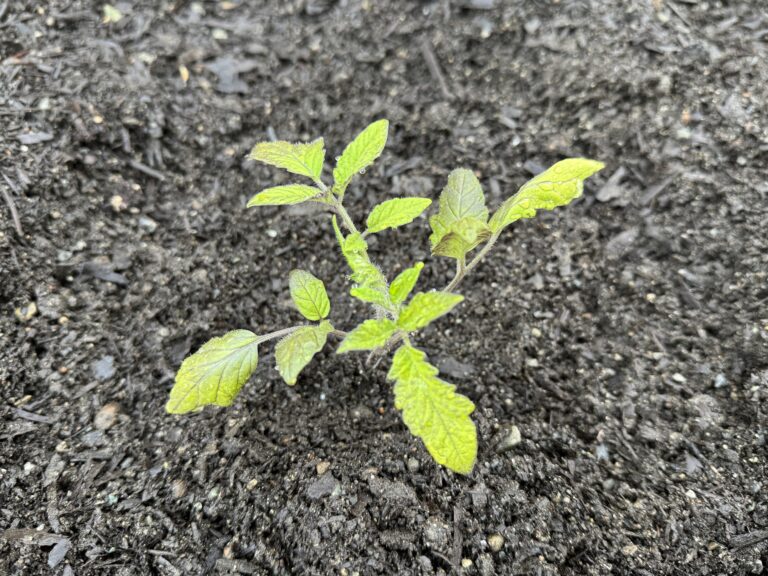
It’s also important to note that sometimes what looks like a tomato disease actually started weeks earlier during seed starting. Weak, leggy, or stressed seedlings are more vulnerable to fungal issues later. If your plants struggled early on, you may want to read my guide on Why Seeds Didn’t Sprout or Struggled After Germination before assuming disease is the only issue.
1. Early Blight vs Late Blight Tomatoes
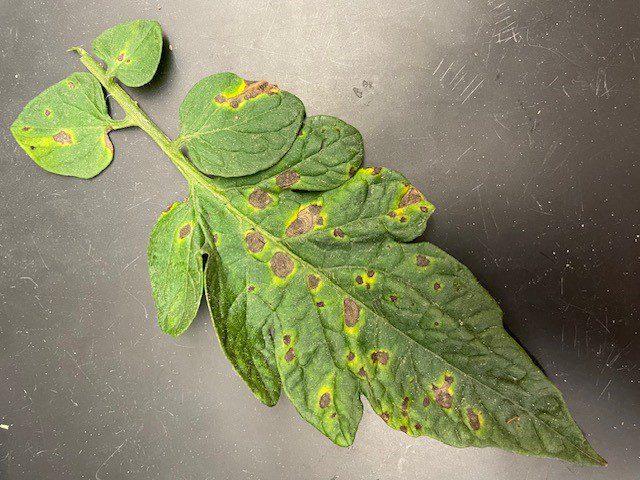
Early Blight
What It Looks Like
Early blight is one of the most recognizable tomato leaf diseases once you know what to look for.
Look for these telltale signs:
- Brown spots with concentric rings that resemble a target
- Yellow halo around the spot
- Begins on lower leaves first
- Gradual upward movement through the plant
- Stems may develop elongated dark lesions
As the leaves die, they will drop off the plant. This could expose your fruit to sunscald.
Favorable Conditions
- Warm temperatures
- High humidity
- Plants under stress
- Typically mid-season
How to Confirm Identification
If the spots are larger and have that bullseye pattern, you are likely dealing with early blight rather than septoria.
How It Spreads
- Soil splashes onto the plant from rain
- Contact with infected plant debris
- Overhead watering keeps leaves wet
- Poor airflow allows moisture to stick around
What To Do
- Remove infected lower leaves immediately
- Mulch heavily to prevent soil splash
- Increase spacing between plants
- Apply organic fungicide if severe

Late Blight
Late blight is like a tornado. Once it hits, you can count on destruction of the plant. Late blight is bad news.
What It Looks Like
- Large gray-green, water-soaked patches
- Rapid browning of leaves
- White fuzzy growth on underside in humid weather
- Dark lesions on stems
- Firm brown rot on fruit
Favorable Conditions
- Cool, wet weather
- Prolonged rain
- Heavy morning dew
How to Identify It Quickly
If your plant declines dramatically in just days, suspect late blight. Unlike early blight, it does not move leaf by leaf. It tackles the whole plant quickly.
What To Do
- Notify local extension if outbreaks are reported in your area
- Remove infected plants immediately
- Do not compost
- Disinfect your gardening tools
2. Septoria Leaf Spot
Septoria is often confused with early blight but it behaves differently.
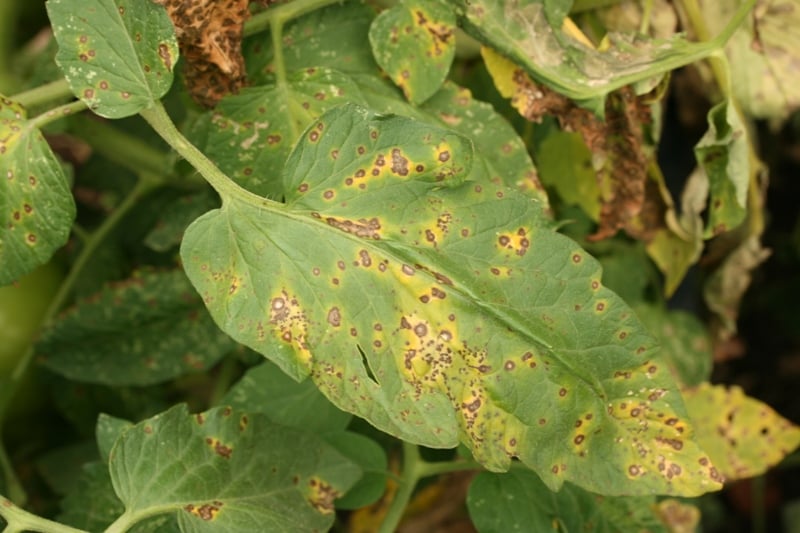
What It Looks Like
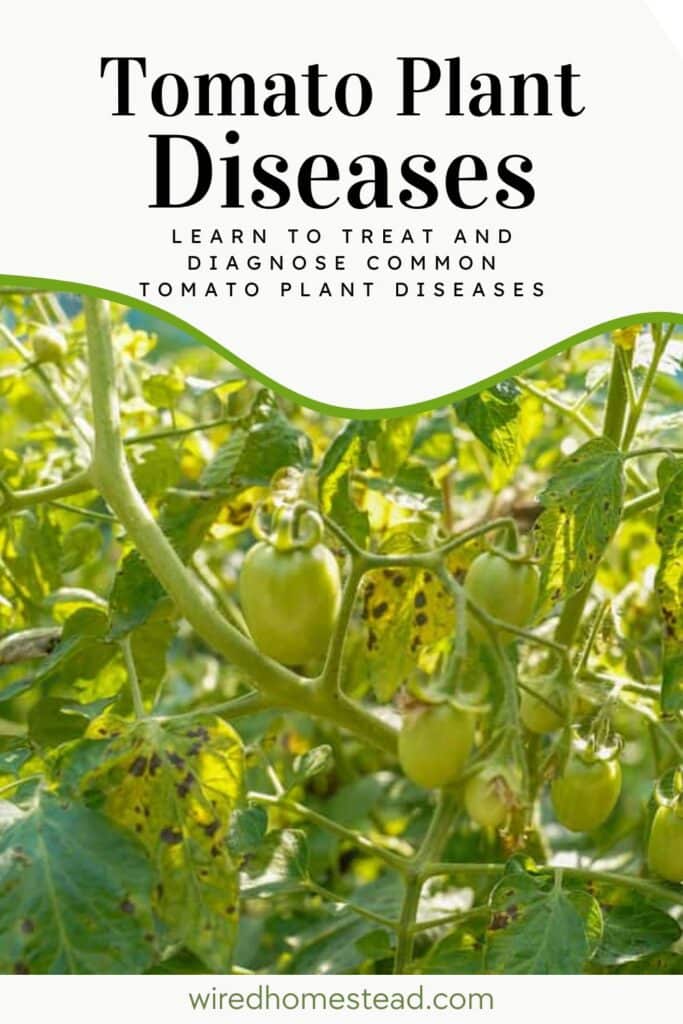
- Numerous small circular spots on leaves
- Gray or tan centers
- Distinct dark brown border
- Tiny black specks inside spots
- Heavy defoliation starting low
The plant can look lace-like if it gets heavily infected.
Favorable Conditions
- Early to mid-season
- After rainy stretches
- In crowded plantings
How to Tell It Apart
If the spots are smaller and far more numerous, and lack strong concentric rings, it is likely septoria. Early blight spots will be larger and look more like a target.
What To Do
- Remove lower leaves
- Improve airflow
- Apply copper fungicide early
- Rotate crops next year
3. Bacterial Spot
Unlike fungal diseases, bacterial spot thrives in hot, wet conditions and spreads quickly.

What It Looks Like
- Irregular dark brown or black spots
- Spots may appear greasy or water-soaked
- Yellowing around lesions
- Raised scabby spots on fruit
Fruit damage is often the giveaway for bacterial spot. If you’re not sure by looking at the leaves, look at the fruit.

Favorable Conditions
- Warm temperatures
- Frequent rain
- Overhead watering
How It Spreads
- Splashing water from soil to plant
- Contaminated tools
- Already infected transplants
What To Do
- Avoid handling plants when wet
- Remove affected leaves
- Use copper-based sprays preventatively (optional)
- Practice crop rotation
4. Powdery Mildew
Powdery mildew often shows up late in the season when days are warm and nights are cool.
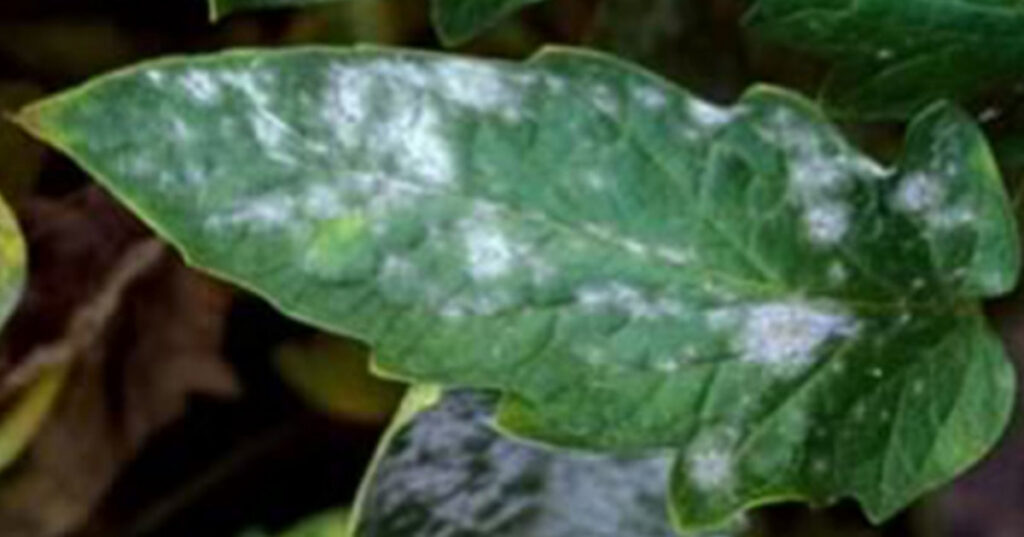
What It Looks Like
- White powder-like coating on leaves
- Begins on upper leaf surface
- Leaves may curl or distort
- Gradual yellowing
Unlike many fungal diseases, it does not require rain or direct watering to infect the plant. It’s also a very common disease for squash and cumber plants.
What To Do
- Increase airflow
- Mix ½ milk with ½ water and spray directly onto leaves in the sunlight
- Can also spray with potassium bicarbonate or neem oil
- Remove affected leaves as a last resort
5. Fusarium Wilt
Fusarium lives in the soil and enters the plant through its roots.

What It Looks Like
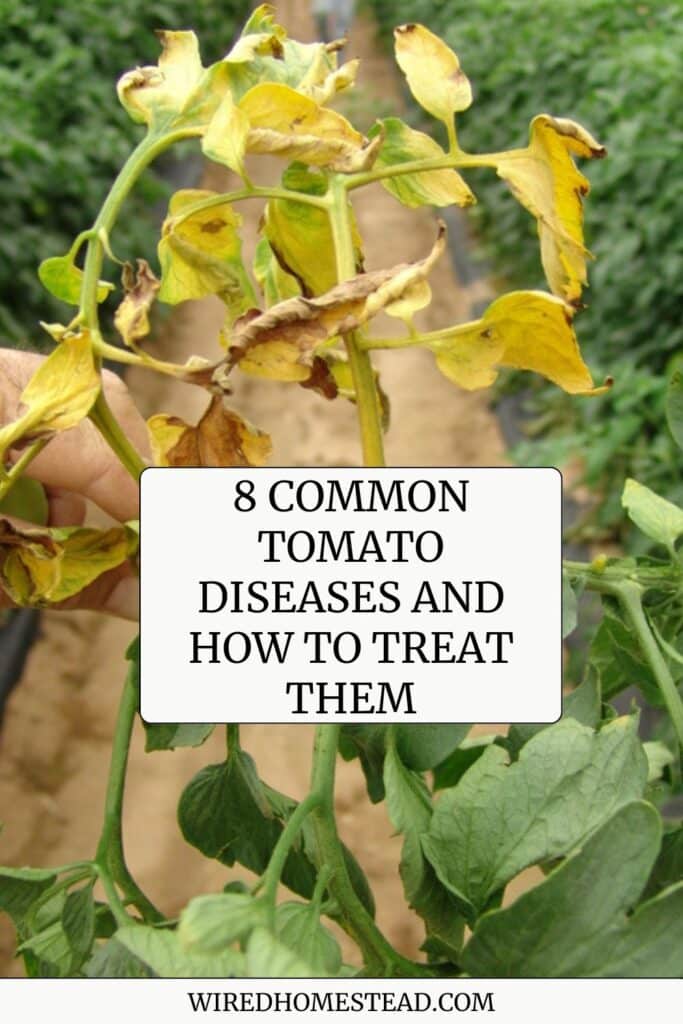
- Yellowing on one side of the plant
- Lower leaves wilt first
- Brown streaking inside stem when cut
- Wilting worsens in heat
The plant may partially recover at night when first infected. In later stages it will not.

What To Do
- Remove plant
- Do not compost
- Plant resistant varieties
- Solarize soil if possible (uses the sun to heat the soil and kill the disease)
Before diagnosing fusarium wilt, make sure your plant isn’t experiencing transplant stress. Wilting after planting can mimic disease symptoms, especially during warm afternoons. I explain the difference in my guide on Why Some Plants Transplant Easily and Others Struggle.
6. Verticillium Wilt
Verticillium is similar to fusarium but tends to move more slowly.

What It Looks Like
- Yellowing begins at lower leaves
- V-shaped yellow patches
- Mild wilting
- Brown vascular tissue inside stem
Key Difference from Fusarium
Verticillium progresses more gradually and may not cause rapid collapse.
What To Do
- Remove plant
- Rotate crops for several years
- Choose resistant varieties
7. Blossom End Rot
Blossom end rot is technically not a disease. However, it is one of the most searched tomato problems. Pretty much everyone deals with this as some point, so it’s worth mentioning here. Blossom end rot is a result of the plant not being able to take up the calcium it needs, but that does not mean the calcium is not in the soil. The plant just can’t access it. The most common reason is because of inconsistent or overwatering.

What It Looks Like
- Black, leathery sunken patch on fruit
- Appears on bottom of fruit
- Usually on first fruits
Cause
- Inconsistent watering or overwatering
- Calcium uptake disruption
- Rapid plant growth
What To Do
- Water consistently but avoid overwatering
- Mulch
- Avoid over-fertilizing with nitrogen
🍅 Tomato Disease Identification Chart
| Disease | First Signs | Spot Appearance | Where It Starts | Weather Conditions | Key Identifier |
|---|---|---|---|---|---|
| Early Blight | Yellowing lower leaves | Brown spots with concentric rings | Bottom leaves | Warm + humid | “Target” pattern |
| Late Blight | Sudden dark patches | Large gray-green water-soaked lesions | Anywhere on plant | Cool + wet | Rapid spread, stem lesions |
| Septoria Leaf Spot | Small yellowing spots | Tiny circular spots with dark borders and black centers | Lower leaves | Rainy, crowded plants | Pepper-like black dots |
| Bacterial Spot | Dark specks on leaves | Irregular, greasy-looking black spots | Leaves and fruit | Hot + rainy | Raised scabs on fruit |
| Powdery Mildew | White dusting | Powdery white coating | Upper leaves first | Warm days, cool nights | Flour-like surface |
| Fusarium Wilt | One-sided yellowing | No leaf spots | Lower leaves first | Warm soil | Brown streak inside stem |
| Verticillium Wilt | Gradual yellowing | V-shaped yellow patches | Lower leaves | Mild temps | Slow decline |
| Blossom End Rot | Dark fruit bottom | Black, sunken patch | Fruit only | Inconsistent watering | Only affects fruit end |
Visual Symptom Cheat Sheet (Ultra-Quick Scan)
If your tomato plant has…
- Bullseye rings on lower leaves → Early Blight
- Tiny spots with black centers → Septoria
- White powder coating → Powdery Mildew
- Plant wilting on one side → Fusarium Wilt
- Black bottom on fruit → Blossom End Rot
- Large water-soaked patches after cool rain → Late Blight
Don’t Be Scared of Growing Tomatoes
When diagnosing common tomato diseases and symptoms, remember:
- Lower leaves first usually means fungal leaf disease
- Rapid collapse suggests late blight
- One-sided yellowing suggests wilt
- White powder means powdery mildew
- Black fruit bottom means blossom end rot
Tomato diseases are common; everyone has dealt with at least one. The plants will give you clues, and now you know how to read them. You have now won half the battle, now go have your best tomato year ever!
Frequently Asked Questions About Tomato Diseases
Q: Why are my tomato leaves turning yellow?
A: Tomato leaves usually turn yellow for one of three reasons:
- Fungal disease such as early blight or septoria leaf spot
- Soil-borne wilt like fusarium or verticillium
- Nutrient imbalance or overwatering
Yellowing that begins on the lower leaves and includes brown spots usually points to a fungal disease.
Yellowing that starts on one side of the plant and moves upward often signals a wilt issue.
Pale leaves without visible spots typically indicate a nitrogen deficiency.
Q: How do I know if my tomato plant has blight?
A: Blight typically shows up as brown spots on tomato leaves.
- Early blight has concentric ring patterns that look like a target.
- Late blight causes large gray-green water-soaked patches and spreads rapidly.
If your plant declines quickly after cool, wet weather, late blight is more likely.
Q: What do septoria leaf spots look like on tomatoes?
A: Septoria leaf spot causes:
- Many small circular spots
- Light gray or tan centers
- Dark borders
- Tiny black dots in the center
It almost always starts on lower leaves and moves upward. Heavy infections can cause severe leaf drop.
Q: What causes black spots on tomato leaves?
A: Black spots are commonly caused by:
- Early blight
- Septoria leaf spot
- Bacterial spot
To identify the cause, look at the pattern:
- Concentric rings = early blight
- Tiny spots with black centers = septoria
- Irregular greasy-looking spots = bacterial spot
Q: Why are there brown spots on my tomato leaves?
A: Brown spots usually indicate a fungal disease. The most common causes are:
- Early blight
- Septoria leaf spot
Warm, humid conditions and soil splash from rain often trigger outbreaks.
Q: Can a tomato plant recover from disease?
A: It depends on the disease.
- Early blight and septoria can be managed if caught early.
- Late blight and wilt diseases usually require plant removal.
- Removing infected leaves and improving airflow can slow progression.
Prevention is always easier than cure. But in many cases you can save the plant and still get a good harvest of fruit.
Q: What is the white powder on my tomato leaves?
A: White powder on tomato leaves is typically powdery mildew.
It appears as a flour-like coating and thrives during warm days with cool nights.
Increase airflow and remove affected leaves to slow its spread.
Q: How do I treat tomato plant diseases naturally?
A: Natural management options include:
- Removing infected leaves
- Mulching to prevent soil splash
- Watering at soil level
- Applying copper fungicide or neem oil
- Using a ½ milk, ½ water mix to spray for powdery mildew
- Improving plant spacing
Crop rotation and disease-resistant varieties are the best long-term strategies if you keep struggling with disease.
Q: What is the most common tomato disease?
A: In home gardens, the most common tomato diseases are:
- Early blight
- Septoria leaf spot
- Powdery mildew
These fungal diseases thrive in humid summer conditions and typically start on lower leaves.
Q: How can I prevent tomato diseases next season?
A: To prevent common tomato diseases:
- Rotate crops yearly
- Mulch heavily
- Space plants for airflow
- Avoid overhead watering
- Remove plant debris at season’s end
- Choose varieties labeled resistant (F, V, or T)
Healthy soil and consistent watering dramatically reduce disease pressure.
Pin It For Later ⤵️