Why Cucumbers Aren’t Producing Fruit: 10 Game-Changing Fixes for Garden Success
If you’ve been staring at healthy cucumber vines covered in leaves and flowers but still wondering why cucumbers aren’t producing fruit, you’re not alone. This is one of the most common frustrations in the summer garden with these plants. Cucumber plants often look thriving on the outside while missing something important, whether it’s poor pollination, too much nitrogen, inconsistent watering, or weather stress. The good news is that when you understand what your plants are missing, the fix is usually simple. With a few practical adjustments, you can help your cucumbers move from all vine and no harvest to producing the crisp, steady crop you were hoping for.
*As an Amazon Associate I may earn from qualifying purchases at no cost to you.
Why Cucumbers Aren’t Producing Fruit: What’s Really Going On
A cucumber plant can look perfect above ground and still fail to set fruit. This usually comes down to one of five things that have broken down or been disrupted:
- Pollination is not happening
- Temperature is stressing the plant
- Nutrients are unbalanced
- Watering is inconsistent
- Flower biology is misunderstood
Most gardeners assume “something is wrong with the plant,” but cucumbers are picky about their environment. If one of their needs is off by too much, it simply chooses not to produce fruit.
1. Pollination Problems (The Most Common Issue)
If you see flowers but no cucumbers forming, this is the first place to check.
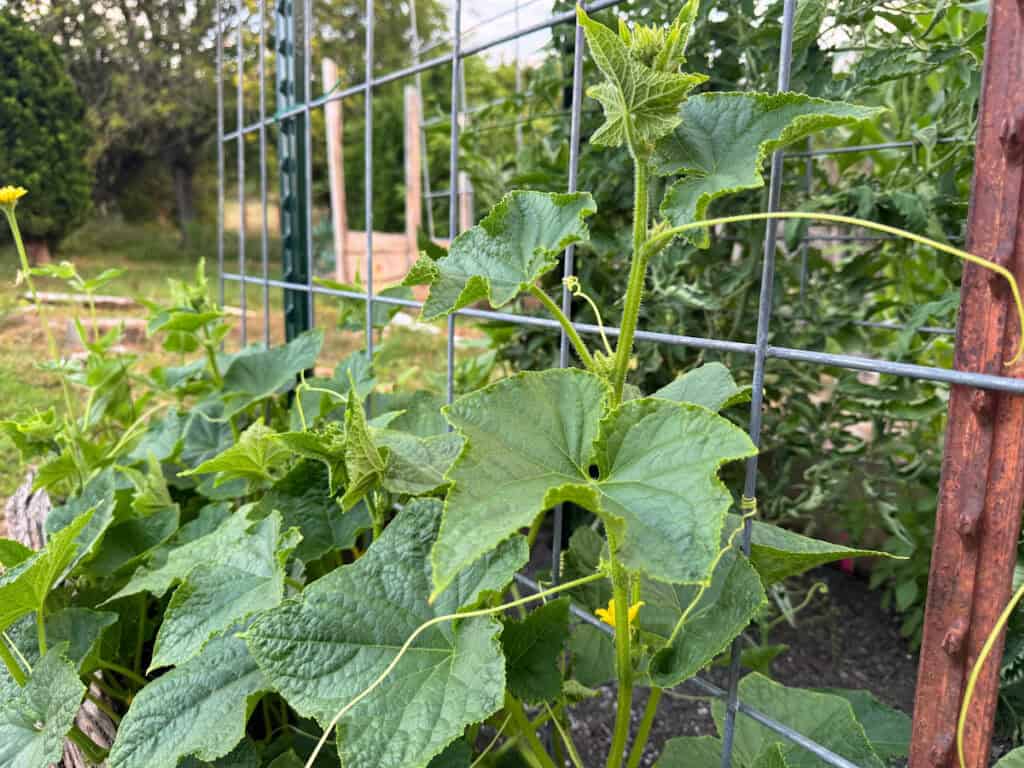
Cucumbers produce both male and female flowers. Only the female flowers can become fruit. If pollination doesn’t happen, the tiny cucumber behind the flower yellows, shrivels, and drops.
Signs of pollination failure:
- Flowers open and fall off within 1–2 days
- Small cucumber “baby fruits” turn yellow and drop
- Lots of flowers, zero swelling fruit
- A cucumber forming but half of it is shriveled and yellow (indicates some pollination happened, but it was it was incomplete)
Why it happens:
- Not enough pollinators (bees, hoverflies, etc.)
- Rainy or cold weather limiting insect activity
- Indoor or greenhouse growing without hand pollination
- Flowers not overlapping in timing
How to fix it:
- Plant pollinator-friendly flowers nearby (borage, calendula, dill)
- Avoid broad-spectrum pesticides
- Hand-pollinate using a small brush (transfer pollen from male to female flowers)
If you’re growing in containers or a small space, this becomes even more important. My guide on How to Grow Summer Squash in Small Spaces goes into more detail on how to hand pollinate. The process is the same with squash and cucumbers.
2. Too Much Heat or Cold Stress
Cucumbers are sensitive with the temperatures they prefer: they like warmth, but not extremes.
Ideal conditions:
- Day temps: 70–85°F
- Night temps: above 55°F
What goes wrong:
- Cold nights slow flower development
- Heat above 90°F causes flowers to drop before setting fruit
- Temperature swings confuse flowering cycles
How To Fix it:
- Use row covers early in the season
- Avoid planting too early outdoors
- Provide afternoon shade during heat waves
- Mulch heavily to stabilize soil temperature
3. Too Much Nitrogen
This creates a classic “beautiful plant, no it’s not producing food” situation.
High nitrogen fertilizers encourage the plant to grow leaves and vines instead fruit. The result is that you get huge vines, deep green leaves, and almost no cucumbers.
What it looks like:
- Massive vine growth
- Few female flowers
- Flowers dropping without fruit
How it happens:
- Lawn fertilizer runoff
- Overuse of composted manure
- High-nitrogen feedings early in growth
How to Fix it:
- Switch to a balanced fertilizer (look for one with higher phosphorus and potassium like this Happy Frog Fruit and Veg fertilizer)
- Stop nitrogen-heavy feeding once flowering starts
- Add composted wood ash or banana peel compost for potassium support
If your soil mix might be part of the issue, my post on Best Soil Mix for Raised Beds goes deeper into balancing nutrients without overfeeding nitrogen.
4. Inconsistent Watering
Cucumbers are about 95% water. If moisture fluctuates too much, the plant stops fruit development to protect itself.
Signs:
- Flowers drop during dry spells
- Fruit starts then stops growing
- Bitter or misshapen cucumbers
Common mistake:
Deep watering occasionally instead of steady moisture.
How To Fix it:
- Water deeply and consistently (not sporadically)
- Use mulch to lock in moisture
- Avoid letting soil dry completely between waterings
- In containers, check daily during warm weather
This becomes even more critical if you’re also managing seedlings or transplants—my guide on Watering Seedlings the Right Way explains how early watering habits affect later fruiting crops like cucumbers.
5. Poor Pollination Timing (Male vs Female Flower Mismatch)
Sometimes cucumbers fail simply because timing is off.
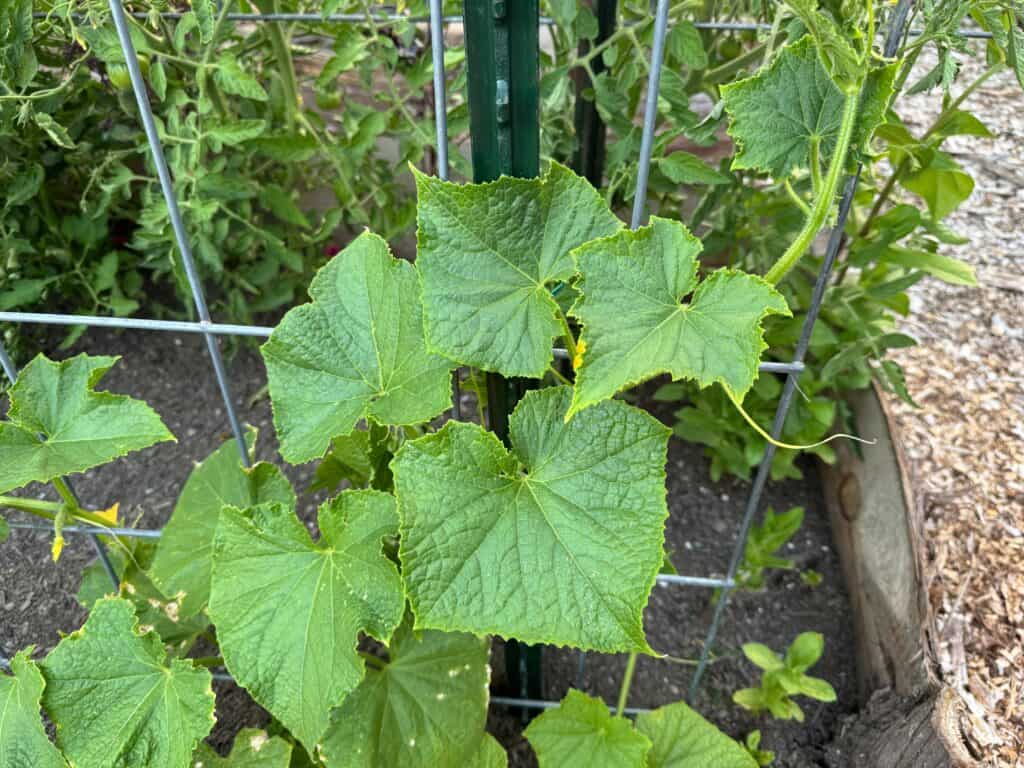
Male flowers usually appear first. Female flowers will come later. If weather or something else delays pollinators during that window, no fruit forms—even if everything else is healthy.
What to look for:
- Early flowers but no fruit
- Male flowers dominate early growth
- Female flowers appear later but fail to set
How to Fix it:
- Be patient during early flowering
- Encourage continuous flowering with steady watering and light feeding
- Hand-pollinate during early bloom windows if needed
6. Not Enough Sunlight
Cucumbers are sun-driven fruiters. Without enough light, they will prioritize survival over reproduction.
Minimum sun requirement:
- 6–8 hours of direct sunlight
What low light causes:
- Weak flowering
- Poor pollen production
- Small or absent fruit set
How to Fix it:
- Move containers to sunnier locations
- Prune nearby shading plants
- Use reflective surfaces in tight spaces
7. Overcrowding and Airflow Issues
Cucumber vines are vigorous, but overcrowding reduces fruit productivity.
Problems caused by crowding:
- Poor airflow reduces pollinator access
- Increased disease pressure
- Flowers hidden inside dense foliage
How to Fix it:
- Space plants 12–18 inches apart (or more for vining types)
- Train vertically on trellises
- Prune selectively to open airflow
Vertical growing often doubles fruit set simply by improving access for pollinators. If you’re growing in a tight space, How to Grow More Food in Less Space is a helpful guide to increasing your harvest.
How to Grow Cucumbers Vertically is an in depth guide on how to utilize vertical growing to maximize your space while increasing your harvest.
8. Variety Issues (Not All Cucumbers Behave the Same)
Some cucumber varieties are naturally different in how they produce fruit.
Types to know:
- Monoecious varieties: separate male and female flowers (most common)
- Gynoecious varieties: mostly female flowers, often has a higher yield but some may need another plant nearby with male flowers
- Parthenocarpic varieties: can set fruit without pollination.
Johnny’s Seeds has a handy pickling, slicing, & specially cucumber comparison chart that indicates whether a variety is gynoecious or parhtenocarpic. Ones that are not marked either way are monoecious.
If you’re growing in a greenhouse or low-pollinator environment, parthenocarpic types are often the most reliable.
9. Pests and Hidden Stress Factors
Even if you don’t see obvious damage, pests can disrupt fruiting.
Common culprits:
- Aphids (stress plant, distort growth)
- Cucumber beetles (damage flowers and spread disease)
- Spider mites (reduce plant vigor)
How to Fix it:
- Inspect leaf undersides regularly
- Use insecticidal soap early
- Encourage beneficial insects like ladybugs
10. Container-Grown Cucumbers Not Fruiting
Containers add another layer of complexity.
Common container issues are:
- Root-bound plants
- Nutrient depletion
- Soil drying rapidly
- Heat stress from pot walls
How to Fix it:
- Use at least a 5–10 gallon container per plant
- Water consistently (sometimes twice daily in heat)
- Feed lightly but regularly
- Ensure strong trellis support
How to Get Cucumbers to Set Fruit Again (Step-by-Step Reset)
If your cucumbers have stalled, here’s a practical reset plan:
- Check flowers for male/female balance
- Improve watering consistency immediately
- Switch away from high-nitrogen fertilizer
- Ensure the plant gets at least 6–8 hours of sun
- Hand-pollinate for 5–7 days if needed
- Thin overcrowded vines
- Monitor for pests weekly
Most plants rebound within 1–2 weeks once conditions stabilize.
Final Thoughts
When cucumbers don’t produce fruit, it rarely means failure. It usually means the plant is responding to the conditions of the environment it’s in.
Once you correct any imbalances—light, water, nutrients, and pollination—the plant tends to “snap back” quickly.
And if you’re troubleshooting garden-wide patterns, like uneven growth or yellowing leaves, those often connect back to the same underlying systems—soil balance, watering rhythm, and plant spacing.
Frequently Asked Questions: Why Cucumbers Aren’t Producing Fruit
Q: Why are my cucumber plants flowering but not producing fruit?
A: This usually comes down to pollination. Cucumbers make both male and female flowers, and only the female flowers turn into fruit after pollination. If bees aren’t active or conditions are off, flowers may open and drop without setting cucumbers.
Q: Why do cucumber flowers fall off without making cucumbers?
A: That’s often a sign the female flowers weren’t pollinated or the plant is stressed. Temperature swings, inconsistent watering, or too much nitrogen can all cause flowers to abort before fruit develops.
Q: How do I get cucumbers to produce more fruit?
A: Focus on steady watering, full sun, and balanced fertilizer. Make sure pollinators can reach the flowers, or hand-pollinate if needed. Also avoid overfeeding nitrogen, which encourages leaves instead of fruit.
Q: Do cucumbers need bees to produce fruit?
A: In most cases, yes. Bees and other pollinators are the main way cucumbers get pollinated outdoors. Without them, you’ll usually need to hand-pollinate female flowers to get reliable fruit set.
Q: Why are my cucumber vines growing big but no cucumbers?
A: That’s almost always excess nitrogen. The plant is putting energy into leaves and vines instead of flowers and fruit. Switching to a more balanced fertilizer usually helps correct it.
Q: Can cucumbers produce fruit without pollination?
A: Some varieties can. These are called parthenocarpic cucumbers, and they can set fruit without pollination. Most standard garden cucumbers still need pollination to produce.
Q: Why do cucumber plants drop small fruit?
A: Small fruit drop usually means the plant is stressed. The most common causes are uneven watering, heat stress, or poor pollination. The plant is essentially “resetting” because it can’t support fruit development under current conditions.
Q: How long after flowering do cucumbers appear?
A: If pollination happens, you’ll usually see small cucumbers start forming within a few days. From there, they grow quickly, often reaching harvest size in 7–14 days depending on variety and temperature.
Q: Why are my cucumber flowers not opening fully?
A: This can be a stress response. Too much heat, lack of water, or poor plant health can cause flowers to stay partially closed or drop early, which reduces pollination success.