How to Prune Tomato Plants (Simple, High-Yield Methods for Healthy Growth)
Tomato pruning is one of those garden skills that feels a little intimidating at first. The goal is not to “shape” the plant for appearance, like you would a bonsai. It is to guide energy into fruit production, increase airflow, and disease prevention. Done correctly, pruning can improve yield, reduce fungal pressure, and make harvesting easier. Done incorrectly, it can stress the plant or reduce your harvest. This guide breaks down exactly how to prune tomato plants for higher yield, when to do it, what to remove, and what to leave alone.
Why Pruning Tomatoes Matters
Tomatoes grow fast. If left unchecked, especially indeterminate varieties, they can turn into dense, tangled systems of stems and leaves. That density creates three common problems:
- Reduced airflow
- Higher disease risk (especially blight and mildew)
- Energy spread too thin across foliage instead of fruit
Pruning helps redirect the plant’s energy into fruit development instead of excessive vegetative growth.
It also helps improve airflow, which in turn makes your tomatoes healthier with less disease risk. Why Airflow Is Important for Healthy Plants goes into more detail.
Healthy pruning works best when nutrition and watering are balanced.
Determinate vs Indeterminate Tomatoes (This Changes Everything)
Before you prune anything, you need to know what type of tomato plant you have.
Determinate tomatoes
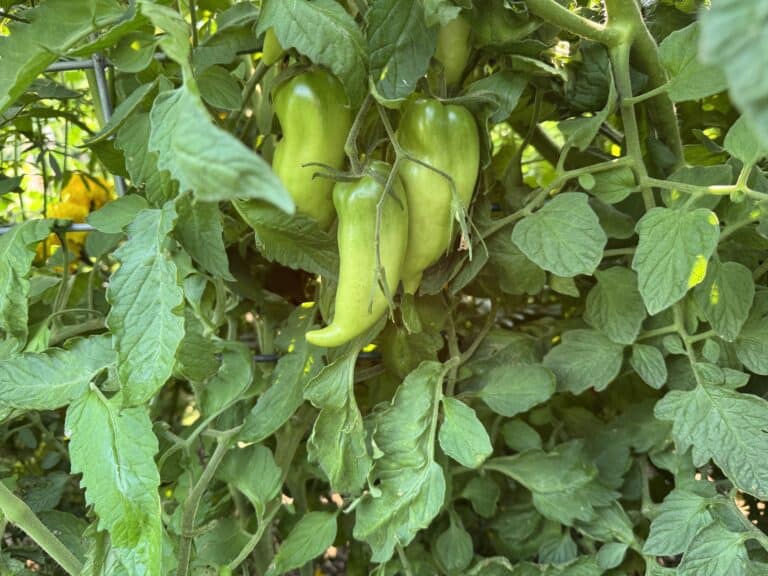
These are the tomato equivalent of a “bush” type. They grow to a fixed height and produce fruit during a defined window instead of steadily throughout the season.
- Prune lightly for maximum yield
- Removing too much reduces yield
- Focus mainly on damaged or diseased leaves
With all that being said, I do prune my determinate tomatoes to help keep airflow going. I’m not as aggressive about it as my indeterminate tomatoes, but I still do prune. I find that if you don’t, the plant lives up to it’s “bush” name and gets very crowded. Crowded tomatoes are more susceptible to pests and disease, so I like to prune enough to help airflow but no more.
Indeterminate tomatoes
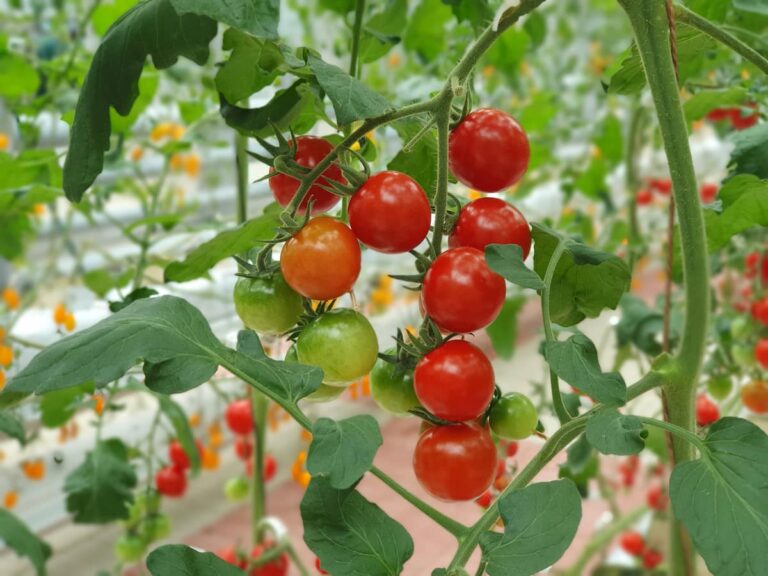
These are true vines that grow continuously and keep producing fruit throughout the season until frost.
- These benefit the most from pruning
- Require regular sucker removal
- Can be trained to one or two main stems
If you are unsure what you planted, seed packets or plant tags usually label it. Knowing the type you have is critical to successfully prune your plant.
If all else fails, if your plant just keeps growing and growing, you probably have an indeterminate tomato plant.
What to Prune on Tomato Plants
You should prune:
- Diseased foliage
- Suckers from indeterminate plants
- Naturally dead or dying foliage due to plant’s age
- Flower clusters if developing within the first 2-3 weeks after planting
- Top of indeterminate plants late in the season
When to Prune Tomato Plants
Timing matters more than most gardeners realize.
Best stage to start pruning
Begin when plants are about 12–18 inches tall and have developed several sets of true leaves.
Best time of day
The best time of day to prune tomato plants is:
- Morning, after dew has dried
- Or on a dry, mild day
Avoid pruning during wet weather or heat stress. Open wounds combined with moisture can increase disease entry points.
Pruning during stressful weather events, like heat or a storm, can also place unnecessary stress on your plant. How to Tell If Your Plants Are Stressed can help you determine if you plants are becoming stressed when you prune.
Useful Tools (keep it simple)
You don’t actually need anything to prune a tomato, but these tools can be helpful.
- Clean, sharp pruning shears
- Gloves (optional but helpful if you don’t want to smell like tomato plants for the rest of the day)
- Rubbing alcohol or diluted bleach solution for sanitizing tools
Always sanitize between plants if you are dealing with disease pressure. I like to just give a light spray of rubbing alcohol if I’m seeing signs of disease. If the plants are healthy I don’t bother.
You can refer to my guide on Common Tomato Diseases if you are seeing anything unusual on your plant to determine if you are dealing with disease or normal plant aging.
How to Identify Tomato Suckers on Stem
Suckers are the small shoots that grow in the “V” space between the main stem and a branch.
They:
- Look like small green shoots emerging at 45-degree angles
- Grow quickly if left unchecked
- Eventually turning into full secondary stems
If you are learning how to identify tomato suckers on stem, check daily during peak growth. They start small and are easiest to remove early. It’s less stressful on the plant if removed early, as well.
How to Prune Tomato Plants Step-By-Step
Step 1: Start from the bottom
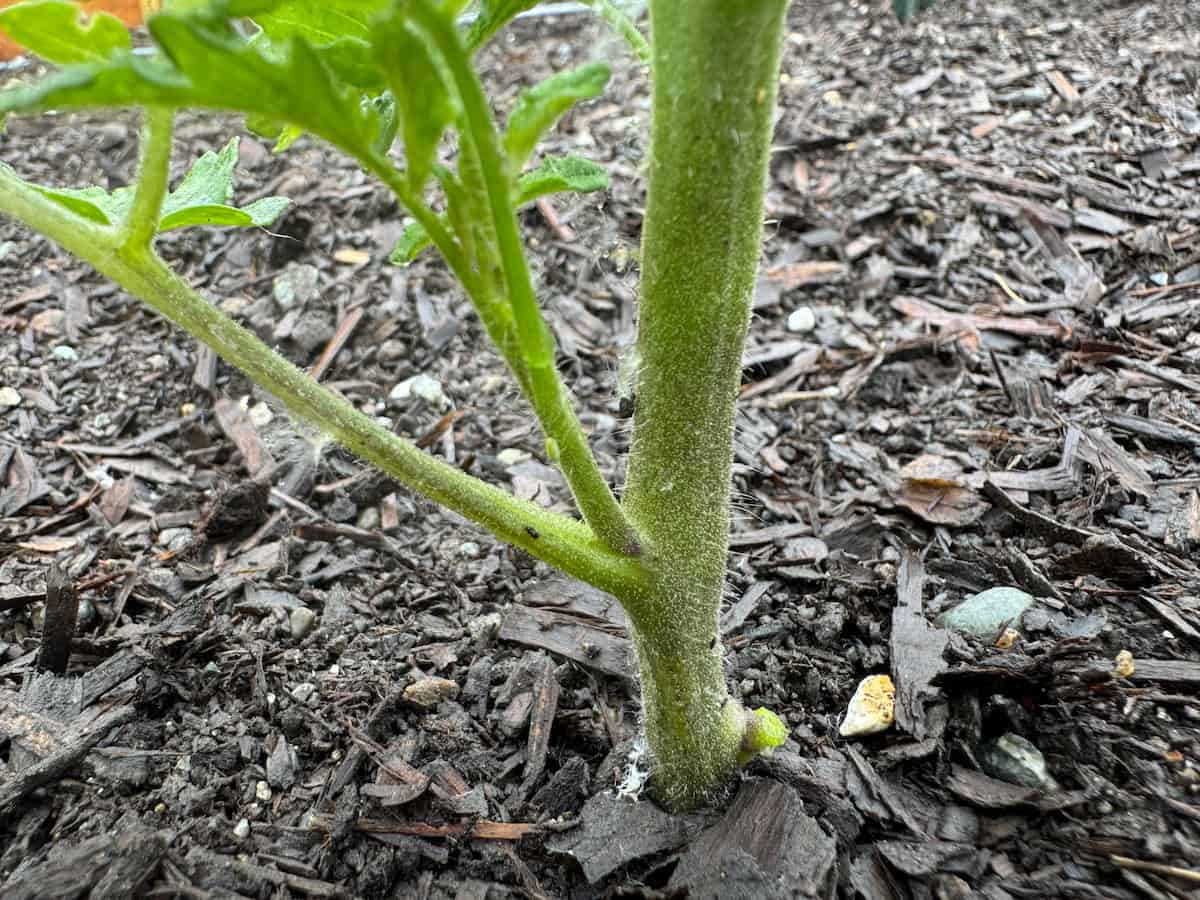
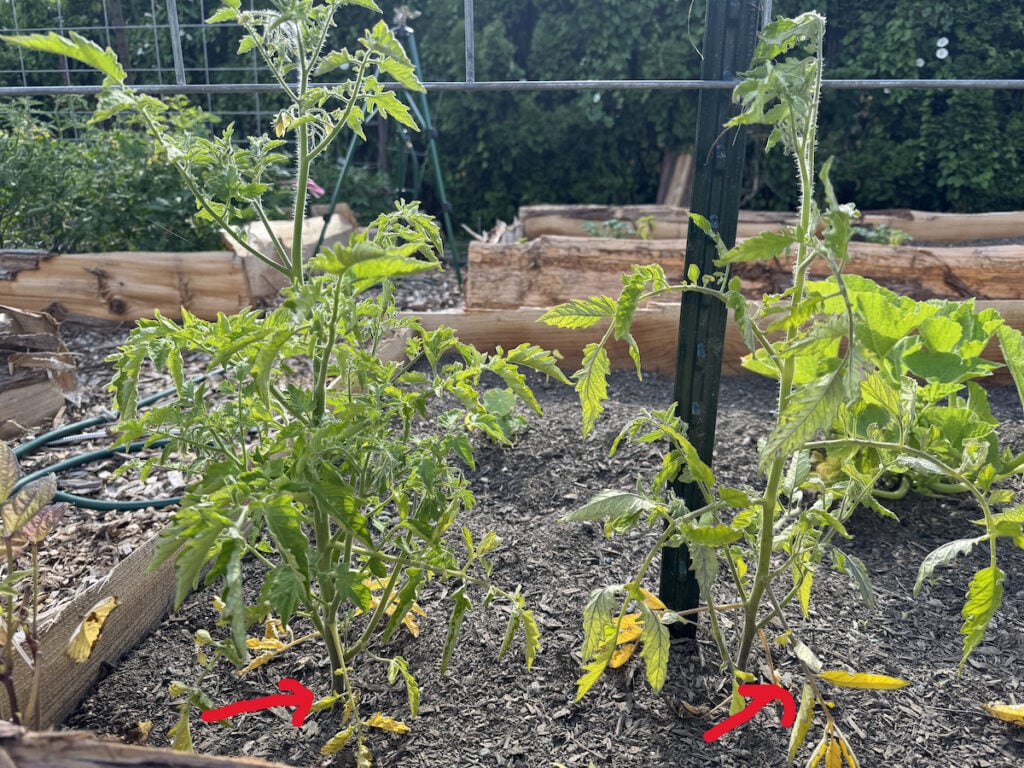
Remove any leaves that touch the soil.
This reduces:
- Soil-borne disease splash
- Pest access points
- Humidity buildup near the base
Keep the lower 6–12 inches of stem clear.
Step 2: Remove diseased or damaged leaves
Any yellowing, spotted, or curling leaves should come off immediately.
This is one of the simplest tomato pruning techniques for beginners and has a strong impact on plant health.
If you are noticing yellowing patterns, you may also find this helpful: Why Leaves Turn Yellow at the Bottom First.
Step 3: Remove suckers (for indeterminate varieties)
This is the core of pruning.
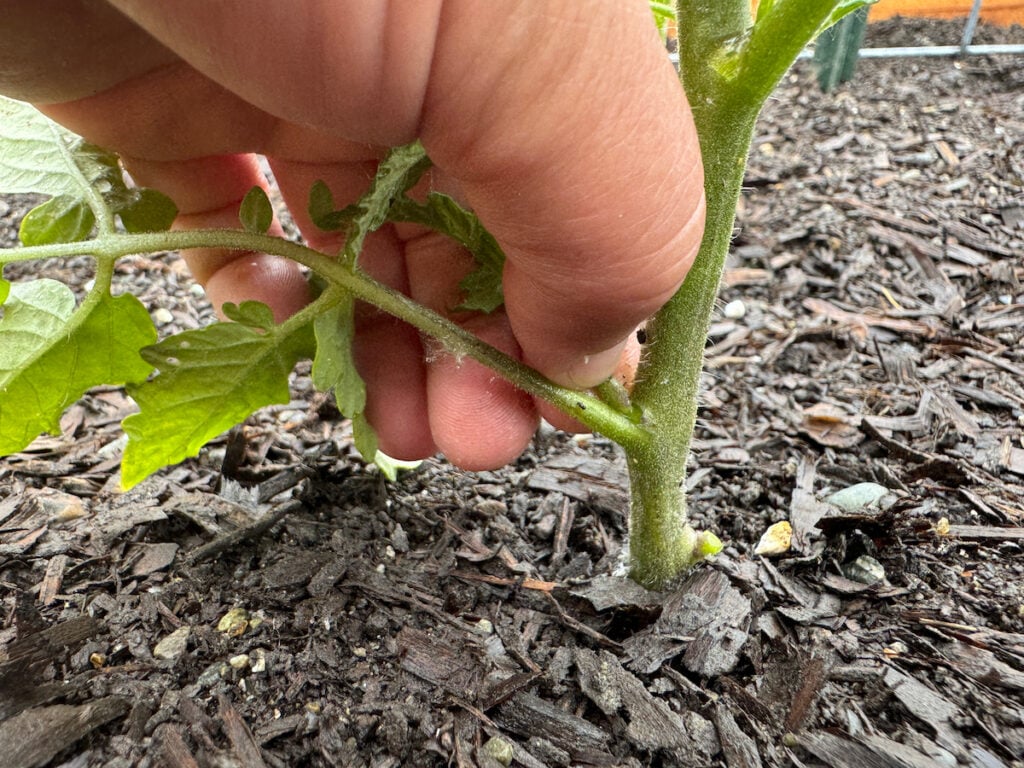
- Pinch small suckers with fingers when tiny
- Use shears if they get thicker
- Focus on keeping 1–2 main stems for structure and production
If you are learning how to remove tomato suckers without harming plant tissue, always remove them when they are small. Large suckers leave bigger wounds and take more energy to remove. They also cause the plant more stress than removing a smaller sucker.
Step 4: Thin for airflow, not density control
Do not strip the plant bare. Instead:
- Remove crowded inner leaves
- Keep leaf clusters spaced out
- Maintain shade coverage for fruit (prevents sunscald)
A common mistake is over-pruning and exposing fruit too aggressively. You want to leave enough leaves for the plant to continue collecting sunlight for energy and to shade the fruit from the sun.
Aggressive pruning will end up setting your plant back and could reduce your harvest.
Step 5: Top pruning (late season only)
Topping means cutting the growing tip of the plant.
Do this only when:
- The season is nearing its end
- Or fruit has set and you want ripening focus
- The plant has outgrown its space
This helps redirect energy into existing tomatoes instead of developing new growth.
If you are growing indeterminate varieties and the vine is outgrowing the trellis, or it’s starting to grow tall enough you can’t reach the top, you can go ahead and top the plant. I have done this and the plants have been fine.
Should I Prune Determinate Tomato Plants?
Short answer is very lightly.
If you are asking, should I prune determinate tomato plants, focus mostly on:
- Dead leaves
- Diseased foliage
- Leaves touching the soil
- Heavy foliage that reduces airflow
Avoid heavy sucker removal. These plants are already genetically programmed for a set production cycle. Over-pruning can end up reducing yield rather than improving it.
Tomato Pruning Mistakes to Avoid
These are the most common issues gardeners run into.
1. Removing too many leaves at once
Leaves are the plant’s energy source. Strip too many and fruit production slows.
2. Pruning in wet conditions
This increases fungal infection risk through open wounds.
3. Confusing fruit trusses with suckers
Fruit stems grow differently. Double-check before removing anything.
4. Letting suckers grow too large
Large suckers turn into full stems and steal energy from fruit clusters. They are also harder to remove and cause the plant more stress than removing them while small.
5. Ignoring plant variety
Determinate vs indeterminate pruning rules are not interchangeable.
How to Prune Tomatoes in Pots
Container-grown tomatoes behave slightly differently.
When learning how to prune tomato plants in pots:
- Be more aggressive with airflow pruning
- Keep growth compact to prevent tipping
- Remove suckers earlier since space is limited
- Rotate containers for even light exposure when possible
Potted plants benefit from structure control more than in-ground plants because root space is restricted.
Does Pruning Tomato Plants Increase Fruit Production?
Yes, but not directly.
Pruning does not create more fruit sites or flowers. Instead, it:
- Improves light penetration
- Reduces disease loss
- Directs energy into existing fruit clusters
- Encourages stronger, thicker stems
It indirectly supports the plant so that the plant can focus on developing and ripening fruit instead of just growing larger. It won’t stop the plant from growing; it just redirects energy into a healthier growth pattern.
Seasonal Pruning Rhythm (Simple Schedule)
A practical approach:
Early season
- Remove lower leaves
- Start sucker control
- Establish main stem structure
Mid-season
- Weekly sucker removal
- Light leaf thinning for airflow
- Monitor signs of disease or stress
Late season
- Stop new growth (topping)
- Focus on ripening fruit
- Remove excess foliage shading fruit clusters
Final Thoughts On How To Prune Tomato Plants
Pruning tomatoes is less about control of the plant and more about providing the right guidance as it grows. You are not forcing the plant into a particular shape, you are helping it allocate energy where it matters most.
Start simple:
- Clean the base
- Remove suckers early
- Maintain airflow
- Avoid over pruning
Once you get comfortable, pruning becomes a quick weekly task rather than an overwhelming chore that takes up a lot of time.
And once your plants start responding with stronger fruit clusters and cleaner structure, you really start to understand why this small habit makes such a large difference in harvest quality.
Frequently Asked Questions: How To Prune Tomato Plants for High Yields
Q: How often should I prune tomato plants?
A: Once or twice a week during active growth is usually enough. Fast-growing indeterminate types may need more frequent attention.
Q: Can I prune tomato plants too much?
A: Yes. Over-pruning reduces photosynthesis and can lower yields significantly.
Q: What happens if I don’t prune tomatoes at all?
A: Plants become dense, airflow decreases, and disease risk increases. Fruit may still grow but is often smaller or less accessible.
Q: Do pruning cuts need sealing?
A: No. Tomato plants naturally heal small cuts quickly in proper conditions.
Q: Is it better to pinch or cut suckers?
A: Pinching is best when small. Cutting is fine when they are larger, but small removal is always easier on the plant.
Q: When should I start pruning tomato plants?
A: Start pruning when the plant is about 12–18 inches tall and has a few strong sets of leaves. This is usually when the first suckers appear and you can clearly see the main stem structure forming.
Q: Do tomato plants really need to be pruned?
A: Not all of them. Indeterminate tomatoes benefit from regular pruning to manage growth and improve airflow. Determinate types need very light pruning only, mainly to remove damaged or soil-touching leaves.
Q: What happens if I don’t remove tomato suckers?
A: The plant will grow denser and more tangled. That can lead to less airflow, higher disease risk, and energy being split across too many stems instead of focused fruit production.
Q: How do I know which suckers to remove?
A: Look at the “V” between the main stem and a branch. Any small shoot growing there is a sucker. Remove them early when they are small and easy to pinch off cleanly.
Q: Can I prune tomato plants too much?
A: Yes. Over-pruning reduces the plant’s ability to photosynthesize and can stress it. A good rule is never remove more than about one-third of the foliage at a time.
Q: Should I remove flowers from tomato plants early on?
A: In most cases, yes. Early flowers can slow root and leaf development. Removing them in the first few weeks helps the plant build a stronger structure before focusing on fruit production.
Q: How many leaves should I leave on a tomato plant?
A: There is no exact number, but the plant should always have enough healthy leaves to support growth and shade developing fruit. Avoid stripping lower leaves all at once unless they are damaged or diseased.
Q: What is the best tool for pruning tomatoes?
A: Sharp, clean pruning shears work best for thicker growth. For small suckers, your fingers are often enough. Always sanitize tools between plants if you notice disease.
Q: Should I prune tomato plants in hot weather?
A: It’s better to avoid heavy pruning during heat waves. Pruning stresses the plant slightly, and extreme heat can slow recovery. Early morning on a mild, dry day is ideal.
Q: What is the biggest mistake people make when pruning tomatoes?
A: Over-pruning or removing the wrong growth. Many gardeners cut too many leaves or confuse fruit stems with suckers. The safest approach is gradual, consistent pruning rather than major cuts all at once.