Soil Block Benefits: The Best Way to Seed Start
I’ve been starting my own seeds for many years now. During that time I’ve experimented with different ways of starting seeds. A couple of years ago I decided to try a soil blocker and it was a game changer for me! Let’s learn about the soil block benefits that can help you grow healthy seedlings that are easy to transplant.
*As an Amazon Associate I may earn from qualifying purchases at no cost to you.
What is a Soil Blocker?
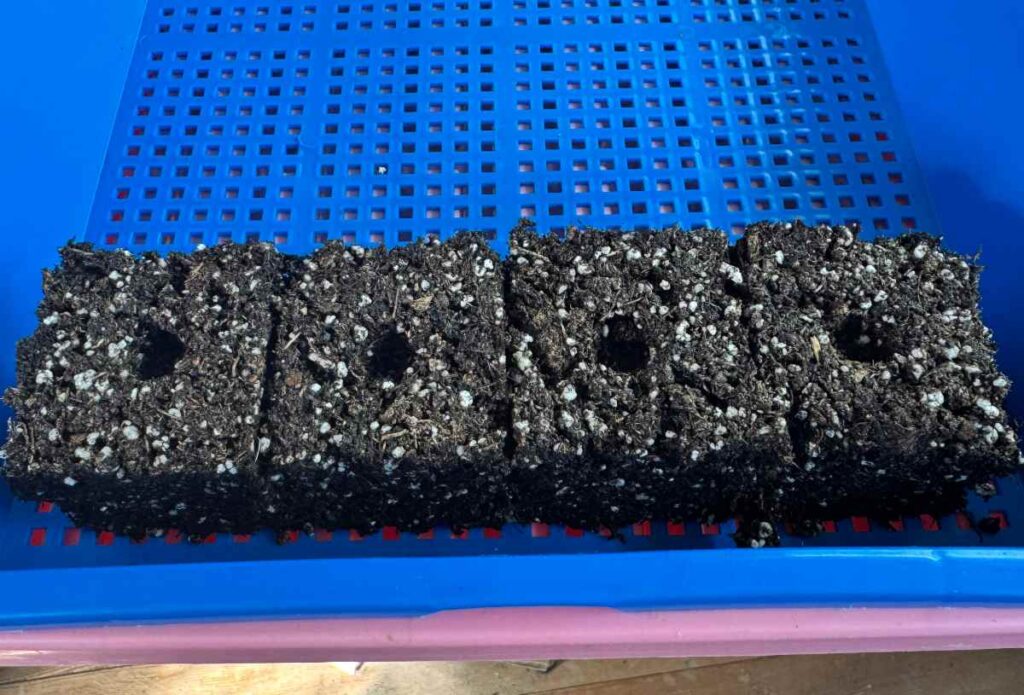
A soil blocker is a tool that makes perfectly square blocks of soil with an indent in the middle to plant seeds in. You pack soil into the squares of the soil blocker, then push down on the handle to make perfect blocks of soil to plant your seed in.
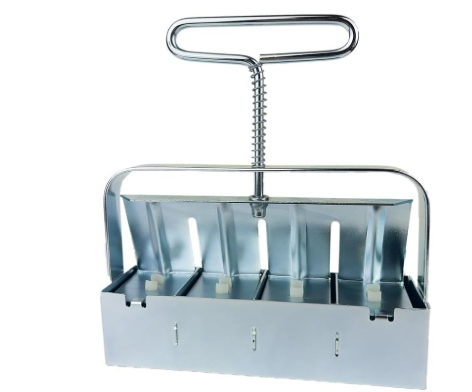
Soil blockers come in a ¾” size, a 2” size, and a 4” size. One of the things I think is neat about these is that each size up is built with a hole that you can fit the smaller size into. The 2” soil blocker has a ¾” in hole that you can fit the smallest blocks in. The 4” soil blocker has a 2” square in the middle that you can slip the 2” size blocks straight into. This makes “potting up” super easy.
I have a Ladbrooke 2” soil blocker that is, by far, my favorite. I don’t use the ¾” and I haven’t used the 4” yet just due to the cost of getting one. There are other soil blocker options available that are cheaper, but the Ladbrooke has been very durable for me and I believe you get what you pay for. I’ve used it for over 3 years and it works just as good now as it did when it was brand new. This upcoming garden season will be year 4 with the Ladbrooke soil blocker.
Why Would You Want To Use One?
Using pots to start seeds has been the standard for as long as I can remember. We didn’t start our own seeds inside when I was little. But when I grew up and had my first real garden I wanted to give it a try. I didn’t know it then, but that was the start of my passion for seed starting.
Buying starts is expensive, and the price of them go up every year. I understand that not everyone has space or the means to start their own seeds. If you are able to and have never given a soil blocker a try, maybe you will after reading this post.
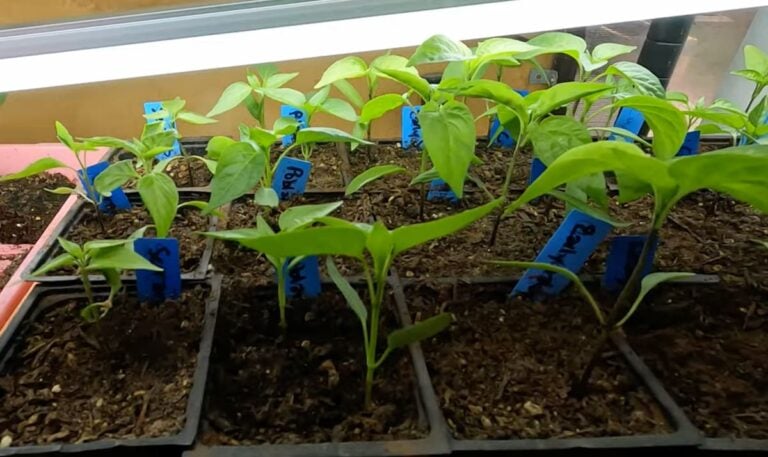
I switched to a soil blocker about 3 years ago now and can’t imagine ever going back to pots. For transparency, I do up-pot my tomato and pepper starts to pots because I have to start them quite early. They outgrow my 2” soil blocks before my weather is warm enough to transplant them outside. But these are the only plants I use pots for, and I do not start my seeds in them.
5 Soil Block Benefits that Improved My Plant Starts
#1. Use Less Space for Seed Starting
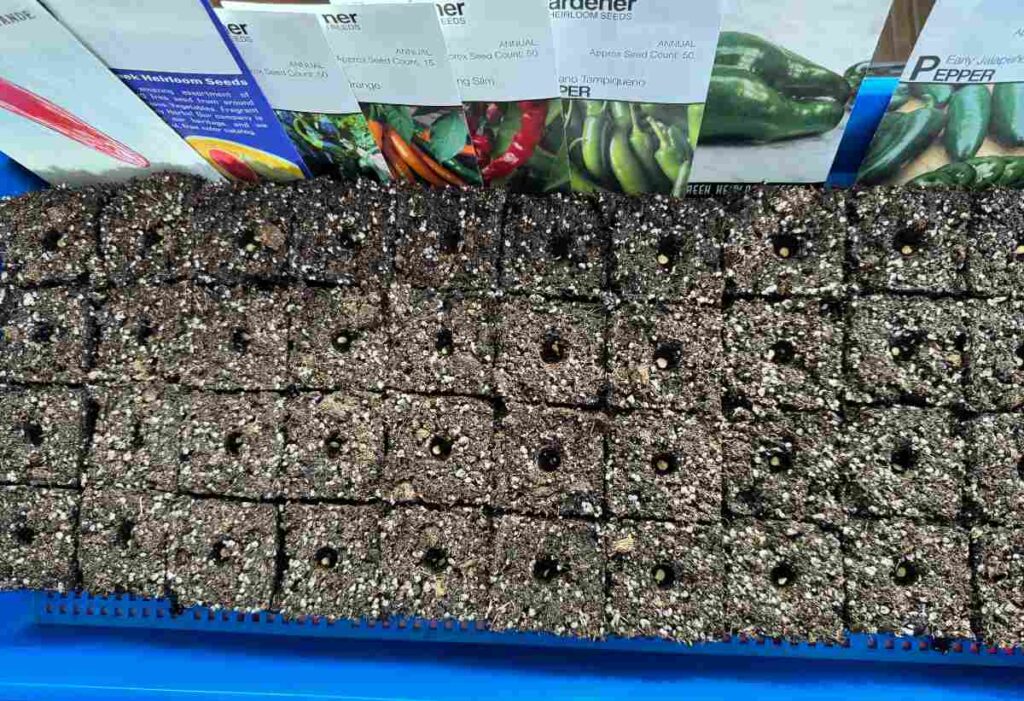
Using soil blocks lets me start a lot more plants with a lot less space. Pots are bulky and take up more space than a 2” square block of soil. In a standard 20”x10” seed starting tray I can fit 50 soil blocks vs about 32 small pots. That means one tray of soil blocks can grow about 1.25 times the amount of plants as the same tray with pots. If you’re growing a larger garden like I am, this can be a huge space saver. It definitely was for me! Even if you have only a small shelf to start seeds or a smaller garden, soil blocks may be helpful for you to use that space more efficiently.
#2. Prevent Root Bound Issues
Using pots to start and grow seedlings can create problems with roots. In pots roots can have problems becoming root bound. This means the roots run out of space and begin circling the pot. This creates problems for many different reasons. Because the roots have run out of space to grow, they’ve generally started to exhaust the nutrients available in the soil as well. The roots also will grow very densely with nowhere to go and that can affect the drainage of water. It could prevent water from soaking all the way through the soil. It could also prevent an over abundance of water from draining out of the soil. This can end up drowning the plant.
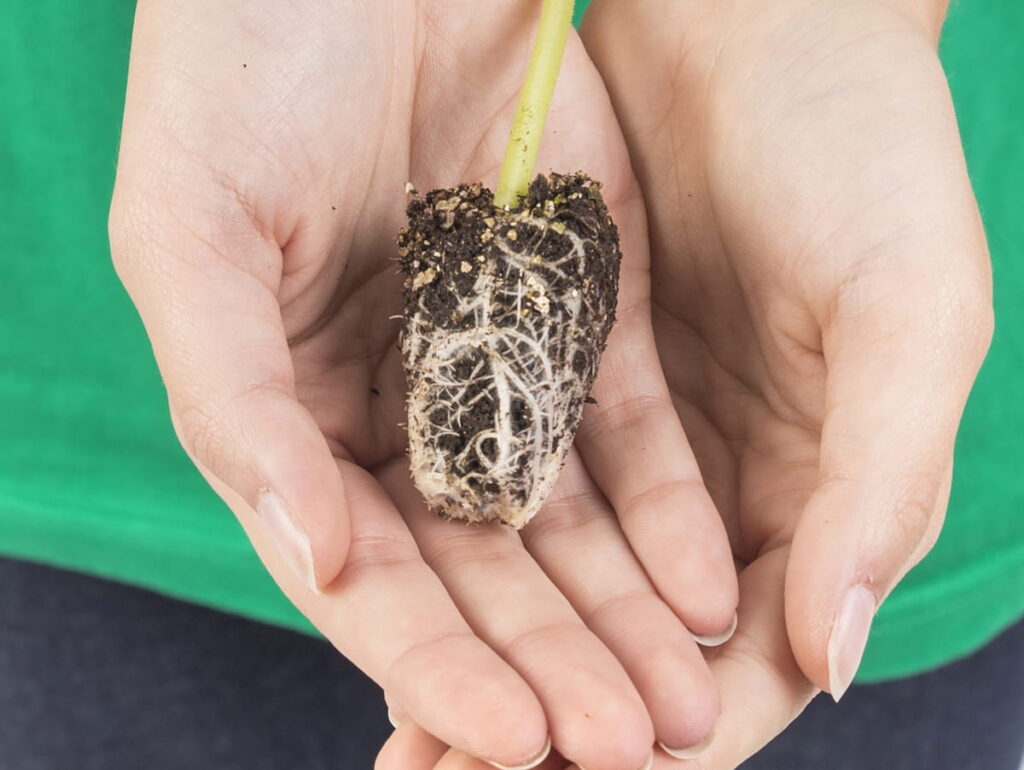
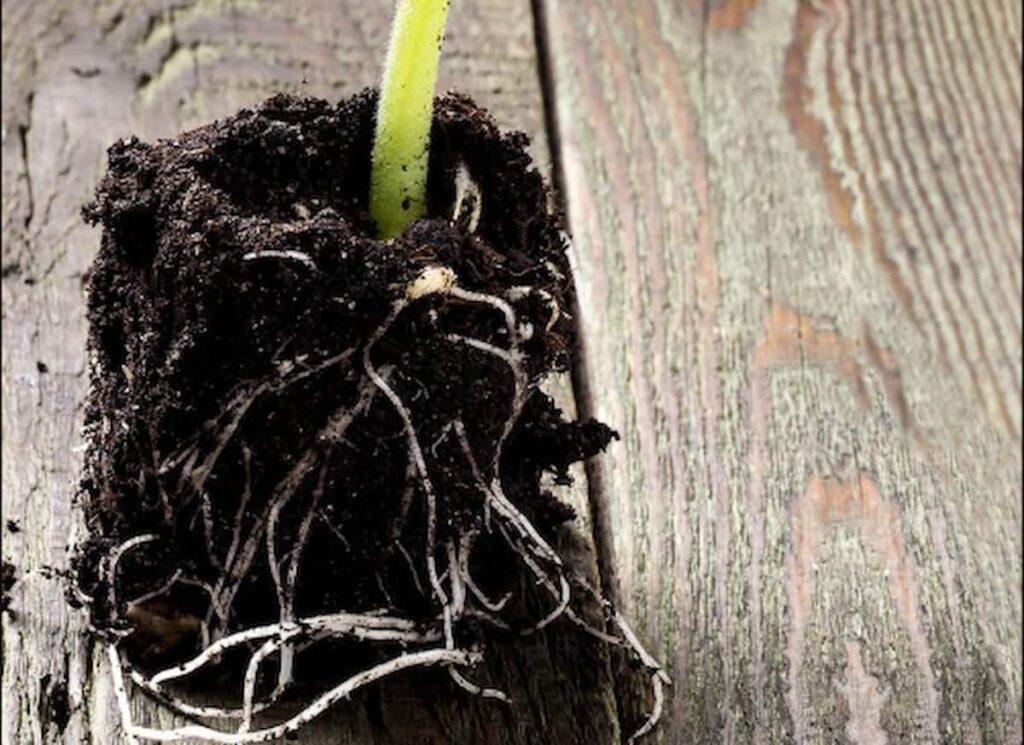
A benefit of soil blocks is that they do not have this issue. There is no pot that restricts the root growth and forces it to start circling. The roots stop when they hit the air, so they do not grow around and around like they do in a pot.
#3. Healthy Roots
Plant roots need air to grow and create a healthy plant. That may surprise some people since the roots are underground, but they create little pathways for air to penetrate through the soil. When a plant becomes root bound in a pot, the densely packed roots prevent air from getting down into the root system and that can kill the plant. With soil blocks, there are no sides impacting root growth. Roots do not hit a barrier that forces them to grow in circles or become a dense mat. When the roots hit the end of the soil block and reach the air, they tend to stop there instead of continuing to grow looking for air, water, and nutrients.
In my experience, the roots continue to grow through the bottom of the soil blocks. But I never have an issue with them becoming root bound because they are allowed to grow freely instead of being restricted by a container. As a result, my seedlings tend to look very healthy and I do not generally have issues with the roots.
#4. Reduce Transplant shock
Transplant shock is something most gardeners have dealt with at some point. This is where you have taken your plant from one environment and placed it in another. For example, taking a plant out of the pot and planting it into the ground. This disturbs the roots and it takes time for the plant to recover from that and get used to its new environment. This can delay the time the plant takes to grow to its full size and start fruiting. It can also completely stunt the growth of the plant.
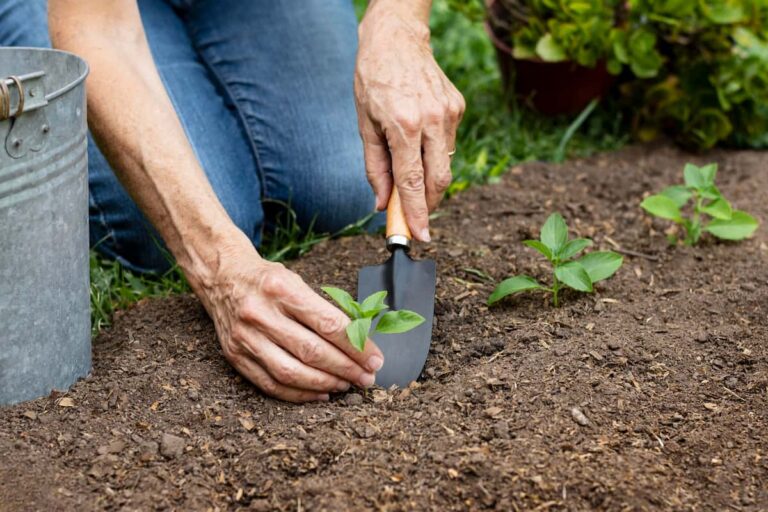
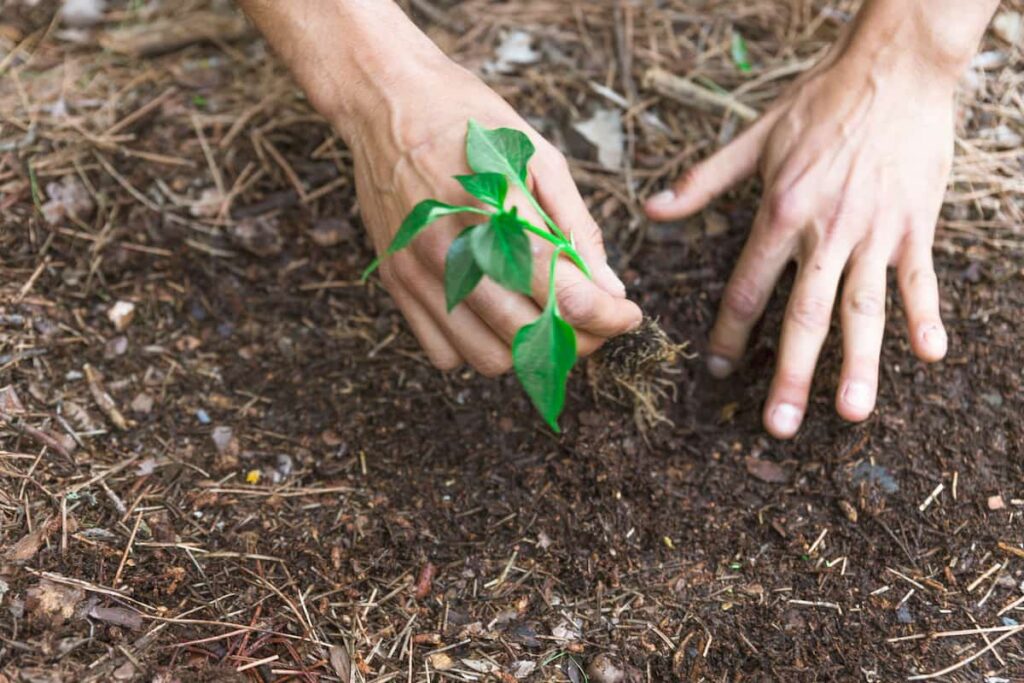
Soil blocks encourage plant roots to grow more naturally. And because they are composed completely of soil, when you transplant a seedling that is grown in a soil block you take the whole block and place it in the soil. This leads to less disturbance of the roots and a healthier transition to the garden or pot the plant will be grown in.
#5. Easy Bottom watering
You may have come across people talking about the benefits of bottom watering plants. I won’t get into all of those in this post, but I do agree that there are lots of benefits to watering seedlings with this method. When I was using pots to start seeds, bottom watering was a bit of a challenge. I never felt the water was getting all the way up to the seeds and the delicate first roots of the seedlings. I was using a lot of water to make sure all the soil in the pot was continuously moist. In some cases, it was deceiving because the top portion would feel dry so I’d give the plant more water. I didn’t realizing that the soil toward the bottom of the pot was still quite wet. I’d end up drowning the roots of the delicate seedling.
With soil blocks, I’ve never had that issue. It’s easy to see and feel when a soil block is dry and in need of watering. It’s also incredibly easy to bottom water them, as long as you have the blocks in the right tray. I also find it takes a lot less water to get the whole block moist (not soaked).
Conclusion
I hope this gives you a more in depth perspective of the soil blocker benefits and how it may help you in your seed starting adventures. Switching to starting seeds in soil blocks really improved the health of my seedlings. They also allowed me to transplant seedlings into the garden without as much transplant shock. With soil blocks, I start squash, cucumbers, and other plants inside that typically get a bit cranky when their roots are disturbed. The soil blocks can be placed directly into the ground, minimizing any disturbance. I’ve found they tend to be much happier that way.
If you use a soil blocker and want to share your experience (good or bad) leave a comment below. Everyone can benefit from other people’s experiences.
Happy gardening!!