St. John’s Wort Benefits: A Practical Medicinal Guide
St. John’s wort is a plant that most of us have heard of and many of us have used. Many people have probably bought the capsules; they seem to be offered wherever you go these days. The most popular use of this herb is for mild depression. But did you know there are so many other St. John’s wort benefits that go beyond that? Let’s look at what all this amazing herb can do for you.
*As an Amazon associate I may earn from qualifying purchases at no cost to you.
Pin It For Later ⤵️
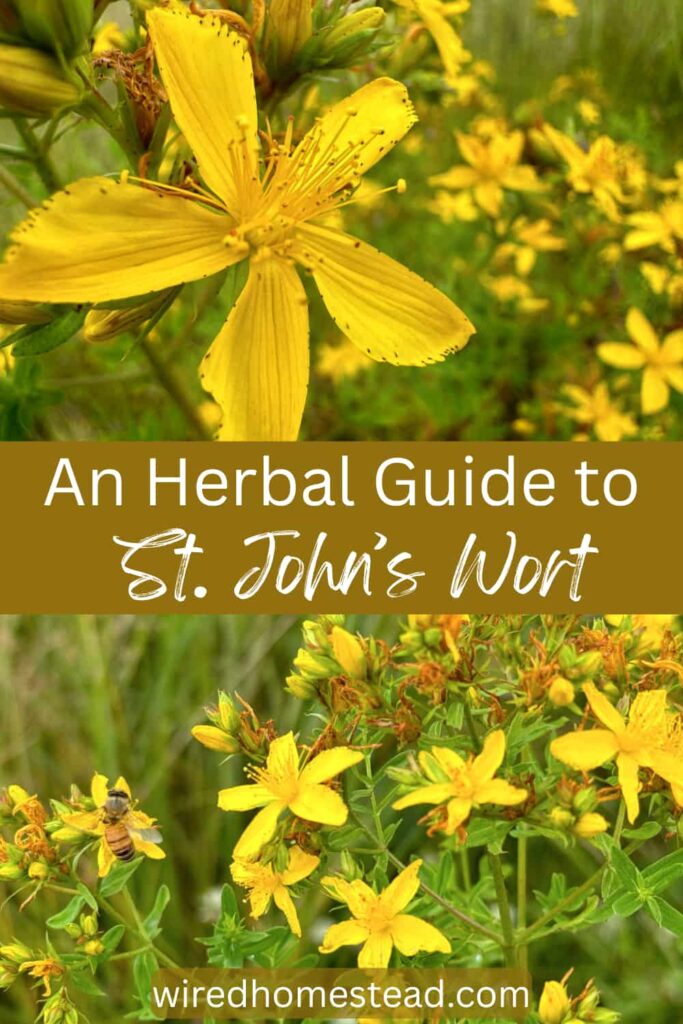
Identifying St. John’s Wort
St. John’s wort, Hypericum perforatum, is a perennial plant that’s native to Europe and Asia. It has become naturalized on most continents worldwide, often so well that it’s considered a noxious weed. Here in Washington it’s considered one of the top noxious weeds in the state.
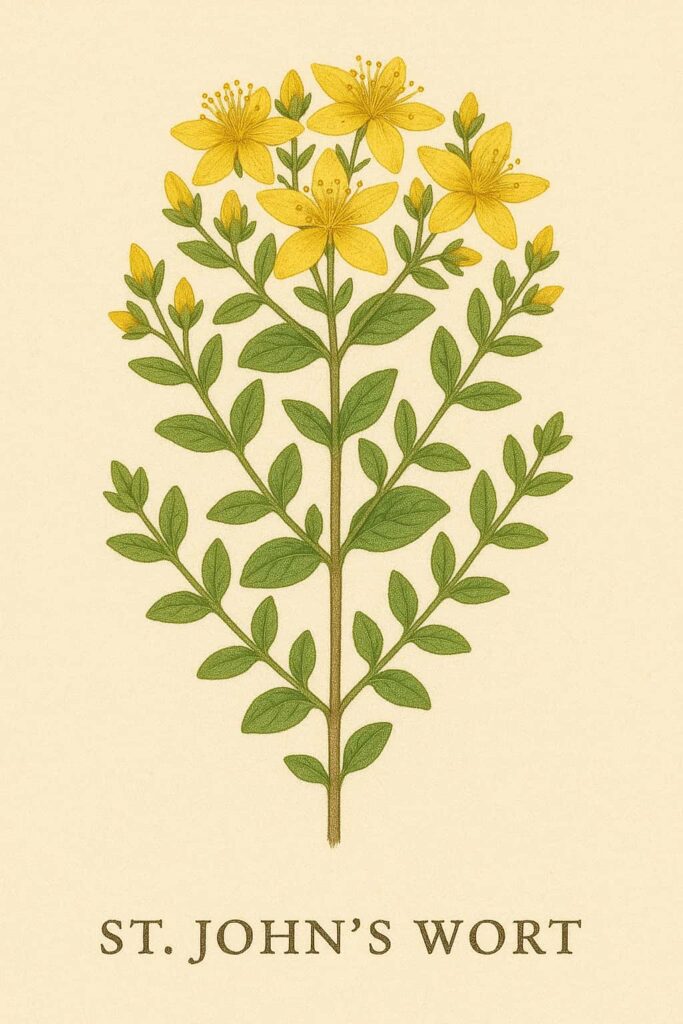
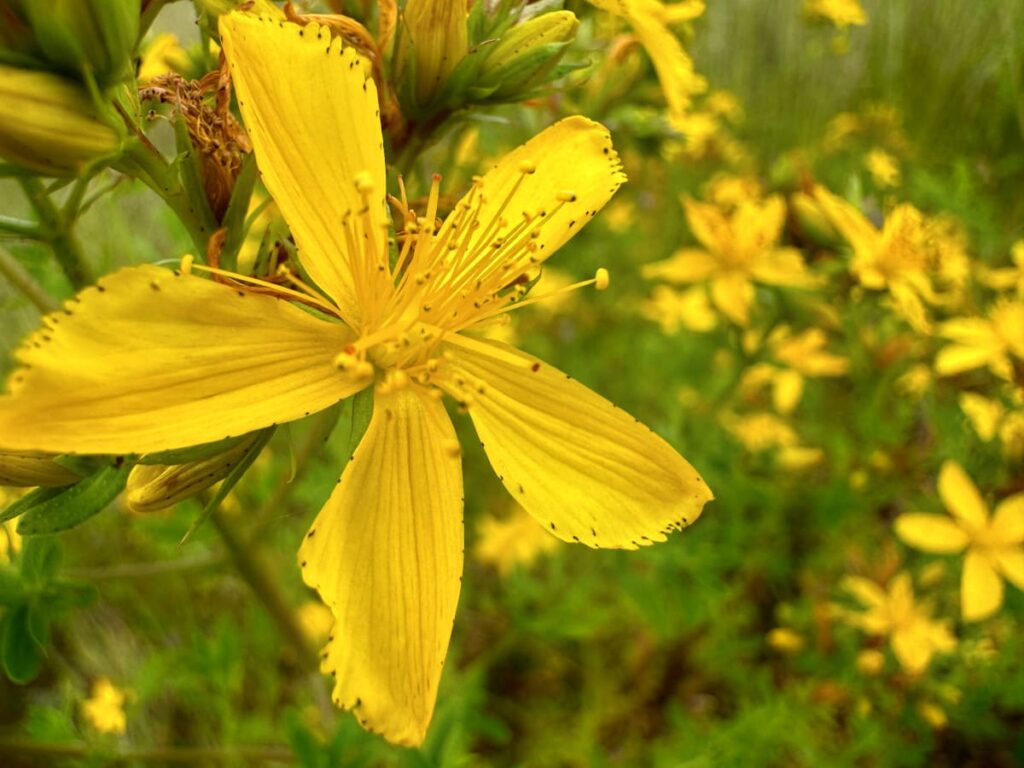
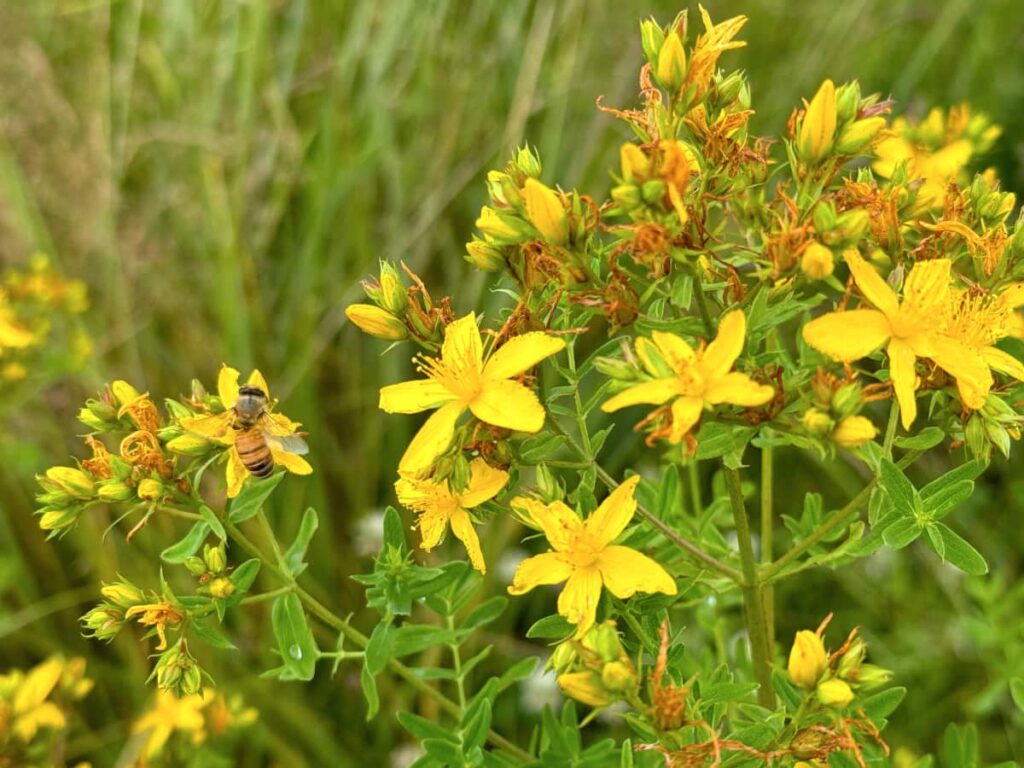
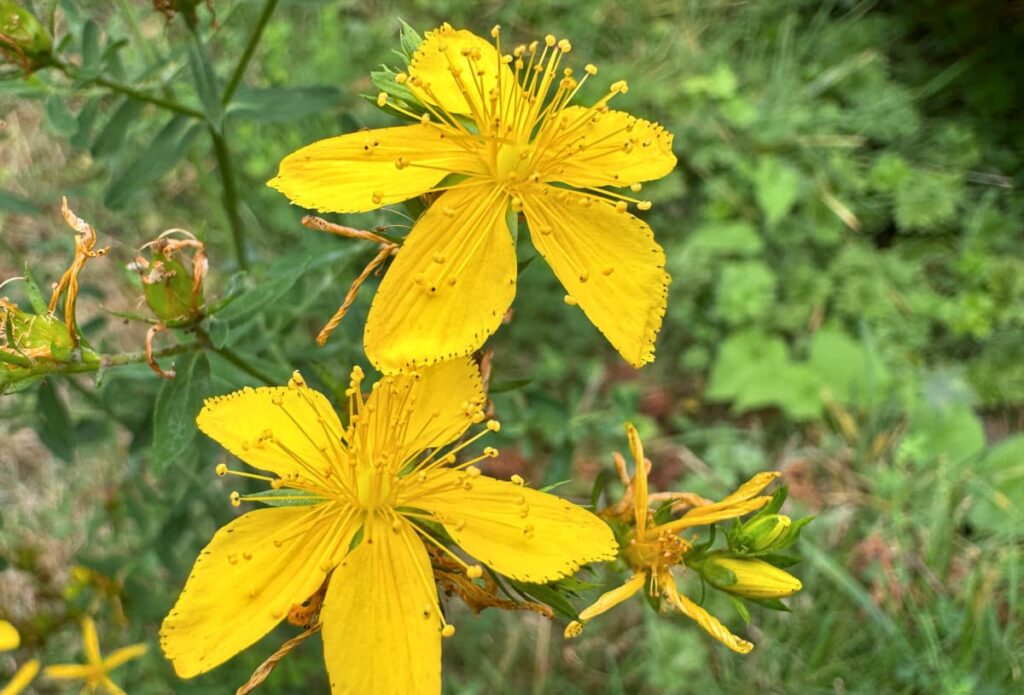
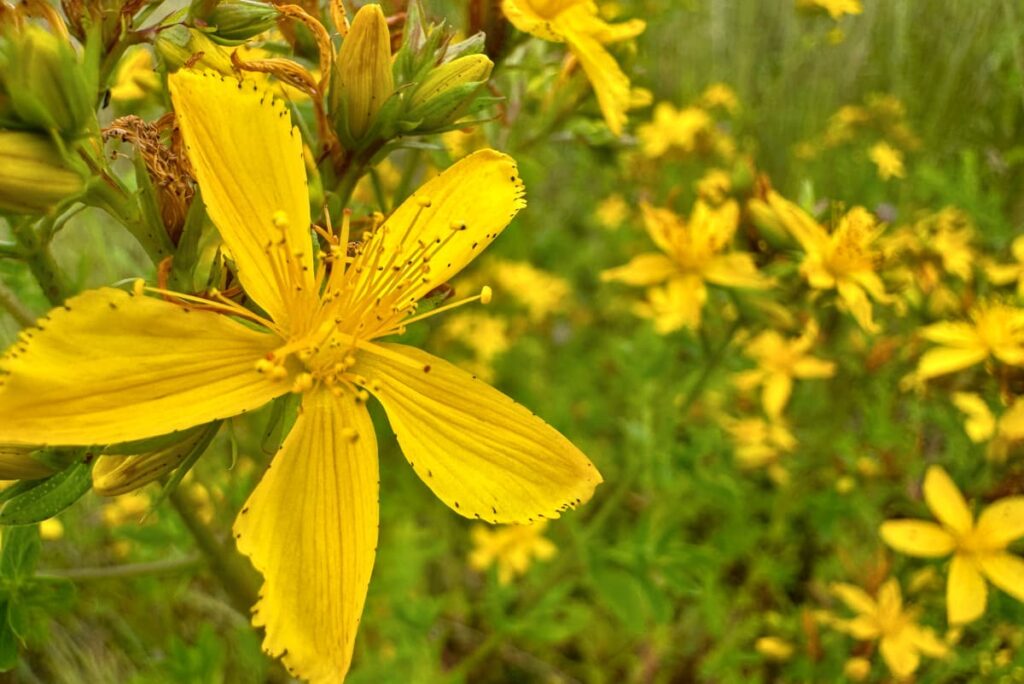
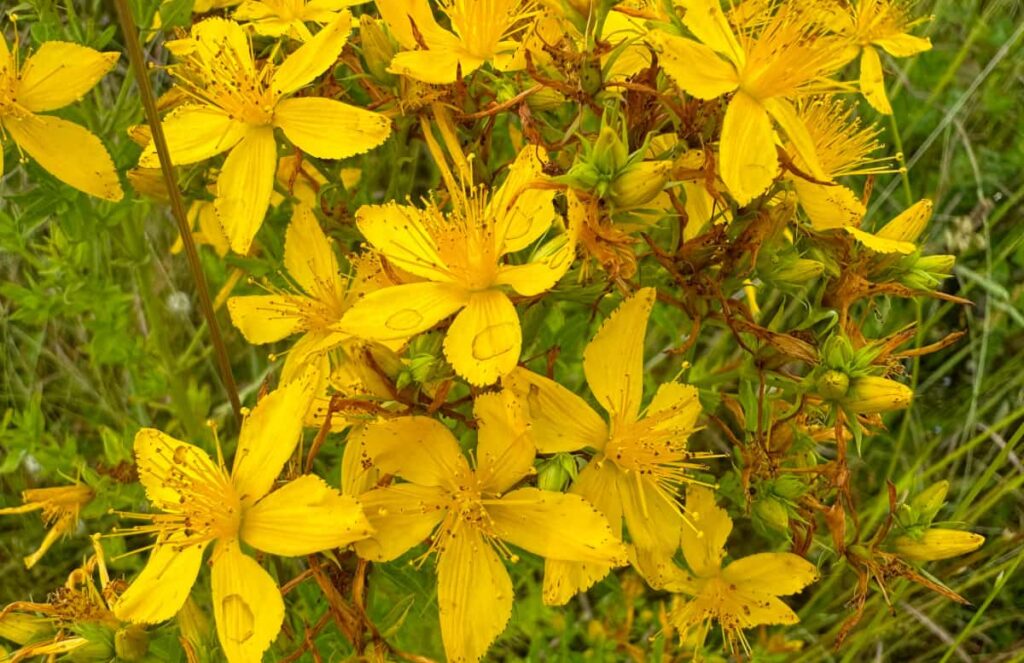
The plant stands about 18 inches to 2 feet tall. It has small, delicate leaves that grow opposite each other up the woody stem of the plant in pairs of 2. The flowers are yellow and have 5 petals arranged like a star. In the center of the flower it looks kinda fuzzy because the plant has a lot of stamins on each flower. The petals should have black dots around the edges.
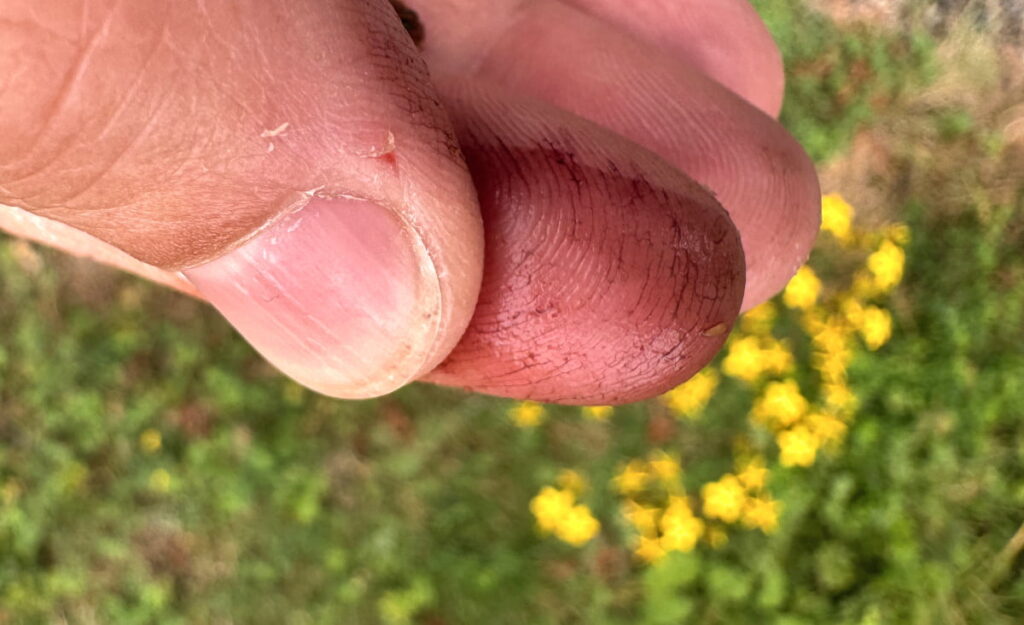
One of the most important ways to tell if you have the medicinal St. John’s wort is by picking a flower and rubbing it between your fingers. If it releases a dye that stains your fingers reddish purple, you have the right plant. If it doesn’t, then it’s not the St. John’s Wort you want. The dye is created by a compound called hypericin, which is one of the two main medicinal compounds of the plant. The other major medicinal compound is called hyperforin.
The medicinal parts of the plant are the stem, leaves, and flowers in full bloom. When harvesting, cut it about halfway down the stem and use all the parts in your chosen remedy.
St. John’s Wort Benefits and Uses
**I am not a doctor and this is not medical advice. Please consult your doctor before using any herbs for medicinal purposes.
I’m going to introduce all the ways this herb is amazing and why you will want it as part of your home apothecary. Let’s start with the most obvious reason.
Depression and Neurodegenerative Diseases
The most popular use of St. John’s wort is for mild to moderate depression. That’s usually how companies market this herb, and for good reason. It is an excellent choice if this is something you battle.
St. John’s wort contain flavonoids, quercetin, luteolin, and kaempferol. These are all very potent antioxidant and anti-inflammatory compounds. They have been found to help protect neurons and neural pathways.
There is promise for St. John’s wort to help in neurodegenerative diseases, although more studies are needed to determine how it could and to what capacity. It’s pretty exciting, though!
Wound Healing and Skin Conditions
These are my all-time favorite St. John’s wort benefits. It can do so much for wounds and different types of skin conditions. Let’s dive in!
Some of St. John’s Wort healing properties:
- Antibacterial
- Antifungal
- Anti-inflammatory
- Antimycobacterial (mycobacteria cause issues like tuberculosis and leprosy)
- Antiviral
- Anti-yeast
- Reduce swelling
These properties make it excellent for cleaning and treating wounds. It has analgesic effects that help with pain. The herb increases production and activation of fibroblast collagen which helps speed wound healing for cuts, scrapes, and minor burns like sunburns. It can also help heal bruises.
St. John’s wort can also help with scarring. Studies have shown that it can reduce the inflammation, itching, and redness of cesarean and episiotomy wounds.
This plant can help reduce swelling caused by injuries to the skin, but also is great for swelling or pain in the eye. It can help with sore furuncles (boils) and has even shown to be very helpful for snake and reptile bites. St. John’s wort can also help ease eczema symptoms when applied directly to the rashes.
Antiviral and Antiparasitic Uses
St. John’s wort can help with several viral infections. Because of its antiviral properties it can help with influenza A and bronchitis. Tinctures would be best for this.
Studies have shown that it is also very useful in treating the herpes simplex viruses 1 and 2 (HSV-1 & HSV-2). HSV-1 is the herpes virus responsible for cold sores. HSV-2 is the virus responsible for genital herpes. St. John’s wort can help reduce the burning sensation. It can also reduce acute pain, redness, inflammation, and irritation of the skin. This herb is also wonderful in decreasing the size and abundance of vesicles, the fluid-filled blisters caused by these viruses.
Pair it with calendula and lemon balm and you might find these viruses won’t stand a chance! Making lip balm or another cream/salve with an infused oil would be a great way to use it to treat these viral infections.
This herb’s antiparasitic properties are especially useful against malaria and leishmaniosis. It can help bring down fevers, especially those associated with malarial fever.
Menstrual and Women’s Health Benefits
St. John’s wort is excellent at helping regulate menstrual cycles. It can help with cramps associated with your menses. It can also help with bleeding between menses or stimulating menstrual blood flow.
In women with PCOS it can improve blood pressure, BMI (body mass index), and insulin resistance. It can also help with the psychological toll this condition often brings in the same way it helps with mild to moderate depression.
For women in menopause, or just those with PMS symptoms, it can help relieve hot flash symptoms. Its neurological benefits can also help with mood or behavioral swings, especially with women who suffer from PMS.
The antibacterial properties also make it a great choice if you develop mastitis. I’m going to make an oil infusion with this herb when it blooms in the summer to have on hand if one of my goats starts developing mastitis this year. Hopefully that doesn’t happen again, but it’s best to be prepared just in case.
St. John’s Wort Benefits for the Liver and Kidneys
Studies have shown that St. John’s wort can have the beneficial effect of improving glucose and fat metabolism. This can help with energy balance, insulin sensitivity and resistance; reducing the risk of developing diabetes.
It can help decrease oxidative damage to the liver. This herb can also help with jaundice. Jaundice appears as a yellowing of the skin, but the cause of it starts in the liver.
In the kidneys, St. John’s wort can help as a diuretic, helping you urinate more to expel toxins. It can also help treat UTIs and urinary stones.
Anti-Cancer Benefits and Uses
St. John’s wort is considered an antineoplastic. This means it interferes with the growth of cancer cells by targeting the cells’ division mechanisms.
It causes cell apoptosis, or targeted cell death, of the cancer cells. It does this by compromising the cell membrane integrity, repressing cell division, and causing cell shrinkage. These ultimately help kill the targeted cancer cells. It’s actually pretty cool how it works.
It can also help flip the inner cell membrane of the cancer cells to the outside. This process makes the cells a target to be eaten by specialized immune cells called phagocytes without causing any inflammation to the area. Nature is amazing! And yes, the science nerd in me is completely geeking out to this right now.
Other Benefits and Uses of St. John’s Wort
And if all the things I’ve mentioned weren’t enough, there’s even more this beautiful yellow flowered herb can do for us.
It can help relieve a sore throat by gargling a tea or decoction made from the herb. If you have polydipsia, or excessive thirst, it may be able to help give you some relief.
It can help with sciatica, which is characterized by pain, numbness, and weakness along the sciatic nerve.
This herb can help relieve rheumatic arthritis and gout pain.
It’s an antispasmodic, can help with gastrointestinal distress, vomiting blood, ulcers, and hemerrhoids.
The seeds of the plant can act as a laxative.
Contraindications
There are some things you need to keep in mind if you are thinking about using St. John’s wort for medicinal purposes. First and foremost, always consult a physician before using this herb, or any herb, especially if you are on any medications.
St. John’s wort can decrease the effectiveness of antiviral drugs (protease inhibitors especially).
It can also decrease the effectiveness of contraceptives. Keep this in mind if you’re not quite ready to build a family yet.
It can interfere with blood-lipid lowering drugs and lead to organ rejection if you have been the recipient of an organ transplant.
St. John’s wort can reduce the effects of oxycodone.
Some people may also experience photosensitivity while using it topically. Be aware of this. It’s probably best not to go dancing in the sun immediately after applying anything containing St. John’s wort to your skin.
How You Can Get the Benefits of St. John’s Wort
There are several ways you can use St. John’s wort as medicine to reap it’s health benefits:
- Make a tea
- Use it as a tincture
- Infuse it in oil
Making a Tea to Extract the Health Benefits of St. John’s wort
To make St. John’s wort into a tea, take either fresh St. John’s wort and put about 2 teaspoons per cup into a tea bag or infuser. Poor 8 oz of boiling water over it and cover the cup to keep the steam from escaping. There are special tea mugs you can buy that come with covers, or you can just cover the cup with a small saucer plate like I do.
Let the tea steep for about 10-15 minutes then remove the cover. Take out the St. John’s wort and enjoy your refreshing medicinal tea. I’ve never had it as a tea, so I can’t attest to how it tastes. If you make a tea, let me know if the comments what you think of it.
Making a Tincture
Tinctures typically involve alcohol but can be made with vegetable glycerin or vinegar if you do not consume alcohol. Keep in mind that when you are taking a tincture, you are taking such small amounts that it is impossible to feel any effects of alcohol.
I make a tincture by using 100 proof vodka. Fill a jar with fresh St. John’s wort. I like to cut it up into smaller pieces so I can fit more in and have more surface area for the alcohol to extract from. I feel it’s important that the plant be fresh, so it still retains all of its water and alcohol soluble properties. Some people like to use dry plant matter, but I don’t think it’s as potent since it’s lost its water-soluble properties in the drying process. Use your own judgement on what works best for you. Make sure you fill the jar to the top with St. John’s wort, don’t pick a jar that’s larger than the amount of plant material you have.
When your jar is full of St. John’s wort, pour the alcohol over it until it reaches the brim of the jar. You may have to let it sit for a minute before the alcohol makes it into all the nooks and crannies. Add more if necessary. Seal the jar with the lid and sit it in a cool dark place for 6-8 weeks.
When it’s ready, strain out the plant material and your tincture is ready for use. You’ll notice it’s a beautiful red color when you strain it.
Tinctures are pretty powerful medicine, so start slowly when taking it. Start with just a few drops several times a day, and work up until you reach the number of drops your body needs to feel the medicinal affects.
Making an Oil Infusion
An oil infusion is best used to make a salve, cream or lotion, but of course you can always use the oil to cook with too! My favorite oil to use is avocado oil, but you can use a pure olive oil, grapeseed oil, or basically any oil that isn’t soy, vegetable, or canola based. I wouldn’t recommend using those due to their inflammatory properties.
Normally, oil infusions should be made with dry plant material only. However, since St. John’s wort loses much of it’s medicinal value when it’s dried you want to use fresh plant material for this one. .
Fill a jar up with fresh St. John’s wort, you can use the stem, leaves, and flowers. Just like with a tincture, cut the plant matter into smaller pieces to allow more surface area for extraction.
Pour the oil over the plant material up to the rim of the jar. Cap it tight and place it in a cool, dark place for 6 weeks. After 6 weeks, strain out the plant material and your oil is ready to go! Try to strain it in 6 weeks, don’t go longer. Because you’re using fresh plant material, the possibility for mold is strong. Keep the oil infusion cool or cold, and strain no later than 6 weeks. You should avoid the mold doing this.
Pin It For Later ⤵️
Other Herbs to Learn About:
Sources:
A review of the antibacterial activity of Hypericum perforatum L.
The antidepressant mechanism of Hypericum perforatum
Hypericum perforatum: Traditional uses, clinical trials, and drug interactions