How to Grow More Food in Less Space: High-Yield Gardening Made Simple
You can grow an incredible amount of food in a small area when you stop thinking in straight rows and start thinking like a high-efficiency system. A small garden, when used well, can produce more than a sprawling one that’s planted once and left alone. I know this because I’ve done it. I grew over 100 pounds of tomatoes in my small suburban backyard with only a couple of small beds tucked into corners. Using vertical container gardening I fit more on one small patio than what you can grow in a ¼ acre lot planted in rows. Let’s walk through how to grow more food in less space using the same methods that gave me great success.
*As an Amazon Associate I may earn from qualifying purchases at no cost to you.
Start Thinking in Layers, Not Rows
Traditional gardening teaches spacing rules that assume you’re working with wide-open land. But in a small space, those rules actually work against you.
Instead of planting in single rows with empty pathways, think of your garden like a layered system:
- Roots growing below
- Leafy crops filling the middle
- Vining plants climbing upward
Once you start utilizing your full space, from floor to ceiling, your garden stops being one dimensional—and starts becoming extremely productive.
Choose Crops That Keep Producing
If you want to maximize your harvest, every plant should be chosen carefully.
Some crops give you one harvest and they’re done. Others will keep producing for weeks—or even months. Your goal is food production, so focus on the plants that will give you the most food.
Only choose vegetables that your family is actually going to eat. My family isn’t the biggest fan of green beans. I don’t grow many, anymore, because we don’t eat them that often.
Focus on high-yield crops like:
- Tomatoes
- Peppers
- Cucumbers
- Zucchini and summer squash
- Pole beans
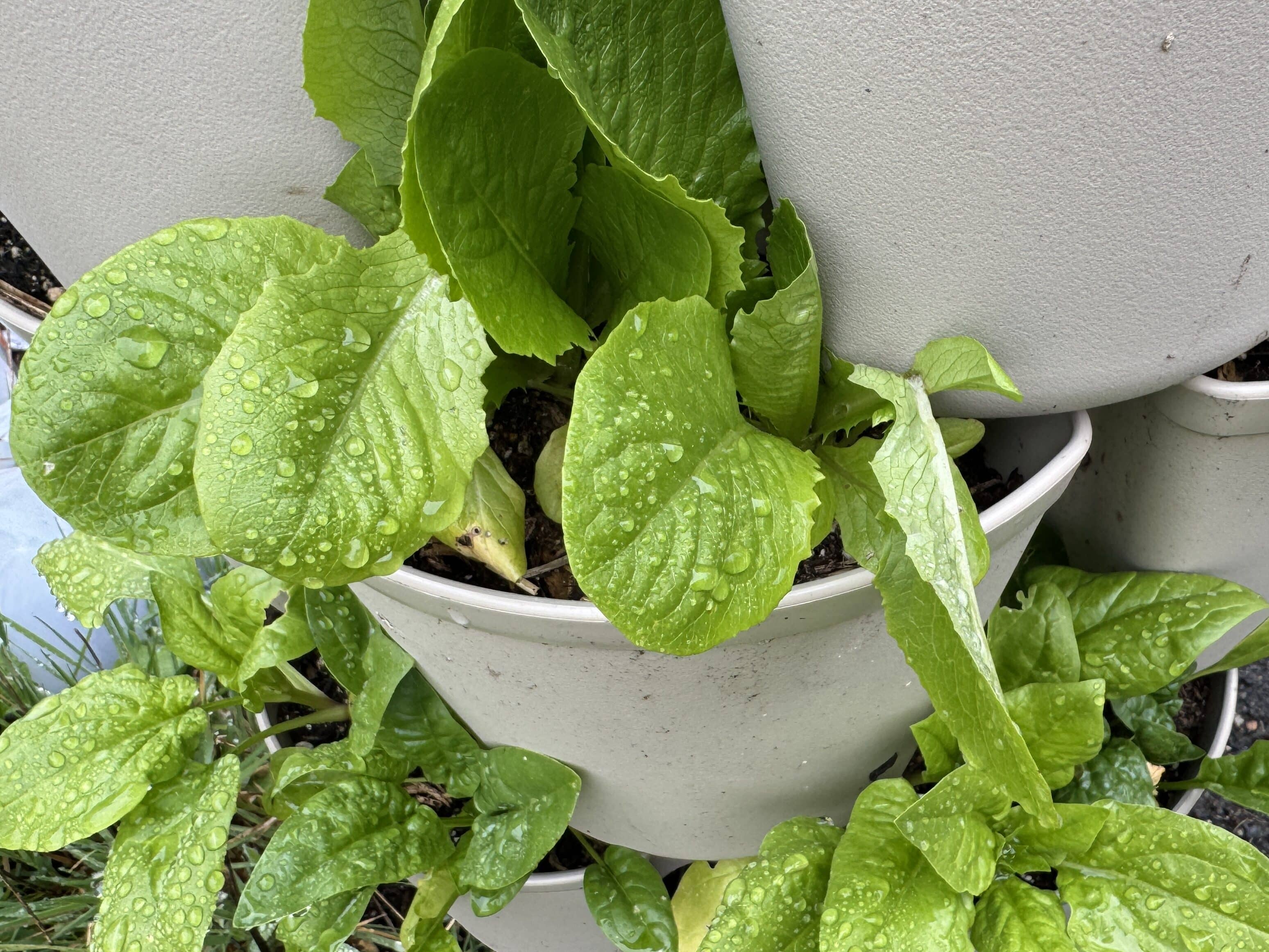
And don’t overlook cut-and-come-again crops like lettuce, kale, and spinach. You can harvest these multiple times instead of pulling the whole plant. Read more about these crops in my post The Best Cut-and-Come-Again Vegetables for Small Gardens.
If you’re growing beans, this is where variety matters. Pole beans climb vertically and produce over a longer period, making them a better choice for tight spaces than bush varieties. I go deeper into this in my post on Growing Beans for Drying and Canning, especially if you’re trying to stretch your harvest for canning and drying.
Grow Up: Vertical Gardening Is a Game Changer
If you’re not growing vertically, you’re leaving a huge portion of your garden unused.
Utilize Trellises
Vertical gardening is one of the simplest ways to grow more food in less space, and it doesn’t have to be complicated. A basic trellis, cattle panel arch, or even sturdy stakes can completely transform your yield.
Crops that thrive vertically include:
- Cucumbers
- Pole beans
- Indeterminate tomatoes
- Peas
Growing upward does more than save space. It improves airflow, reduces disease pressure, and makes harvesting easier. No more hunting for cucumbers hiding under a jungle of leaves.
If you’re growing in tight quarters, vertical growing isn’t optional—it’s essential.
Vertical Planters are a Lifesaver
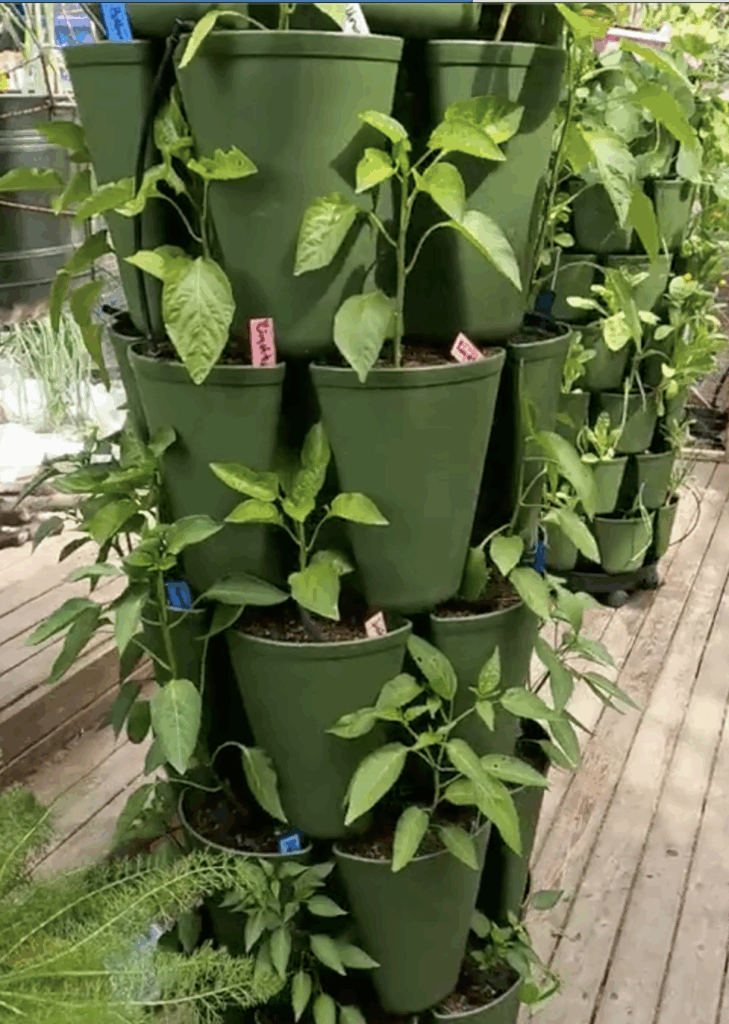
One of my favorite ways to maximize space usage is by using vertical planters. My favorites are the 5 and 7 tier planters from GreenStalk because they’re durable and can grow so much food in 2 square feet.
The 5-tier original has 30 pockets and is how I grew 30 pepper plants in 2 square feet. I had 2 of these set up for a total of 60 pepper plants that barely took up any room. This was a game changer for me.
Their 7-tier leaf planter has 42 pockets. The pockets are not as deep, so you need to be more selective on what you plant in it. I’ve grown peas, strawberries, leafy greens, herbs, and so much more in this planter. In fact, this is still the only way I grow herbs and leafy greens. Even though I have more space now, I still choose to grow all my lettuce, spinach, arugula and herbs in these planters.
There are other vertical planter options as well, GreenStalk is just the one that I have chosen to use. I’m not an affiliate of theirs, I only recommend them because I’ve used them for several years and still continue to love them.
Use Succession Planting to Keep Food Coming
One of the biggest mistakes I see is planting everything at once… and then watching the garden slow down after that first big harvest.
Succession planting fixes that. I used to plant everything all at once before I understood what succession planting is and how to utilize it.
Instead of planting all your lettuce, radishes, or beans in one go, plant a small batch every couple of weeks. That way, as one crop finishes, another is just getting started.
For example, plant some lettuce during week 1, then plant more during week 3-4. The lettuce from week 1 will be ready to harvest first. By the time you’re done harvesting the week 1 lettuce, the week 3-4 lettuce is ready. There’s no gap in harvesting lettuce because you succession planted and have the next batch ready when the first one is gone.
This creates less waste as well. You don’t want to plant all the lettuce at once and have more than you can use at one time. Spread it out, end up harvesting more, and eat fresh over a longer period.
You can also replant entire spaces as soon as crops are done. For example:
- Pull out spring lettuce → plant bush beans
- Harvest garlic → plant fall carrots
- Finish peas → plant cucumbers
The goal is simple: never let your soil sit empty during the growing season. There’s always something it can be growing for you.
Let Your Plants Share Space (Interplanting)
Plants don’t have to grow alone. In fact, they often do better when you plant them together with intention.
Interplanting allows you to grow multiple crops in the same space by taking advantage of how they grow differently.
Here are a few simple ways to do it:
- Plant fast-growing radishes alongside slower crops like carrots or underneath tomatoes and peppers.
- Grow lettuce under taller plants like tomatoes or trellised plants like cucumbers or winter squash for shade.
- Pair deep-rooted crops with shallow-rooted ones, like carrots or parsnips with onions or beans with corn.
This method helps you harvest more from the same square footage without overcrowding. The caveat is that you do need to have healthy soil to support the plants.

Square Foot Gardening Planting
The concept of square foot gardening was developed by Mel Bartholomew. His book Square Foot Gardening was so helpful to me when I started implementing this technique.
The idea behind it is to fully utilize your garden space by dividing it into 1 square foot sections and densely planting each section based on how many of each crop that space could hold. Each plant is different, as each one has different spacing needs.
The Farmer’s Almanac has a nice square foot gardening chart that will help get you started with how many of each vegetable you can plant in 1 square foot of garden space.
This concept also works for containers. A 12 inch wide pot can substitute for 1 square foot of garden bed space.
Use Containers to Expand Your Growing Area
When ground space runs out, or when you don’t have garden beds to plant in, containers are your best friend.
You can grow a surprising amount of food in containers if you choose the right crops and give them good soil. In fact, container gardening is one of the easiest ways to increase your overall yield without expanding your garden beds.
Great container crops include:
- Herbs
- Lettuce and greens
- Peppers
- Bush beans
- Compact tomatoes
If you want to dive deeper into this, my post on high-yield container gardening breaks down exactly how to get the most production out of each pot without wasting space or effort.
You can also pair this with growing specific crops in containers, like cucumbers, which can be incredibly productive in small setups when given the proper support.
As mentioned above under the section on vertical planting, vertical container systems will significantly increase the amount of food you can grow. I highly recommend them if you are trying to grow a lot of food in a small space.
Build Soil That Can Handle Intensive Planting
Here’s the part that sometimes gets overlooked, but is actually the most important part of your garden: your soil.
You can pack plants closer together, grow vertically, and succession plant as much as you want. But if your soil isn’t rich enough to provide for those plants, your yields will suffer.
High-yield gardening pulls more nutrients out of the soil, so you need to put more back in to replace them.
Focus on:
- Adding compost regularly
- Feeding plants throughout the season
- Keeping soil covered with mulch
Healthy soil is able to hold nutrients and moisture better, so your plants can keep producing instead of burning out halfway through the season. If you’re growing in a raised bed, read Best High-Yield Soil Mix For Raised Beds for a great soil recipe that supports high intensity planting.
If there’s one thing you don’t want to take a short cut on, it’s the soil. My guide How to Prepare Soil for Planting and Maximize Growth This Season will help you build a nutrient-rich soil.
Avoid These Yield-Killing Mistakes
Even experienced gardeners run into these:
Overcrowding without feeding the soil
More plants doesn’t always mean more food—especially if nutrients are limited. If plants run out of nutrients, they lack the ability to produce fruit that will feed you and your family.
Ignoring vertical space
Letting vining crops sprawl wastes valuable room. Not utilizing your space, from floor to ceiling, really decreases what you can grow. Your harvest will be much lower and you will end up being more dependent on the grocery store.
Planting everything at once
Leads to feast… then famine. If you have too much of something, like lettuce, at the same time, you can’t use it fast enough before it gets wasted. And once it’s gone, it’s gone. Succession plant to get the most out of your crops and feed your family longer.
Growing low-yield crops in prime space
Some crops just don’t give much back. Be intentional about what you plant. Look for varieties that are bred for high yields. They will give you the most bang for your spacing buck.
Small Space Doesn’t Have to Mean Small Harvests
A small garden can feel like a limitation—until you turn it into your advantage.
When you’re working with less space, you naturally pay closer attention. You notice timing, spacing, and plant behavior in a way that often gets overlooked in larger gardens. You become more intentional about what plants you choose and how you grow them.
And that attention? That’s what turns a modest garden into a productive one. Planting with intention in your small space will often grow you even more than if you had a larger space.
If you’re just getting started, start small. Try one or two of these methods this season—maybe add a trellis or stagger your planting dates—and build from there. Don’t try to do everything at once and become overwhelmed. Overwhelm is the biggest reason people quit gardening. You can do this, just do what you can reasonably implement in one year.
Before long, you’ll realize something that you may not have thought before:
You didn’t need more space at all. You just needed a better plan. This is how you grow more food in less space.
Frequently Asked Questions: How to Grow More Food In Less Space
How can I grow more food in a small garden space?
The key isn’t squeezing more plants in—it’s stacking your growing space like a layered ecosystem. Use vertical supports, plant in succession, and choose high-yield crops that keep producing instead of harvesting once and done. A small garden becomes far more productive when every inch is doing double duty, whether that’s above ground, below ground, or over time.
What are the best vegetables for small space gardening?
The best vegetables for small spaces are the ones that either produce continuously or grow upward instead of outward. Think tomatoes, peppers, cucumbers, pole beans, lettuce, spinach, and herbs. Compact varieties and “cut-and-come-again” greens are especially valuable because they keep giving you harvests without needing replanting.
What is intensive planting in gardening?
Intensive planting is a method where crops are grown closer together than traditional spacing guides recommend, but in a very intentional way. Instead of leaving wide empty rows, plants are arranged to maximize sunlight, soil use, and timing. When paired with healthy soil and good crop pairing, it can dramatically increase how much food you harvest from a small area.
Does vertical gardening really increase yield?
Yes, and sometimes dramatically. Vertical gardening doesn’t just save space—it creates new growing space upward. Crops like cucumbers, pole beans, and indeterminate tomatoes produce more efficiently when trained vertically because they get better airflow, more sunlight exposure, and easier harvesting access. In small gardens, vertical growing is one of the fastest ways to increase total yield without expanding your footprint.
How do you keep harvesting vegetables all season long?
The secret is succession planting. Instead of planting everything at once, you plant small batches every couple of weeks. As one crop finishes, another is ready to take its place. You can also replant beds immediately after harvest so your garden never sits idle. This creates a steady rhythm of food instead of one big harvest followed by silence.
Can you grow enough food in containers to make it worth it?
Absolutely. Container gardening can be surprisingly productive when done intentionally. The key is choosing high-yield crops like lettuce, herbs, peppers, bush beans, and compact tomatoes, and using high-quality soil. Containers also let you expand your growing space into patios, porches, and driveways—essentially turning unused areas into mini food production zones.
What is the easiest way to maximize garden yield?
If you’re looking for the simplest high-impact changes, start with these three: grow vertically, plant in succession, and choose productive crops over space-intensive ones. Those three shifts alone can transform a modest garden into a highly efficient food system without requiring more land or complicated setups.
Why am I not getting a good harvest in a small garden?
The most common reasons are soil depletion, overcrowding without enough nutrients, and not using vertical or succession planting strategies. Small gardens need more intentional feeding and planning than large ones because the plants are competing in a tighter space. When soil health, spacing strategy, and crop choice are aligned, yields usually improve quickly.