Growing Beans for Drying and Canning: Easy, High-Yield Methods
Beans are a crop that feeds you long after the season ends if you pick the right varieties. Expect steady production that turns into jars and jars of real food on your shelf. If you’ve ever wanted a crop that feels dual purpose, beans are it. You can eat them fresh, dry them for winter, or preserve them through canning. Growing beans for drying, fresh eating, or canning is very rewarding, even if you have a relatively small space to garden in.
*As an Amazon Associate I may earn from qualifying purchases at no cost to you.
Choosing the Right Beans (This Part Matters More Than You Might Think)
Not all beans are grown to be used the same way.
If your goal is long-term storage, you should choose a variety that is grown specifically to dry. These are sometimes referred to as shell beans. They are different from the tender green beans you have as a delicious side for dinner or soup like my Black Bean Soup Canning Recipe.
Good beginner varieties include:
- Pinto beans
- Black beans
- Kidney beans
- Navy beans
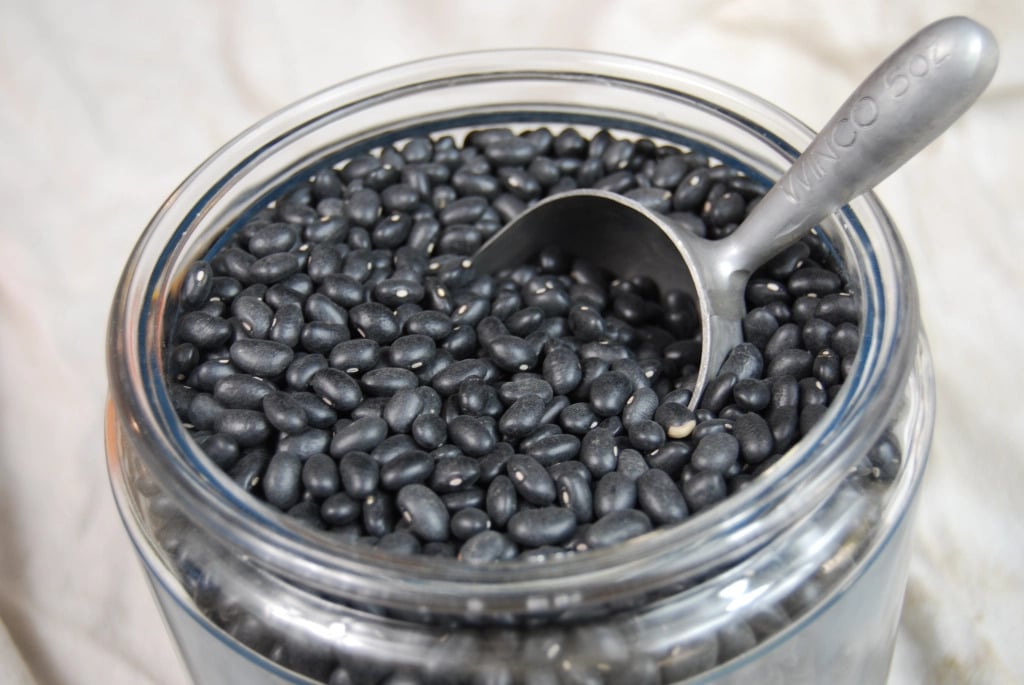
Choose the variety of bean your family uses the most, especially if you are growing in a small space. Growing beans for drying in a small space requires careful space planning and choosing what you grow intentionally.
These tend to be varieties most people are familiar with and use on a regular basis. They’re the beans most commonly used for soups, to turn into baked beans like my Homemade Baked Beans Canning Recipe, chili beans such as my Chili Beans Canning Recipe, and other flavored beans like my Easy Seasoned Black Beans Recipe.
After you decide on the variety (or varieties) you want to grow, you’ll also need to decide between bush beans and pole beans.
Bush beans grow compact and fast. A benefit of them is that they don’t need any trellising. They’re a great choice if you want a quick harvest and don’t want to mess with setting up trellising. If you have the space to dedicate to bush beans, or do not have the option to grow vertical, these are a good option for you.
Pole beans, on the other hand, climb and keep producing for longer periods. If you’re trying to maximize vertical space or increase yield in a small garden, I would recommend choosing pole beans. You’ll end up getting a bigger harvest from pole beans over bush beans. If you can grow vertically, this option also tends to take up less ground space.
When and Where to Plant Beans for Drying
Beans are warm-season crops. That means they don’t like cold soil, and they can’t handle frost.
Wait until:
- Soil temperature is at least 60°F
- All danger of frost has passed
Choose a spot with:
- Full sun (6–8 hours minimum)
- Well-draining, nutrient rich soil
Your soil is the most important part of growing a garden, especially a high yield garden. A simple, balanced mix can have a big effect on the amount of food you end up harvesting. I describe the perfect raised bed soil mix in Best High-Yield Soil Mix For Raised Beds.
If you are growing in containers, the same soil mix I talk about in How to Grow Peppers in Containers for High Yields works great for growing beans as well.
Planting for High Yields (Simple but Strategic)
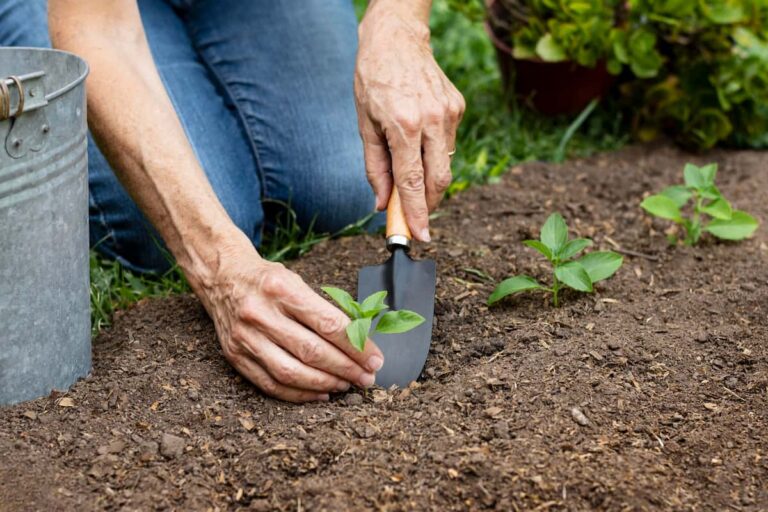
Beans don’t like being transplanted. They grow a tap root and plants with tap roots don’t transplant well. To learn more about this see Why Do Some Plants Transplant Easily While Others Struggle? Direct sowing is the best way to plants beans.
General planting instructions for beans:
- plant 1 inch deep
- 2–4 inches apart for bush beans
- 4–6 inches apart for pole beans
While those are general rules, when planting follow the spacing directions on the seed packet. Spacing may be different depending on the variety you’ve chosen to grow.
Give pole beans something to climb early. A trellis, cattle panel, or even a sturdy string setup works. The earlier they latch on, the better they produce.
And here’s a small but powerful tip: don’t overcrowd. It’s tempting when space is tight, but airflow is everything when it comes to healthy plants. Learn why by reading Why Airflow Is Important for Healthy Plants.
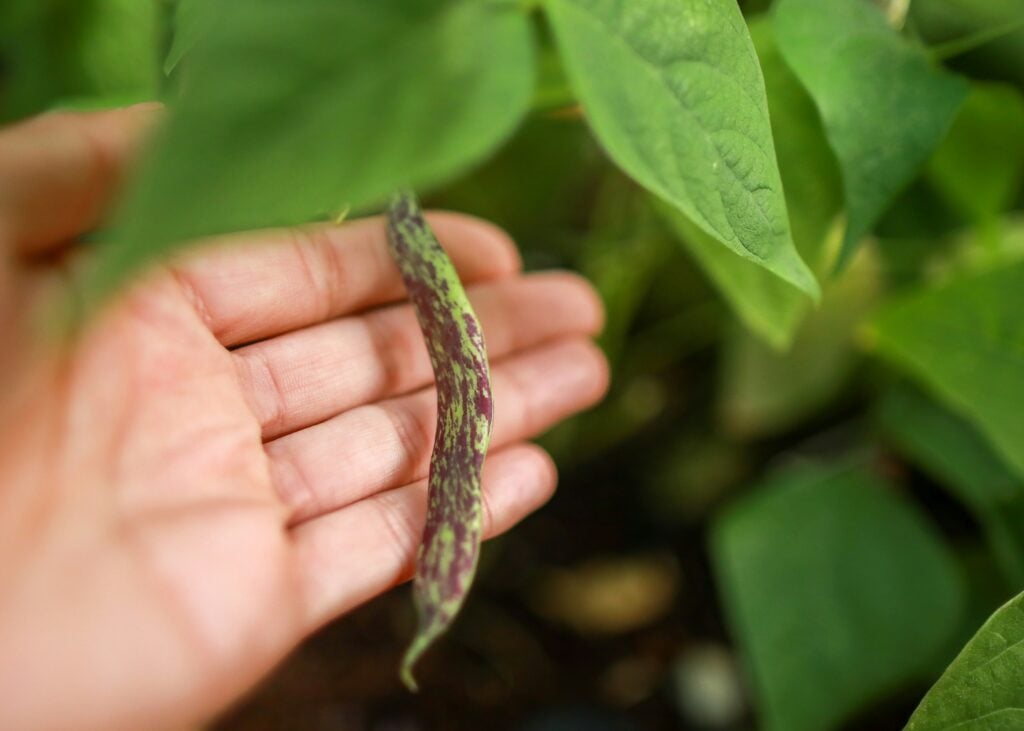
How to Trellis Beans For Drying
If you’re growing pole beans, a trellis isn’t optional—it’s essential for a healthy and large harvest.
Without support, the vines will sprawl, tangle, and waste valuable space. It’s also very hard to find the beans to harvest when they’re growing in a tangled mat of bean vines. Because you must let them dry on the vine, without appropriate airflow that a trellis will give, the beans are likely to mold and become unusable if you can locate them.
But give them something to climb, and they’ll turn vertical space into a wall of food. If you’ve ever walked under a tunnel of beans, you’ll know there’s almost something magical about it.
Why Trellising Beans Is Worth It
A good trellis does more than just hold plants up.
It helps:
- Increase yields by maximizing vertical space
- Improve airflow, which reduces disease
- Make harvesting easier (no more hunting through a jungle of leaves)
- Keep pods clean and off the soil
It’s one of the simplest ways you can ensure a healthy harvest of beans.
Easy Trellis Options That Actually Work
You don’t need anything complicated or expensive. Beans aren’t picky—you can make a trellis out of sticks and string if that’s what you have.
Here are a few reliable options:
Cattle Panel Trellis
Sturdy, long-lasting, and perfect for high yields. You can arch it over a bed or secure it upright. This is one of the best options if you’re serious about production. It’s also my favorite type of trellis.
String Trellis (Minimal and Effective)
Run twine from the base of your plants up to a horizontal support, typically a piece of wood, a dowel, metal pole, or the supports of a green house if you’re growing in one. It’s simple, affordable, and works especially well in raised beds.
Bamboo Teepee
This is a great option for small spaces or container gardens. Tie several poles together at the top, run string around the poles winding from the bottom to the top, and you’ve got a natural climbing structure that also looks good in the garden.
Fence or Garden Netting
If you already have a fence that vines can climb, use it. Beans will happily climb it, turning an ordinary boundary into a productive growing space.
If you’ve already set up vertical systems for other crops, such as cucumbers, you can use the same approach for growing beans.
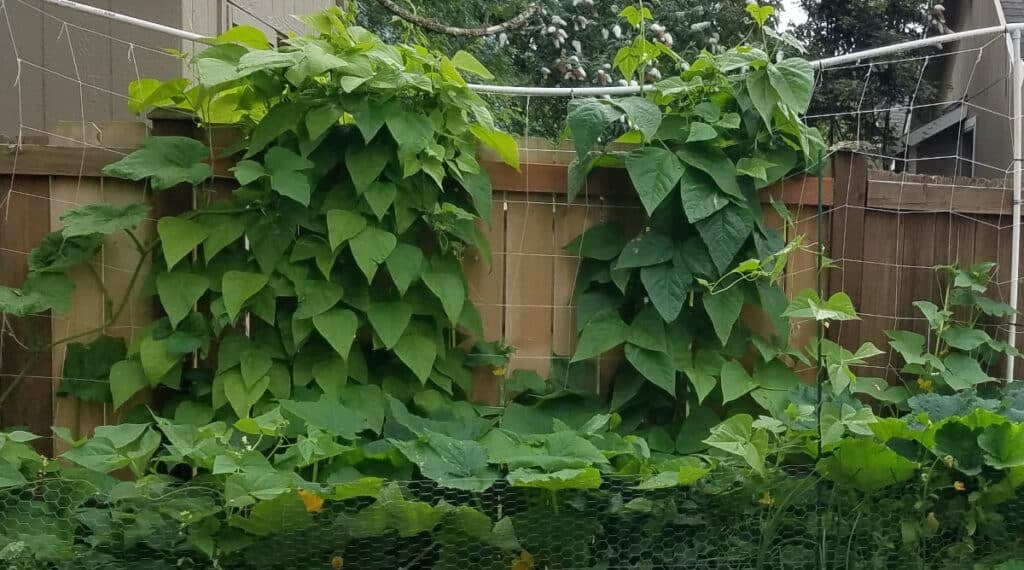
How to Set Your Trellis Up for Best Results
Timing matters more than people might think.
- Install your trellis at planting time so roots aren’t disturbed later
- Plant seeds close enough to the base that vines can easily find the support
- Gently guide young vines toward the structure if needed
Once they grab on, they’re likely to find their way up the trellis. You may need to help guide a vine back here and there, but most of the time the beans will grow up the trellis without issue.
Caring for Bean Plants Without Overthinking It
Beans are pretty low-maintenance. That makes them perfect for people with busy schedules or likes a more hands-off garden.
Water them:
- Deeply, about 1–2 times per week
- May need more often in extreme heat
Avoid over-fertilizing. Beans are actually a nitrogen fixer, which means they make their own nitrogen and release it into the soil. Too much fertilizer will lead to leafy plants with fewer pods.
If you’re already growing vertically (see Growing Cucumbers Vertically to learn to use vertical growing with cucumbers), the same principles apply here. Proper soil, good airflow, good structure, and consistent watering will give you a bountiful harvest.
Growing Beans for Drying
This is where things shift.
Instead of harvesting early and often, you’re going to let the pods mature fully on the plant.
what you’re waiting for is:
- Pods to turn yellow, tan, or brown
- Pods to feel dry and papery
- Beans inside to feel hard
Sometimes this feels like a little wrong, like you’re doing something wrong. But when you’re growing beans for drying this is exactly what you need to do.
If the weather stays dry, you can leave beans right on the plant until they’re fully ready. If it’s wet, like it tends to get in fall here in W. Washington you may need to pick them if the weather gets too wet. Be sure to lay them out in a dry place to finish drying.
Harvesting and Drying Beans
Once most of your pods are dry, you’ve got two options:
Option 1: Pick individual pods
Great for small harvests or staggered maturity.
Option 2: Pull the whole plant
Hang it upside down in a dry space like a garage or shed.
After that, let all the pods dry completely before shelling the beans.
How do You Shell Beans?
Shelling beans is quite easy. All you need to do is:
- Crack open pods
- Remove beans
- Lay them out and let them air dry a bit longer if needed
You’ll know they’re ready for storage when they’re hard and no longer dent when you press them with your finger.
Storing Dry Beans for the Long Haul
Once fully dry, beans store incredibly well.
Keep them in:
- Glass jars
- Airtight containers
- Cool, dark spaces
Properly stored, dry beans can last for years. Not months—years.
This is where your garden starts to feel less like a hobby and more like real food security.
Growing Beans for Canning
If drying beans is about patience, canning beans is about timing.
For canning, you can:
- Use fresh shell beans (before they fully dry)
- Or rehydrate dried beans before pressure canning
Important note: beans are a low-acid food, so you must use a pressure canner like this Presto Pressure Canner that I use. For more information on how to pressure can beans, see one of my posts such as How to Can Chili Beans for more details.
The texture difference is worth mentioning:
- Fresh canned beans = softer, more tender
- Dried beans (rehydrated) = slightly firmer
Both can taste good, it just depends on what you prefer in your meals. I prefer using dry beans because I like that they stay a bit firmer and keep their shape better after canning.
Common Mistakes That Can Reduce Your Harvest
These are some mistakes that are easy to make and can severely reduce your bean harvest:
Overwatering
Beans don’t like soggy roots. Too much water leads to fungal diseases and pest problems.
Harvesting too early
Because you’re aiming for dry beans, patience is key. You must let them completely mature, unlike their green bean counterpart that you harvest early. Harvesting early will severely reduce your yield and give you mushy beans.
Poor airflow
Crowded plants create lots of disease and pest issues. It also makes harvesting quite difficult.
Final Thoughts: A Small Crop That Builds Food Security
Beans are pretty easy to grow. Even without lots of attention they can give you big harvests.
A single bed can produce enough to stock your pantry. This will help stretch your grocery budget and give you one less thing to rely on the store for. I find canning beans to be one of the most rewarding things I put in my pantry.
Once you’ve done it once, it becomes almost second nature. Plant, grow, dry, store. The time and energy put into the growing and canning process pays off every time you open a jar in the middle of winter. They will taste so much better than anything you can buy in the store.
If you’re building a garden that actually feeds you—not just one that looks good—beans are an excellent choice.
FAQ: Growing Beans for Drying and Canning
Q: Can you use green beans for drying?
A: Not really. Green beans (snap beans) are developed to be eaten fresh and young while the pods are tender. For drying, you want shell beans, which are grown specifically to mature fully and produce firm, storable seeds inside the pod.
Q: How long do beans take to grow for drying?
A: Most dry beans take about 90 to 120 days from planting to full maturity. The key is letting them stay on the plant longer than you would for fresh eating, until the pods are completely dry.
Q: When should I harvest beans for drying?
A: Wait until the pods turn dry and papery, usually they’ll be yellow to brown in color. Inside, the beans should feel hard, not soft or dentable. If rain is coming, it’s better to harvest slightly early and finish drying indoors otherwise they may mold.
Q: Do beans need to dry on the plant?
A: Ideally, yes. Letting beans dry on the plant gives you the best flavor and storage life. But if the weather turns wet or cold, you can pull the plants and hang them in a dry space to finish curing.
Q: How do I know if my beans are dry enough to store?
A: Fully dried beans are hard and won’t dent if you press them with your fingernail. If there’s any softness or give, they need more time. Storing beans too early can lead to them spoiling or molding before you can use them.
Q: What are the best beans for drying at home?
A: Reliable choices include pintos, black beans, kidney beans, and navy beans. They’re productive, easy to grow, and store well long-term, making them great for beginners and homesteaders alike. They are also some of the move versatile beans and can be used in many different kinds of dishes.
Q: Can you grow dry beans in containers?
A: Yes. Use a deep container with good drainage and keep watering consistent. Yields may be smaller than in-ground beds, but it’s still a solid option for small spaces. Be sure to have a trellis for pole beans if you choose to grow those over bush beans.
Q: How much water do beans need to produce well?
A: Beans prefer steady moisture, but not soggy soil. A deep watering once or twice a week is usually enough, depending on your climate. Let the soil dry slightly between waterings to avoid root issues.
Q: Do I need to soak beans before canning them?
A: Yes. If you’re using dried beans, they should be soaked and rehydrated before pressure canning. This helps them cook evenly and improves the final texture.
Q: Why are my bean plants not producing many pods?
A: This usually comes down to too much nitrogen, overcrowding, or inconsistent watering. Beans don’t need rich soil, and too much fertilizer can lead to leafy growth instead of bean pods.
Q: How long do homegrown dry beans last in storage?
A: When properly dried and stored in a cool, dark place, beans can last several years. For best quality and cooking time, try to use them within 1–2 years.
Q: What’s the difference between bush beans and pole beans for drying?
A: Bush beans grow smaller, more compact plants and tend to produce all at once, which is great for bulk harvesting. Pole beans grow vines, require trellises, and produce over a longer period. Pole beans often yield more overall.