Master How to Water Seedlings Without Drowning or Drying Them Out
Watering seedlings sounds simple. Just add water, right? But this is where a lot of gardeners lose their plants without understanding why. Too much water, and roots will suffocate. Too little, and those tiny stems dry out fast. Seedlings don’t have the deep roots or resilience of mature plants, so watering mistakes show up fast. If you’ve ever had seedlings fall over, stall out, or just… disappear overnight, watering is usually part of the story. Let’s walk through exactly how to water seedlings the right way so they grow strong, steady, and ready for the garden.
Why Proper Watering Matters for Seedlings
Seedlings have a fairly narrow zone where they thrive. Their roots are shallow. Their stems are tender. And the soil they grow in dries out quickly, especially indoors.
The goal for seedlings is simple:
- Keep the soil consistently moist
Never let it get bone dry, and never let it get soggy.
That balance is what allows roots to expand, oxygen to circulate, and growth to stay steady.
When watering is off, you’ll often see:
- Yellowing leaves
- Slow or stunted growth
- Seedlings falling over
- Mold or algae on the soil
If you’re dealing with seedlings collapsing, it may not just be water—it could also be damping off. I break that down here in my post on Why Seedlings Fall Over After Sprouting.
How Often to Water Seedlings
There’s no fixed schedule that works for every setup. Instead of watering on a calendar, or a specific daily/weekly rotation, use the soil as your guide.
Check moisture daily
Stick your finger about ½ inch into the soil:
- If it feels dry → water
- If it still feels moist → wait
Most seedlings need watering every 1–2 days indoors, but factors like light, airflow, and container size will change that.
Small cells dry out faster than larger pots. Seed trays under grow lights dry faster than those near a window.
Consistency matters more than the frequency.
If you’re planting in soil blocks, like I do, watering is fairly consistent between plants. I find I have to water about every 3-4 days. If you’ve never used soil blocks, they are my preferred method of seed starting. Learn How to Soil Block for Seed Starting in my complete guide.
How To Water Seedlings: Best Way = Bottom Watering
I cannot emphasize this enough. If you want one method that solves most watering problems, this is it.
Bottom watering encourages roots to grow deeper, keeps stems dry, and reduces disease risk.
How to bottom water seedlings (step-by-step)
- Fill a tray or container with about 1 inch of water
- Place your seedling tray into the water
- Let the soil absorb moisture from the bottom (10–20 minutes)
- Remove the tray once the top of the soil feels moist
- Let excess water drain
That’s it. This works great no matter the type of tray, container, or soil block you’re using to start. You just need to have your seedlings in some type of tray that has holes at the bottom for water to get up to the seedlings without you having to disturb your delicate plants.
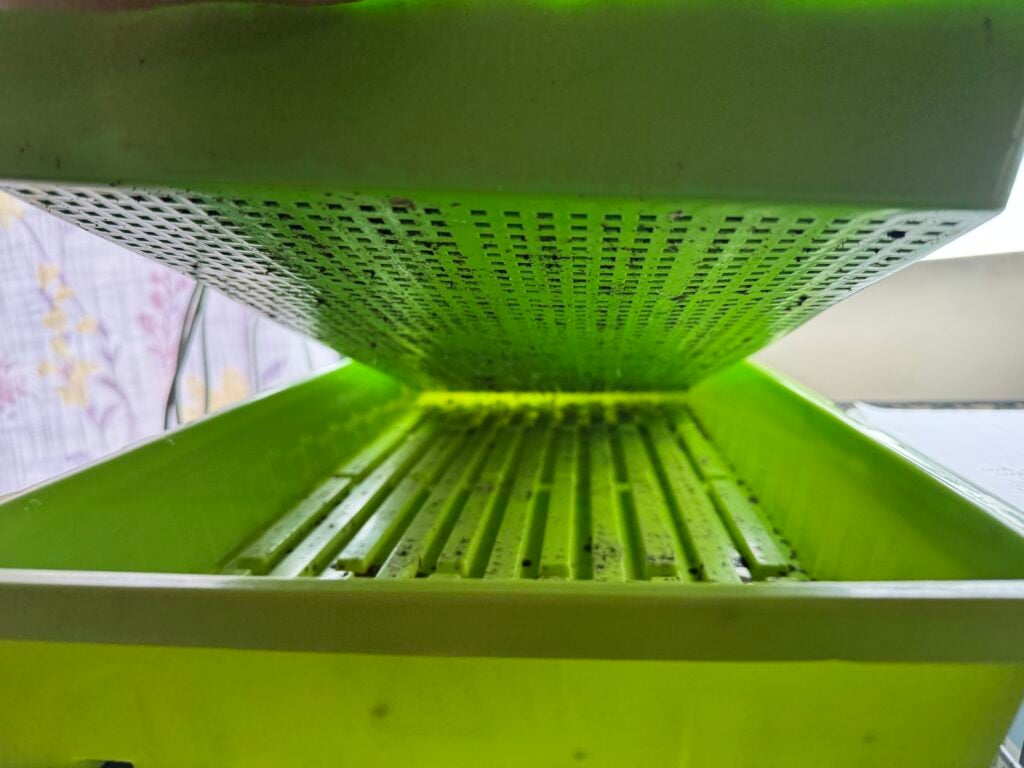
I like using these mesh trays from Bootstrap Farmer to set my soil blocks in. Then I can put the water into the 1020 trays from Bootstrap Farmer that do not have holes and let the seedlings absorb the water.
Bottom watering is especially helpful after germination, when seedlings are most vulnerable.
Top Watering: When and How to Do It Safely
Bottom watering is ideal, but sometimes you’ll still need to water from above.
The key is to be as gentle as possible.
Use the right tools
- A small watering can with a fine spout
- A spray bottle for very young seedlings
How to avoid damage
- Water slowly and close to the soil
- Avoid hitting stems directly
- Stop as soon as water begins draining from the bottom
Heavy watering can flatten seedlings or expose roots. It can also invite disease issues like Damping Off. If you’re not sure what that is or want to learn more, see my post on What Is Damping Off and How to Stop It.
Misting vs Watering Seedlings
Misting has its place, but it can easily be used incorrectly.
When misting works
- During germination (before seeds sprout)
- To lightly moisten the soil surface
When it doesn’t
- As a replacement for watering
Misting only wets the surface. I like misting when I first place seeds in the soil, and while I’m waiting for them to sprout. The surface dries out faster, so I mist almost every day as my seeds start to germinate. This keeps the soil evenly moist. Seeds require that for proper germination.
Seedling roots need deeper moisture to grow strong.
Once seedlings emerge, switch to proper watering methods (ideally bottom watering) instead of relying on misting.
Signs You’re Overwatering Seedlings
Overwatering is one of the most common mistakes, especially for beginners. It’s so easy to overwater delicate seedlings.
Look for:
- Yellow or pale leaves
- Soft, weak stems
- Soil that stays constantly wet
- Mold or algae on the surface
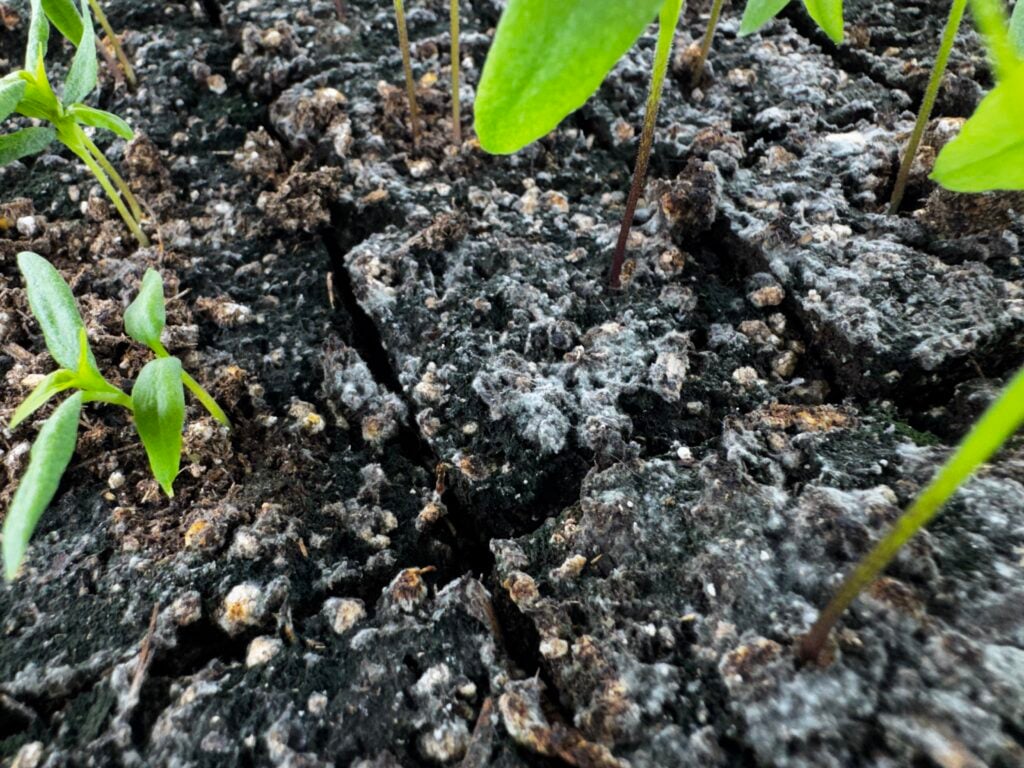
Roots need oxygen just as much as they need water. When soil stays saturated, oxygen can’t penetrate the soil and the roots can’t breathe.
If your seedlings look worse after watering, that’s a clue you may be giving too much.
Signs Your Seedlings Need Water
Underwatering is just as common as underwatering.
Watch for:
- Drooping or wilting
- Dry, crumbly soil
- Leaves that look thin or papery
The tricky part is that wilting can also happen from overwatering. That’s why checking the soil is more reliable than judging by appearance alone.
It’s also helpful to place seedlings in a place that you regularly go. If you see them on a constant basis, you check on them more often. If they’re in a room you barely go into, they’re likely to be neglected.
How to Keep Seedlings from Drying Out
Seedlings dry out faster than most people expect, especially indoors.
Here’s how to keep moisture consistent:
Use the right containers
Small cells dry out quickly. If you’re struggling, consider slightly larger containers once seedlings are established.
Or switch to soil blocks that are easy to see if the bottom of the soil is dry.
Improve humidity (carefully)
A humidity dome can help during germination, but remove it once seedlings sprout. Leaving it on too long can lead to disease.
I have had mixed luck with humidity domes. Some people swear by them, and I have had success using them. But I’ve also had trays develop mold on the soil surface using them.
If you choose to use them, be mindful of how much humidity is enclosed and air it out for a bit each day to prevent too much humidity and mold issues.
Adjust your environment
- Grow lights increase evaporation
- Fans improve airflow but dry soil faster
- Warm rooms require more frequent watering
These things are all necessary for healthy seedlings. Don’t get rid of them just because they dry out soil faster. Just be mindful to check the soil every day and water as needed.
Watering Seedlings After Germination
This is where many gardeners go wrong.
Before germination, seeds need steady surface moisture. After germination, the focus shifts to root development.
That means:
- Water less frequently, but more thoroughly
- Let the top layer dry slightly between waterings
- Encourage roots to grow downward
This transition is key to preventing weak, shallow root systems. It will give your plants a better start when you move them to their final spot in your garden.
Can You Overwater Seedlings?
Yes—and it’s very easy to do.
Seedlings don’t need constant moisture at all times. They do need a cycle of:
- Moist soil
- Slight drying between waterings
- Water again
That cycle strengthens roots and improves resilience. If soil never gets a chance to breathe, seedlings struggle and may not make it.
A Simple Seedling Watering Routine
If you want a practical rhythm to follow, start here:
Daily
- Check soil moisture
Every 1–2 days
- Bottom water if soil is dry
As needed
- Light top watering for uneven moisture
Always
- Ensure good drainage
Don’t overcomplicate it, just be consistent.
Common Seedling Watering Mistakes
Avoid these, and you’ll prevent most problems:
Watering on a strict schedule
Plants don’t follow calendars. Always check the soil first and let it tell you whether or not to water each day.
Letting seedlings sit in water too long
Bottom watering works well—but leaving trays soaking in too much water can lead to root rot.
Using poor-draining soil
If water can’t move through the soil, roots suffer and rot.
Ignoring airflow
Still, humid air increases the risk of disease. See Why Airflow is Important for Healthy Plants for a more detailed discussion on airflow.
How Watering Connects to Strong Transplants
Healthy watering habits don’t just keep seedlings alive—they prepare them for the garden.
Seedlings that are watered correctly:
- Develop deeper roots
- Grow sturdier stems
- Handle transplanting better
When it’s time to move them outdoors, proper watering continues to matter.
If you’re unsure when your seedlings are ready, reading my guide on How to Tell If Seedlings are Ready to Transplant.
And if you need a refresher on the transplanting process itself, check out When to Transplant Seedlings Outdoors.
To learn how to properly harden off your seedlings for transplanting, read A Simple, Proven Method to Harden Off Seedlings Without Shock.
Final Thoughts
Watering seedlings the right way is less about rules and more about awareness.
You’re not just adding water, you’re managing a small environment where roots, air, and moisture all need to stay in balance.
Check the soil. Water when needed. Most importantly, keep things consistent.
That’s what turns fragile sprouts into strong plants ready for the garden.
Frequently Asked Questions: How to Water Seedlings
Q: How often should you water seedlings indoors?
A: Most indoor seedlings need water every 1–2 days, but the real answer depends on your setup. Small seed trays dry out faster than larger pots, and grow lights or warm rooms increase evaporation. The best method is to check the soil daily and water only when the top layer starts to feel dry.
Q: What is the best way to water seedlings without damaging them?
A: Bottom watering is usually the safest method. It allows soil to pull in moisture from below, which keeps tender stems dry and reduces disturbance to delicate roots. If you water from the top, use a gentle stream or spray bottle and aim for the soil, not the plants.
Q: Should seedling soil be kept constantly wet?
A: No. Seedling soil should stay lightly moist, not saturated. Constantly wet soil can reduce oxygen around the roots and lead to weak growth or disease. A slight dry-down between waterings actually helps roots grow stronger.
Q: How do I know if my seedlings need water?
A: The most reliable check is the soil itself. If the top half-inch feels dry, it’s time to water. Visual signs like drooping can help, but they’re not always accurate since both underwatering and overwatering can cause wilting.
Q: Is misting enough for seedlings?
A: Misting can help keep the surface moist during germination, but it doesn’t provide enough water for established seedlings. Once sprouts appear, they need deeper watering so roots can grow downward and strengthen.
Q: Can you overwater seedlings?
A: Yes, and it’s one of the most common issues. Overwatered seedlings often look pale, weak, or stunted. The soil may stay constantly wet and sometimes develop algae or mold. Good drainage and allowing slight drying between waterings helps prevent this.
Q: Why are my seedlings falling over after watering?
A: This can happen if the soil becomes too saturated or if stems are weakened by poor airflow or disease. Overwatering is often part of the problem, but environmental factors like low light or damping-off fungus can also contribute.
Q: Should seedlings be watered from the top or bottom?
A: Bottom watering is generally preferred because it encourages stronger root growth and reduces disturbance to fragile seedlings. Top watering is still useful occasionally, especially if the soil surface needs rehydrating or if water distribution is uneven.
Q: Do seedlings need different watering after germination?
A: Yes. Before germination, consistent surface moisture is important. After sprouting, the focus shifts to deeper watering and allowing slight drying cycles so roots grow downward and become more resilient.
Q: What happens if seedlings dry out too much?
A: If seedlings dry out completely, growth can stall or stop, and young plants may not recover if stress is severe. Quick correction usually helps, but repeated drying weakens development and reduces transplant success later on.