Tomato Plants Aren’t Producing Fruit? 10 Common Reasons and Proven Fixes
There’s nothing more frustrating than big, healthy tomato plants covered in blooms… and not a single tomato in sight. Or maybe just one or two. I’ve been there and felt that frustration. When tomato plants flower but don’t produce fruit, they’re trying to tell you something is out of balance. Let’s walk through the most common reasons your tomato plants aren’t producing fruit—and exactly what to do about each one.
*As an Amazon Associate I may earn from qualifying purchases at no cost to you.
1. Too Much Nitrogen (The #1 Cause of All Leaves, No Fruit)
If your tomato plants aren’t producing fruit but are big, lush, and deep green, this is almost always the reason.
Nitrogen fuels leafy growth. When there’s too much of it, your plant puts all its energy into growing stems and leaves instead of flowers and fruit.
What to look for:
- Huge plants with thick stems
- Dark green leaves
- Few or no flowers
How to fix it:
- Stop using high-nitrogen fertilizers immediately
- Switch to a balanced or phosphorus-heavy fertilizer
- Avoid fresh manure or overly rich compost mid-season
There are many fertilizer options you can choose from. I am a big fan of Happy Frog fertilizer. Neptune Harvest also makes really good fertilizer options, like this Tomato and Vegetable Plant Fertilizer.
If you’re building your beds or containers, this is where soil balance really matters. I go deeper into that in my Best High-Yield Soil Mix For Raised Beds guide.
2. Poor Pollination (Flowers But No Fruit)
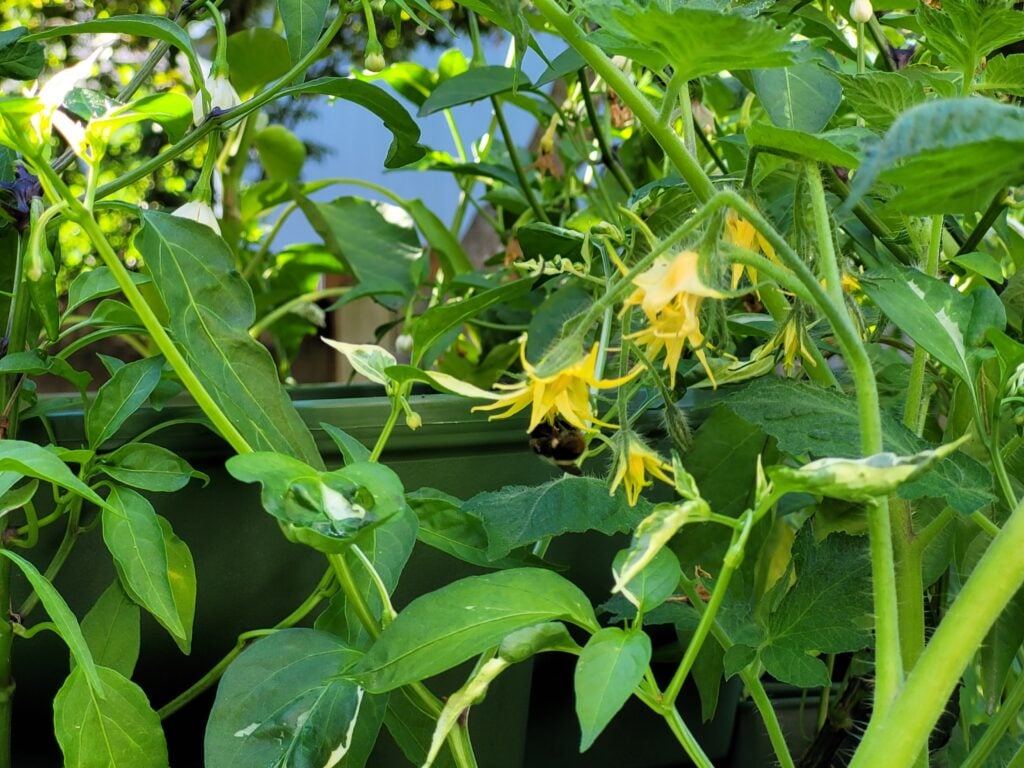
Tomatoes are self-pollinating, but they still need movement—wind or vibration—to release their pollen.
In a backyard garden, especially in still air or enclosed spaces, pollination can stall out completely.
What to look for:
- Plenty of flowers
- Flowers dry up and fall off
- No fruit forming
How to fix it:
- Gently shake your plants once a day
- Tap flower clusters with your finger
- Plant pollinator-friendly flowers as companion plants
If you’re growing in a greenhouse or covered area, this becomes even more important.
3. Temperatures Are Too Hot or Too Cold
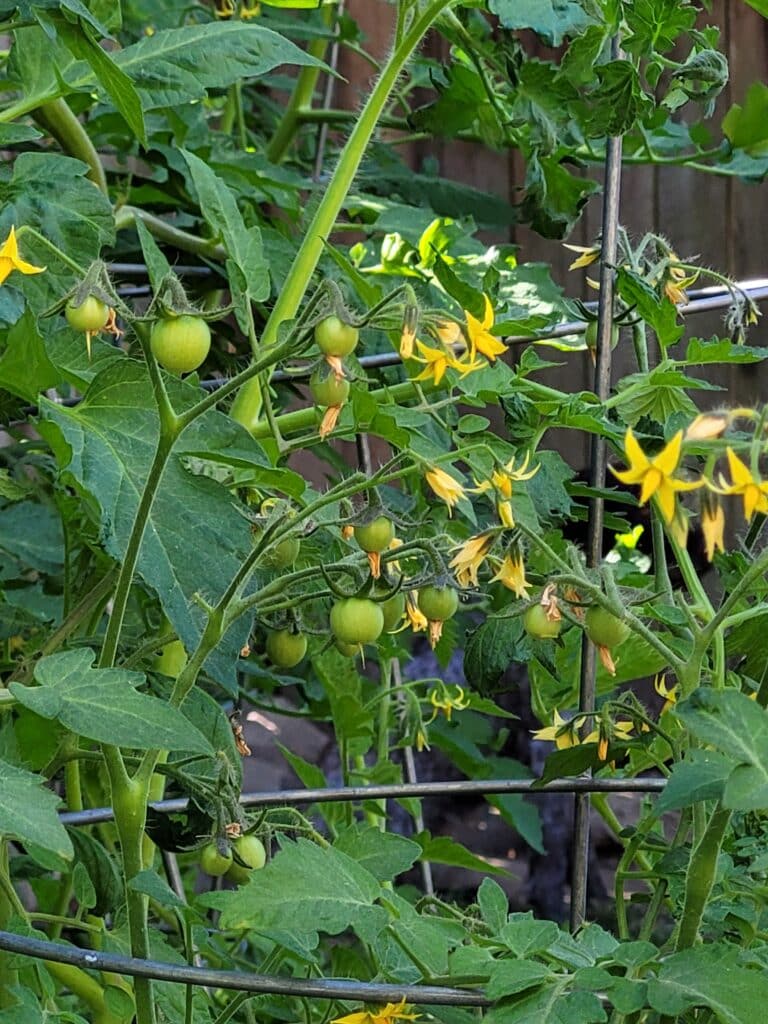
Tomatoes are surprisingly picky about temperature when it comes to setting fruit.
- Below 55°F (12.5°C) at night → pollination slows down
- Above 90°F (32°C) during the day → pollen becomes sterile
When that happens, flowers drop without forming fruit. This is called blossom drop, and it catches a lot of gardeners off guard.
What to look for:
- Healthy plants with lots of flowers
- Sudden flower drop during heat waves or cold snaps
How to fix it:
- Be patient—fruiting usually resumes when temps stabilize
- Use shade cloth during extreme heat
- Water consistently to reduce stress
If you’re planting early in the season, timing matters more than most people realize. I break that down in detail in my guide When To Transplant Seedlings Outdoors.
4. Inconsistent Watering (Stress = No Fruit)
Tomatoes don’t like rollercoasters. Going from bone dry soil to soaking wet conditions stresses the plant, and stressed plants drop flowers.
What to look for:
- Dropping blossoms
- Curling leaves
- Cracked soil or inconsistent moisture
How to fix it:
- Water deeply and consistently (not shallow and frequent)
- Mulch around your plants to retain moisture
- Aim for evenly moist soil—not soggy, not dry
A thick layer of mulch acts like a buffer, keeping soil moist without becoming soggy. Because it helps retain moisture it decreases how often you need to water the plants.
Learn more about How to Tell If Your Plants Are Stressed. Excess moisture can also lead to tomato plant diseases. Learn more about Common Tomato Diseases and follow the steps to reduce the risk of your plants becoming infected.
5. Not Enough Sunlight
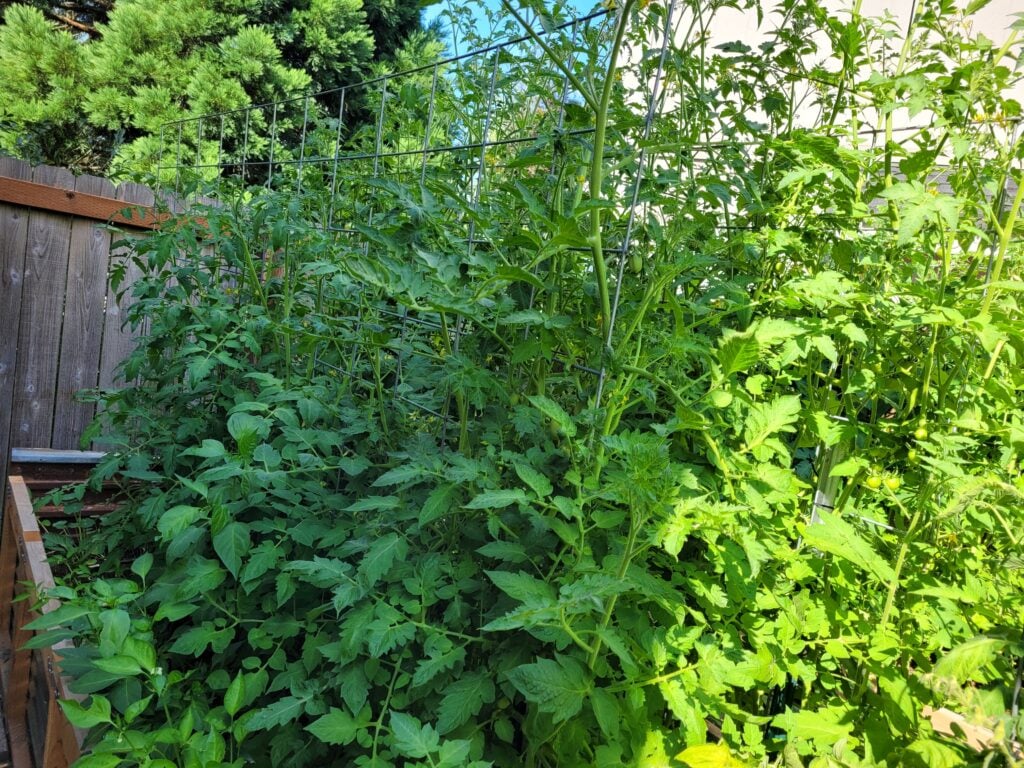
Tomatoes plants love the sun. If they’re not getting at least 6–8 hours of direct sunlight, fruit production will suffer.
They will likely still grow and produce. I’ve grown them with only 4-6 hours of sun when that’s the only space I had. But the harvest was lower per plant.
What to look for:
- Leggy plants reaching for light
- Fewer flowers
- Slow overall growth
How to fix it:
- Move containers to a sunnier location
- Trim nearby plants that are shading them
- Choose the sunniest spot in your garden next season
If space is tight, this is where vertical growing really shines. You can maximize sun exposure without needing more ground space. I share strategies for that in my post on How To Grow More Food in Less Space.
6. Overcrowding and Poor Airflow
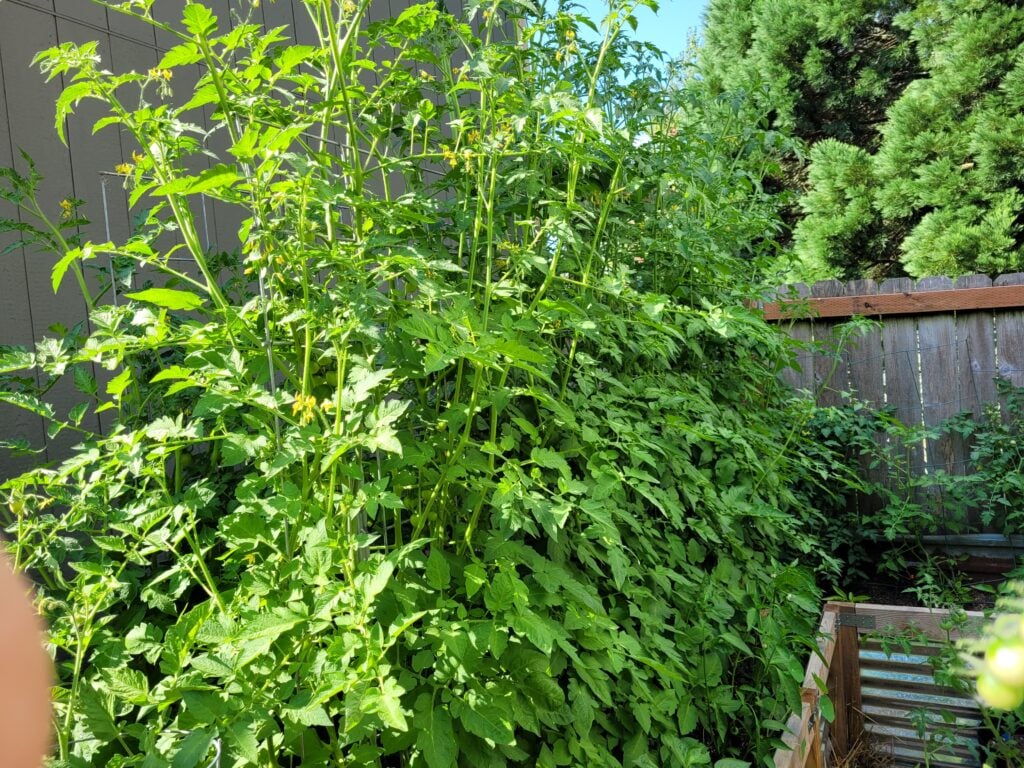
Tomatoes need breathing room. When plants are too close together, airflow drops, humidity rises, and pollination becomes less effective.
It also increases disease pressure, which further stresses the plant. Learn more about Why Airflow is Important for Healthy Plants.
What to look for:
- Dense, tangled growth
- Leaves staying wet longer
- Lower fruit production overall
- Spots developing on leaves
How to fix it:
- Space plants properly (usually 18–24 inches minimum)
- Prune excess growth, especially lower branches
- Use stakes, cages, or trellises to open up the plant
A well-supported tomato plant is easier to manage and a lot more productive.
7. Transplant Shock (Early Season Stall-Out)
If your tomatoes were recently transplanted, they may still be recovering.
During this phase, plants focus on root development rather than fruit production.
What to look for:
- Slow growth after transplanting
- Flowers that drop early
- Temporary lack of fruiting
How to fix it:
- Give it time—most plants recover within 2–3 weeks
- Keep watering consistent
- Avoid fertilizing too heavily right away
If you skipped hardening off, this effect can be even stronger. Sudden exposure to sun and wind can delay fruiting significantly.
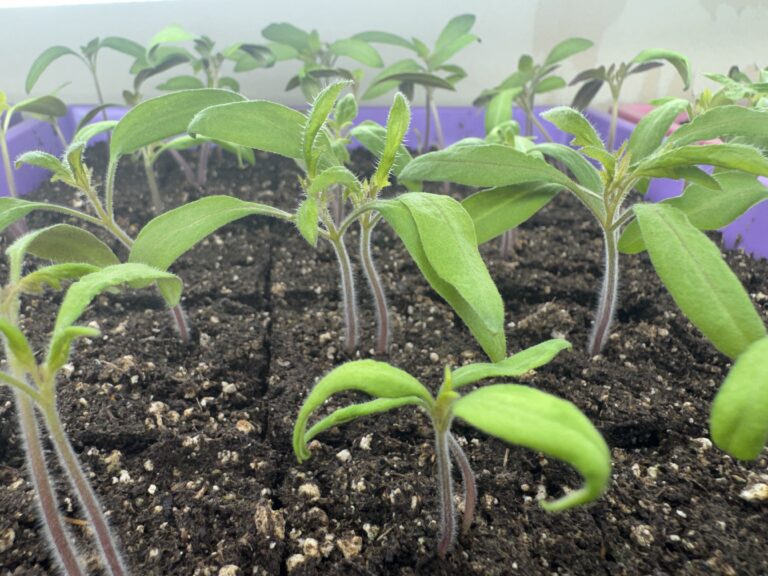
8. The Plant Is Still Too Young
Sometimes the simplest answer is the right one.
Tomatoes don’t produce fruit immediately. They need time to mature, establish roots, and build enough energy to support fruiting.
What to look for:
- Healthy plants with steady growth
- Few early flowers
What to do:
- Be patient
- Focus on good care instead of forcing production
Once the plant is ready, fruiting tends to ramp up quickly.
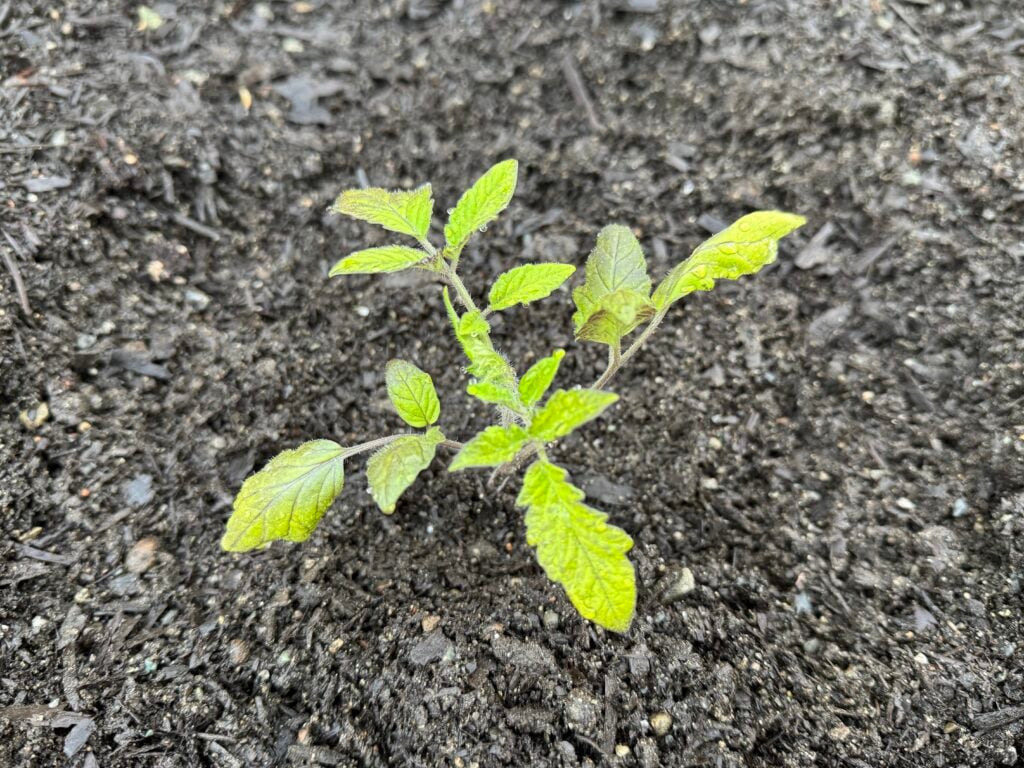
If you purchase your plant, pick one that is not large, does not have lots of flowers, and one that is not currently setting fruit. These look great at first. It looks like they have a head start. But transplanting them into your garden, or a larger container, shocks the plant. Younger, smaller plants have an easier time adjusting to a move. Larger plants are past their prime for transplanting.
Larger plants that are already trying to produce will have a harder time. The roots are likely to be root bound, creating issues for plant health. You may find that the plant drops the flowers and fruit it had when you bought it. The overall production of a plant like this is probably going to be lower than if you had bought a younger plant.
9. Pest or Disease Pressure
Even mild pest problems can stress a plant enough to reduce fruit production.
Common culprits include:
- Aphids
- Spider mites
- Early blight
What to look for:
- Yellowing or spotted leaves
- Visible pests under leaves
- Stunted growth
How to fix it:
- Inspect plants regularly
- Remove affected leaves
- Use natural controls like neem oil if needed
- Water consistently and do not overwater
Healthy plants produce more fruit. Common Tomato Diseases addresses the most common diseases you may experience along with what causes them and how to fix it.
10. Variety Matters More Than You Think
Some tomato varieties are naturally more productive than others.
- Determinate varieties produce all at once
- Indeterminate varieties produce continuously over time
If you planted a lower-yield variety, your expectations might not match what you really get.
What to do:
- Choose high-yield varieties for your space
- Mix types to spread out your harvest
How to Get Your Tomato Plants Producing Again
If your plants aren’t producing fruit, don’t panic. In most cases, you don’t need to start over—you just need to make a few adjustments.
Here’s a quick reset plan:
- Check your fertilizer (cut nitrogen if needed)
- Improve pollination (shake plants daily)
- Stabilize watering
- Watch temperatures and reduce stressors
- Give the plant time to recover
Tomatoes are resilient. Once conditions improve, they usually bounce back and start setting fruit. You can do everything wrong, give the plant a reset, and still watch it bounce back.
Final Thoughts
Tomato plants don’t “fail” to produce fruit for no reason. There’s always a cause—and once you find it, the solution is usually straightforward.
In most backyard gardens, it comes down to one of three things:
- Too much nitrogen
- Poor pollination
- Environmental stress
If your tomato plants aren’t producing fruit, try dialing those in, and your plants will recover. Once recovered, they’ll start producing fruit for you.
Frequently Asked Questions: Why Tomato Plants Aren’t Producing Fruit
Q: Why do my tomato plants have flowers but no fruit?
A: This usually comes down to pollination or stress. Tomatoes can flower beautifully but still fail to set fruit if pollen isn’t being properly moved around. That can happen from still air, high heat, or even humidity issues. In some cases, the plant is also under stress from watering swings or excess nitrogen, so it drops flowers before fruit can form. A gentle daily shake or tap of the flower clusters often helps more than people expect.
Q: Why are my tomato flowers falling off without producing fruit?
A: That’s called blossom drop, and it’s the plant’s way of saying conditions aren’t quite right. The most common triggers are temperature swings, inconsistent watering, or too much nitrogen pushing leafy growth instead of fruit development. It can also happen during a sudden heat wave. The good news is, once conditions stabilize, new flowers usually start setting fruit again without you needing to replace the plant.
Q: How do I get my tomato plants to produce more fruit?
A: Think balance, not force. You want steady watering, full sun, and a fertilizer that isn’t heavy on nitrogen. If your plants are already healthy but not producing, focus on pollination support—shake the plants lightly each morning or attract pollinators with companion flowers. Also, avoid overfeeding. More fertilizer doesn’t equal more tomatoes if the plant is already over-nourished.
Q: Can too much fertilizer stop tomatoes from producing fruit?
A: Absolutely, and it happens more often than people think. High-nitrogen fertilizer pushes the plant into “leaf mode,” where it grows big and lush but skips fruit production. If that’s what’s happening, ease off the fertilizer and switch to something more balanced or slightly higher in phosphorus to encourage flowering and fruit set.
Q: Why are my tomato plants growing but not producing tomatoes?
A: When a tomato plant is growing well but not fruiting, it usually means one of three things: too much nitrogen, not enough pollination, or environmental stress like heat or inconsistent watering. The plant isn’t unhealthy—it’s just prioritizing survival or growth over reproduction. Once conditions are corrected, fruit production typically follows quickly.
Q: Does heat stop tomato plants from producing fruit?
A: Yes, it can. Once temperatures consistently climb above about 90°F (32°C) during the day, tomato pollen can become less viable, meaning flowers don’t get properly fertilized. The result is flower drop or empty blooms. On the flip side, cold nights below about 55°F (12.5°C) can also slow fruit set.
Q: Should I remove flowers if my tomato plant is struggling?
A: In most cases, no. If the plant is struggling due to stress, the better move is fixing the environment rather than removing flowers. The plant already knows when it can or can’t support fruit. Once conditions improve, it will naturally shift back into production mode. The only time I’d consider removing flowers is on a very young transplant that hasn’t established roots yet.
Q: How long after flowering do tomatoes appear?
A: Once a flower is successfully pollinated, you’ll usually see tiny fruit forming within a few days. From there, it takes anywhere from 4 to 8 weeks for tomatoes to fully ripen depending on variety and conditions. If nothing is forming at all after flowering, that’s when you know pollination or stress is likely the issue.
Q: Why are my tomato plants tall and bushy but not fruiting?
A: That’s a classic sign of too much nitrogen or not enough sun. The plant is basically saying, “I’ve got energy, but I’m not being told to make fruit.” It might look impressive, but it’s not in reproduction mode. Dial back fertilizer, make sure it’s getting at least 6–8 hours of sun, and give it a little stress-free consistency. That usually flips the switch.