What is Mullein? Medicinal Properties of the Mullein Plant
The medicinal properties of mullein are many and once you know how amazing this plant is, you’ll never call it a weed again! As a bonus, this plant can be used for humans, pets, and livestock.
Pin It For Later ⤵️

What is Mullein?
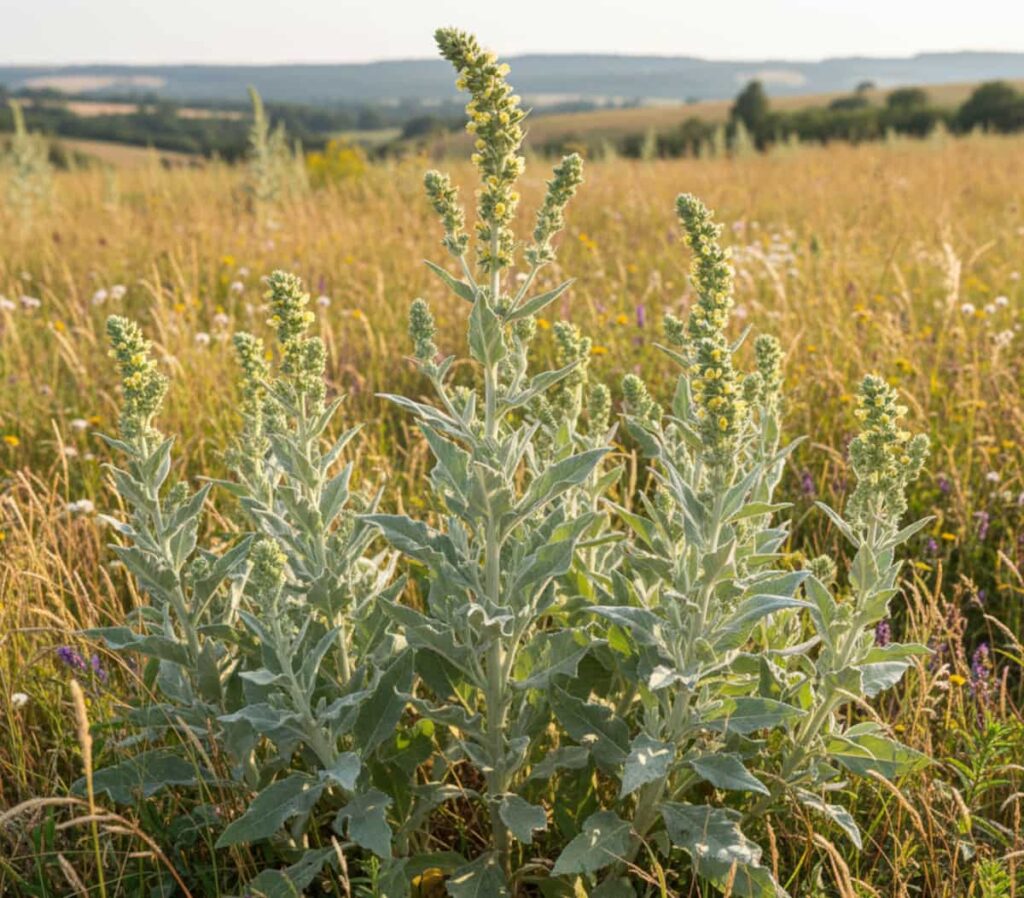
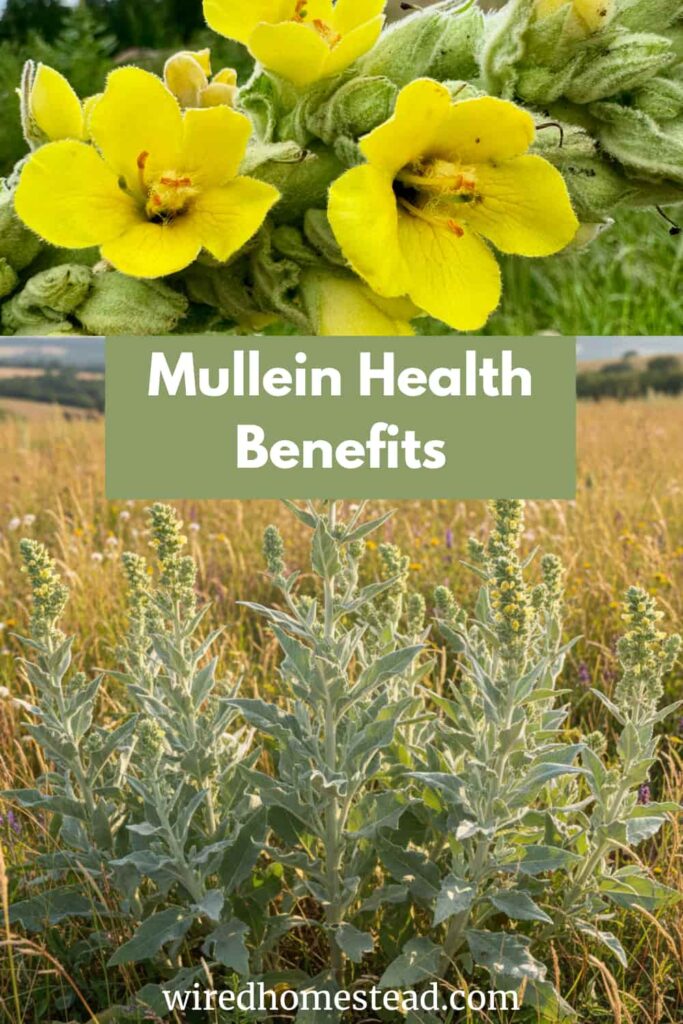
Mullein (Verbascum thapsus) is native to Europe, N. Africa, and Asia; but it now grows almost everywhere. When I moved to our new homestead one of the first plants I noticed was mullein out in one of our pastures. It’s often thought of as a weed because it readily reseeds itself and easily spreads to new areas.
Mullein is a biannual that grows to an average of about 6 feet during it’s second year. During the first year it stays pretty low to the ground; and the plant will produce flowers, seeds, then will die the second year.
The leaves are covered with small hairs that make them feel fuzzy. Some people call mullein leaf “cowboy’s toilet paper” or “emergency toilet paper,” but I highly recommend NOT using it as toilet paper no matter what kind of emergency you’re having. The small hairs of the leaf can actually end up irritating you, and that’s one place you definitely don’t want irritated!

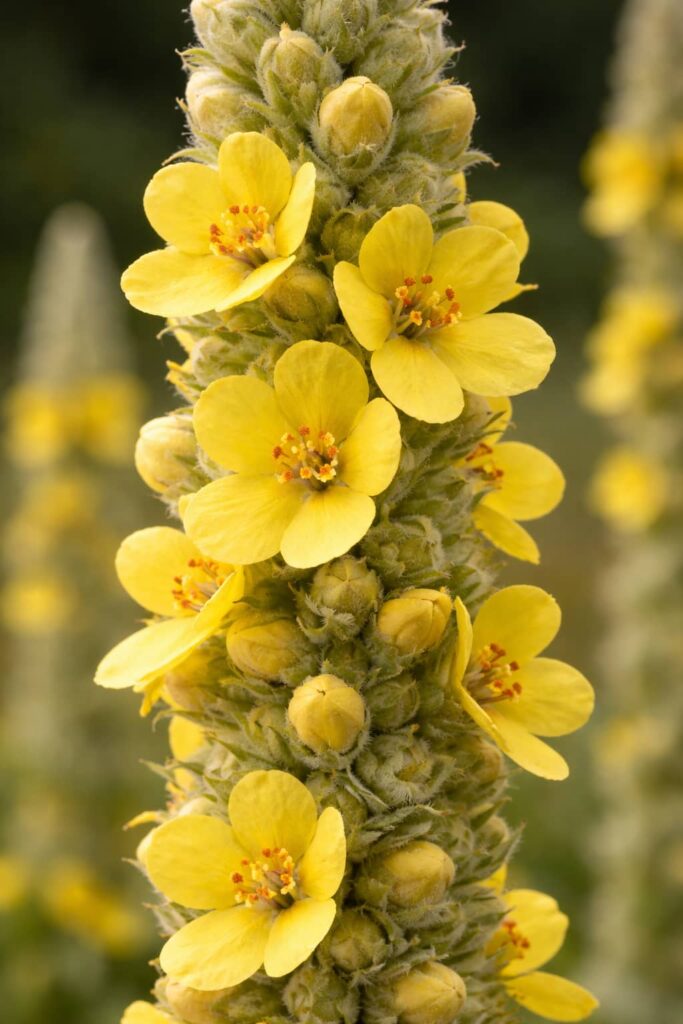
Mullein flowers are a lovely sunshine yellow color. Flowers are only found on the 2nd year plant, right before the plant produces seeds and dies.

Medicinal Properties of Mullein
**I am not a doctor and is this not medical advice. Please consult your physician before using herbal medicine.
Overview
Mullein can benefit anyone with lungs. Since most living beings have those, mullein is a plant you’ll want on hand. Whether it be colds, asthma, or something more severe, mullein can help you out. The plant doesn’t stop there, though. It will also help with skin and digestive issues. You’ll find more detailed information below.
The aerial parts of the plant (everything above ground) are the most well known parts used for medicinal purposes, but the root can also be used.
The Plant for Lungs
The most well known use for mullein is for lung health. If you have an ailment of the lungs, chances are good that mullein is the plant you’ll want to be reaching for. The properties that make it so good for lungs is that it has antispasmodic properties, it’s a good expectorant (meaning it helps cough stuff up), and works as a demulcent which relieves irritation of mucous membranes.
Some lung conditions that mullein may be helpful for are:
- dry coughs
- bronchitis
- pneumonia
- colic
- tuberculosis
- COPD
- whooping cough
- chest congestion
- asthma from smoking
- hoarseness
- lung inflammation
Taking mullein in tea form is an excellent way to use this plant for respiratory ailments.
This isn’t an exhaustive list of lung conditions, but I think it shows how well mullein pairs with the lungs.

Medicinal Properties for Skin Issues
Lungs may be the star of the mullein show for most people, but this beauty of a plant can do so much more than help you breathe better. It’s also a good anti-inflammatory and antioxident. Mullein’s anti-inflammatory medicinal properties are from the flavones and flavonols present in the plant. Both of these qualities make it a good choice for some skin wounds and issues where inflammation is a big factor.
- wound healing (can reduce swelling and inflammation)
- burns
- eczema (used externally in a poultice or cream)
- inflamed skin conditions
Digestive
The mullein plant is an astringent and can be helpful for diarrhea in both humans and livestock. It probably wouldn’t be my go to plant for this, but it certainly can help if this is what you have on hand. This medicinal property of mullein can also help with hemorrhoids if this is something you battle with.
The plant can also help with rectal prolapse in animals. The best way to use it for this purpose is to infuse it into olive oil and use that on the prolapse to help relax it so it can move back into place.
Other Medicinal Properties of Mullein for Issues in Humans and Livestock
The root is often over looked as a medicinal part of this plant, but it is also very useful for a number of ailments and conditions. It has been recorded as an anti-spasmodic, or relaxant, and has been noted as being helpful for seizures and convulsions. I’ve never used it in this way to use at your own discretion and do not use as a replacement for medical care.
The relaxant property of the root can also help with muscle stiffness and cramping. It has also been shown to increase collagen production.

Ways to Use Mullein
It’s important to note that when using mullein, it’s important to strain out the very fine hairs from any tincture, tea, or oil infusion you make. The hairs that make the leaf feel fuzzy when touching it can be very irritating when ingested or rubbed on the skin.
Tincture – respiratory issues, digestive issues
Tinctures typically involve alcohol but can be made with vegetable glycerin or vinegar if you do not consume alcohol. Keep in mind that when you are taking a tincture, you are taking such small amounts that it is impossible to feel any effects of alcohol.
I make a tincture by using 100 proof vodka. Fill a jar with fresh mullein leaves and flowers. I like to cut it up into smaller pieces so I can fit more in and have more surface area for the alcohol to extract from. I feel it’s important that the plant be fresh, so it still retains all of its water and alcohol soluble properties. Some people like to use dry plant matter, but I don’t think it’s as potent since it’s lost its water-soluble properties in the drying process. Use your own judgement on what works best for you. Make sure you fill the jar to the top with mullein, don’t pick a jar that’s larger than the amount of plant material you have. It doesn’t matter what jar you use, just make sure it has a lid that is tight.
When your jar is full of mullein, pour the alcohol over it until it reaches the brim of the jar. You may have to let it sit for a minute before the alcohol makes it into all the nooks and crannies. Add more if necessary. Seal the jar with the lid and sit it in a cool dark place for 6-8 weeks.
When it’s ready, strain out the plant material and your tincture is ready for use.
Tinctures are pretty powerful medicine, so start slowly when taking it. Start with just a few drops several times a day, and work up until you reach the number of drops your body needs to feel the medicinal affects.
Teas – respiratory issues
To make mullein into a tea, take either fresh or dried mullein and put about a teaspoon dried mullein (2 teaspoons fresh) per cup into a tea bag. For Mullein a tea bag is better than an infuser because it’s more likely to keep the very fine hairs on the plant from getting into the tea. The hairs can irritate you, so it’s best to make sure they are filtered out. Poor 8 oz of boiling water over it and cover the cup to keep the steam from escaping. There are special tea mugs you can buy that come with covers, or you can just cover the cup with a small saucer plate like I do.
Let the tea steep for about 10-15 minutes then remove the cover. Take out the mullein and enjoy your refreshing medicinal tea.
Smoked (dried plant material) – respiratory issues, muscle relaxation
Take dried plant material, break it up into small pieces, and place in a cigarette rolling paper. Close the paper as the directions state, and smoke.
Do not choose this method if you have COPD or severe respiratory issues. Consult your doctor and thoroughly research an herb before choosing to smoke it.
Oil Infusion – skin issues, earaches, wounds/burns, muscle cramping, prolapse
An oil infusion is best used to make a salve, cream or lotion, but of course you can always use the oil to cook with too! My favorite oil to use is avocado oil, but you can use a pure olive oil, grapeseed oil, or basically any oil that isn’t soy, vegetable, or canola based. I wouldn’t recommend using those due to their inflammatory properties.
Oil infusions should be made with dry plant material only. Because oil and water are the perfect breeding ground for bacteria, if you use fresh plant material your oil is going to end up growing mold.
Fill a jar up with dried mullein, you can use the stem and all, you don’t have to only use the leaves. Just like with a tincture, cut the plant matter into smaller pieces to allow more surface area for extraction.
Pour the oil over the plant material up to the rim of the jar. Cap it tight and place it in a warm, dark place for 6 weeks. After 6 weeks, strain out the plant material and your oil is ready to go!
Dried Powder – poultices/compresses for skin issues or joint pain or make capsules
Capsules
You can buy ready made capsules from any health food stores, or online. If you choose to buy them, research the company and make sure they independently test their products for purity.
You can also make capsules yourself. To do this, take dried plant material and grind it to a powder. A blender should work fine. The plant must be dried, if you capsule plant material that has any moisture left in it you’ll end up growing mold.
You’ll need a capsule maker and empty capsules. Put your capsules into the capsule maker, spread the powdered plant material around and firmly press it into each capsule. The capsule maker should come with something called a tamper to help you compress the plant material into the capsule.
Place the two plates of the capsule maker together and press. You have now magically made your own capsules with only the plant ingredient(s) you chose to put in them.
Poultices: The Direct Application
A poultice is a direct application of fresh or dried herbs to a targeted area. The herb itself is the remedy—for example, crushed fresh plantain leaves can be used to draw out the venom from a bee sting. The moisture and direct contact allow the plant’s medicinal compounds to be absorbed right where they are needed. It’s a classic, simple, and powerful method for on-the-spot relief.
Poultices are great for drawing out splinters, soothing insect bites, reducing swelling, or delivering a high concentration of healing compounds to a specific area.
How to Use a Poultice
- Fresh Herbs: Fresh herbs are often crushed or chewed to release their juices before being applied. A classic example is a plantain poultice for a bee sting.
- Dried Herbs: Dried herbs are usually mixed with a little hot water to form a thick paste.
- How to Apply: Place the poultice directly on the affected area and cover it with a bandage or cloth to keep it in place and prevent it from drying out.
- Leave the Poultice in Place: Take the poultice off after 10-20 minutes.
Compresses
Compresses are excellent for covering a larger area and for providing a soothing or anti-inflammatory effect without the mess of a poultice. The temperature of the compress adds another layer of benefit.
Cold Compress: A cold compress is ideal for inflammation, swelling, bruises, or sprains. The cloth is soaked in a cold herbal liquid and applied directly to the area.
Hot Compress: This is often used for sore muscles, aches, or to draw out infections. The cloth is soaked in a hot herbal liquid, wrung out, and applied directly to the affected area.

Other Medicinal Plants that can Benefit Your Life
Pin It For Later ⤵️
Sources:
Biological activity of common mullein, a medicinal plant
Health-promoting and disease-mitigating potential of Verbascum thapsus L. (common mullein): A review
Anthelmintic and relaxant activities of Verbascum Thapsus Mullein