Why Seedlings Fall Over After Sprouting (And How to Save Them)
If you’ve ever checked on your seedlings and felt that little gut-punch of “what happened?” — you’re not alone. Every gardener, from first-timers to seasoned growers, has watched a tray of seedlings suddenly collapse. I know I’ve lost my fair share of seedlings over the years. The good news is that most of the time your plants will give you the answer as to what happened. Once you know how to read the signs, you can figure out why seedlings fall over after sprouting and how to fix the problem quickly. Then you’ll grow stronger, tougher plants moving forward.
The 5 Most Common Reasons Seedlings Fall Over
1. Not Enough Light (The #1 Cause)
If your seedlings are tall, thin, and leaning like they’re reaching for something, you’re looking at classic legginess.
Seedlings don’t just prefer light — they depend on it for structure. If they don’t have enough light, they’ll search for it, growing weak stems that can’t support their own weight.
You’ll usually notice:
- Long, spindly stems
- Pale or light green leaves
- Plants bending toward a window or a light
A sunny window often isn’t enough, especially in early spring. These little plants need lots of light to get a healthy start.
Grow lights are typically needed and shouldn’t be more than 2-3 inches above the seedling. I usually have it almost right on top of brassica plants (broccoli, cabbage, cauliflower, etc) because they are particularly prone to becoming leggy. It’s hard to recover these particular plants once they get really leggy. Other plants you can fix fairly easily, like tomato plants.
If tomato or pepper plants get leggy, you can just up pot them and plant them deeper.
2. Damping Off (The Silent Killer)
This one is frustrating because it can wipe out a tray overnight, and you may not even see it coming.
Damping off is a soil-borne fungal issue that attacks seedlings right at the base of the stem. One minute they look fine… the next, they’re toppled over with a thin, pinched stem at the soil line.
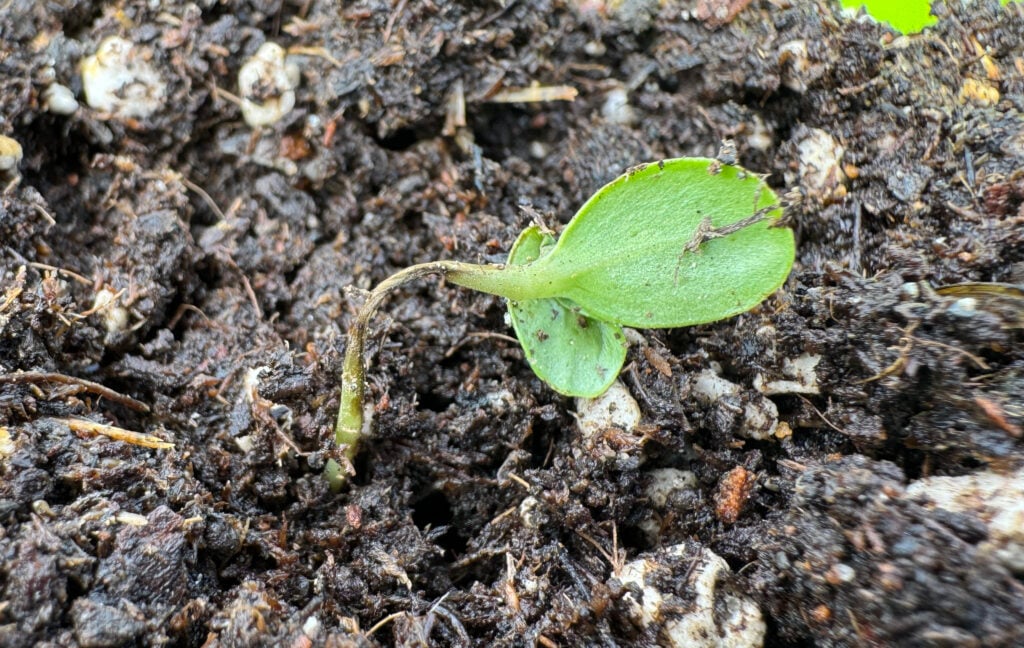
Watch for:
- Seedlings collapsing suddenly
- Stems that look shriveled or “pinched”
- Wet soil conditions
Once it starts, it spreads quickly through moisture and poor airflow. Read about dampening off in more depth: What is Dampening Off and How to Stop It.
3. Overwatering (And Poor Airflow)
Too much water creates a swampy environment where roots struggle to breathe.
When roots are weak, the whole plant becomes weak. If you don’t have proper airflow you’ve created the perfect environment for fungal diseases. Too much water also makes it very hard for the seedling to take up nutrients once it uses up all the nutrients in the seed itself.
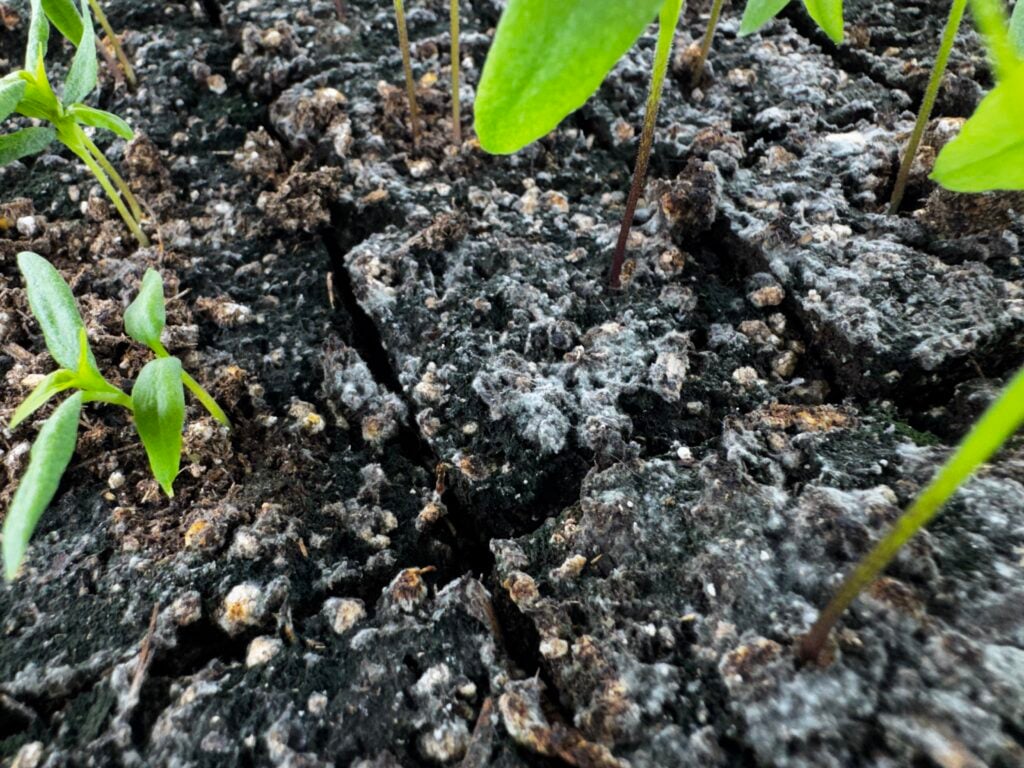
Signs include:
- Constantly wet soil
- Yellowing seedlings
- Slow or stalled growth
Seedlings like moisture — but they can’t handle being soggy.
4. Weak Stems from Still Air
Out in the garden, wind gently pushes plants around all day. That movement strengthens their stems. Indoors, however, the air tends to be still. Especially in the Spring when most seeds are started and most of us are not opening windows or turning on fans yet.
Without movement, seedlings grow soft and fragile, unable to hold themselves upright. For more information on airflow read Why Airflow is Important for Healthy Plants.
5. Crowded Seedlings Competing for Resources
When too many seedlings are packed into one space, they compete for:
- Light
- Nutrients
- Airflow
This creates taller and weaker plants that are more likely to fall over. The stems will not become strong enough to handle the leaves at the top and they will flop over.
How to Tell What’s Causing the Problem
Before you try to fix anything, take a close look:
- Tall and leaning? → Not enough light
- Collapsed at soil line? → Likely damping off
- Wet soil + yellowing? → Overwatering
- Thin but upright stems? → Needs airflow
- Clustered and tangled? → Overcrowding
How to Save Falling Seedlings (Step-by-Step Fixes)
Fix Leggy Seedlings
Light is everything here when the issue is leggy seedlings.
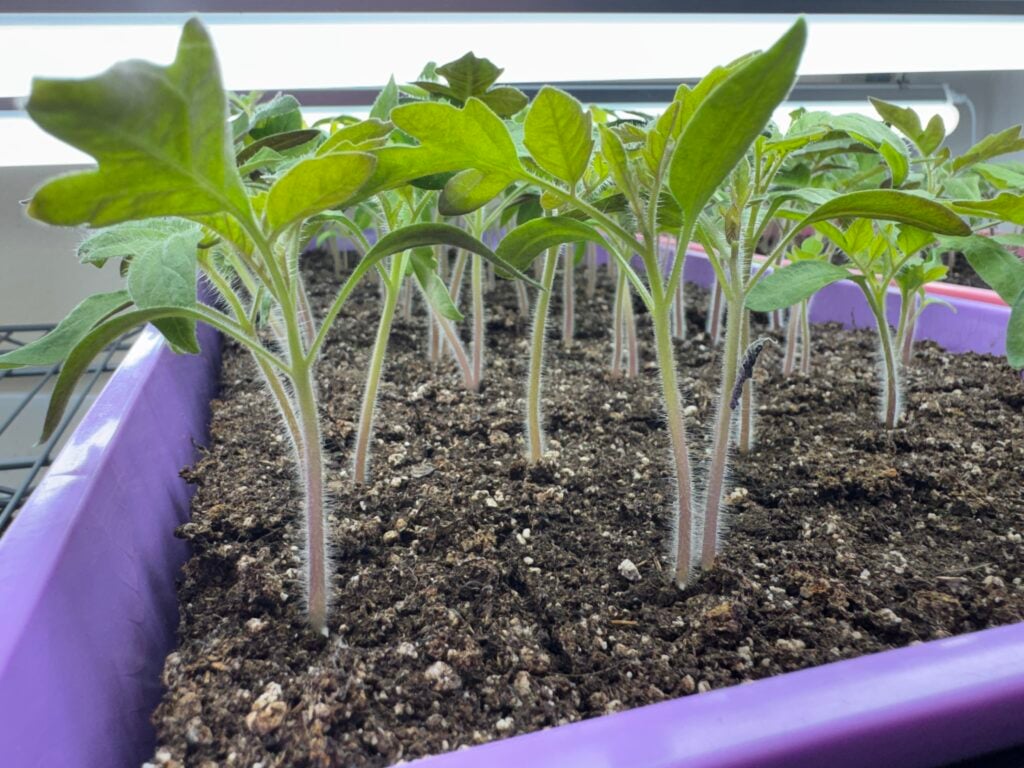
Move your seedlings under a grow light and keep it just a few inches above the tops. As they grow, raise the light with them. If you can, add aluminum foil or another reflective surface around the shelf where you have your seedlings. This will help reflect light back to the seedlings, helping them even more.
If you’re working with crops like tomatoes or peppers, you can actually bury part of the stem when transplanting or up-potting. The stem will develop nodes that will turn into roots. The result will be a stronger plant with a better root system.
Stop Damping Off Fast
If you suspect damping off, act quickly:
- Remove affected seedlings immediately
- Let the soil dry slightly, especially on the surface, before watering again
- Change to bottom watering instead of watering the surface
- Increase airflow around your plants
Unfortunately, seedlings that have already collapsed won’t recover. The goal here is to protect the ones that are still standing.
Correct Your Watering Habits
Switch to bottom watering if you haven’t already.
Set your trays in a shallow container of water and let them absorb moisture from below. This keeps stems dry and encourages deeper root growth. I like to use a tray with a mesh bottom, like these microgreen trays from Bootstrap Farmer and set them into a 1020 tray without holes. I can lift the top tray, put water in the bottom tray, and then set the top one back down into the water. The water will come up through the holes, allowing the seedlings to soak it up without having water set on the soil surface.
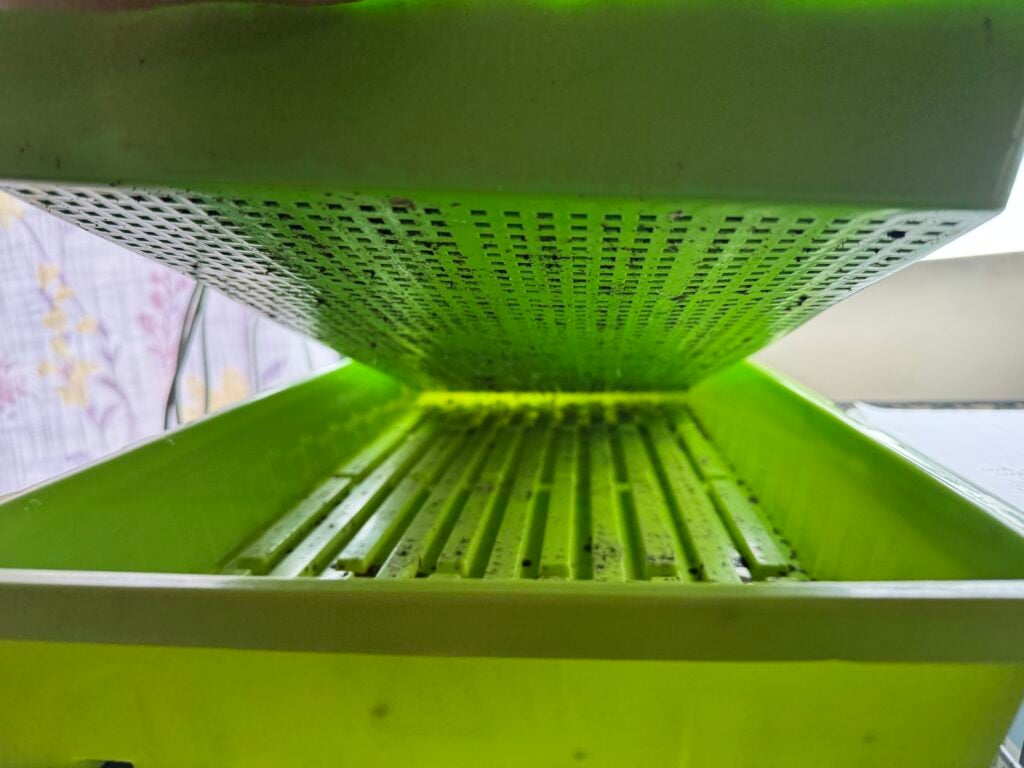
Also, let the top layer of soil dry out slightly between waterings. Constant moisture causes problems, especially for delicate seedlings.
If your soil is holding too much water, it might be time to revisit your mix. A well-draining blend makes all the difference, especially in small containers. Using a mix specifically for seedlings, I use Black Gold Seedling Mix because I can buy it locally, it’s organic, and I’ve found it works well for me. The most important thing is that it’s seedling mix. Potting mix can work, but do not pick a raised bed mix or use a garden mix. These are too heavy and will hold too much water for seedlings.
Strengthen Stems Naturally
Set up a small fan to gently move air across your seedlings for a few hours a day. You don’t want a heavy wind — just enough movement to make them sway a little.
You can also lightly brush your hand across the tops of your seedlings once or twice a day. It mimics natural movement and encourages thicker stems.
Thin and Transplant Seedlings
If your seedlings are crowded, it’s time to thin them out.
Snip the weaker ones at the base with some scissors and give the stronger plants room to grow. It feels wasteful, but it’s one of the best things you can do for the overall health of your tray.
For more detailed instructions on thinning seedlings, read When to Thin Seedlings (And How to Avoid Stunting Your Plants).
Can You Still Save Them? (When It’s Too Late)
Not every seedling can be saved.
If the stem is already collapsed from damping off, it’s gone and can’t be fixed. If the plant is extremely leggy and weak, it may never fully recover.
And that’s okay. It’s okay to make mistakes and lose seedlings.
Starting over isn’t failure — it’s part of the process. Mistakes are important in learning, read How Mistakes Make You A Better Gardener for encouragement. It’s necessary to lose some seedlings now and then. Your next ones will be stronger for it.
How to Prevent It Next Time
Once you’ve dealt with falling seedlings once, you’ll be prepared to prevent it from happening again. Here’s what to dial in from the start:
Strong Light Early On
Use grow lights from day one and position them close to your seedlings. Don’t hang them more than 2-3 inches from the seedlings.
Water with Intention
Keep soil moist but not soggy. Bottom watering helps a lot and I can’t recommend it enough.
Create Airflow
A small fan is one of the easiest upgrades you can make to have strong, healthy seedlings.
Use the Right Soil
Light, well-draining seed starting mixes prevent a lot of problems before they start.
Don’t Overcrowd
Give each plant space to grow strong from the beginning. If you do end up with crowded seedlings, don’t be afraid to thin them out.
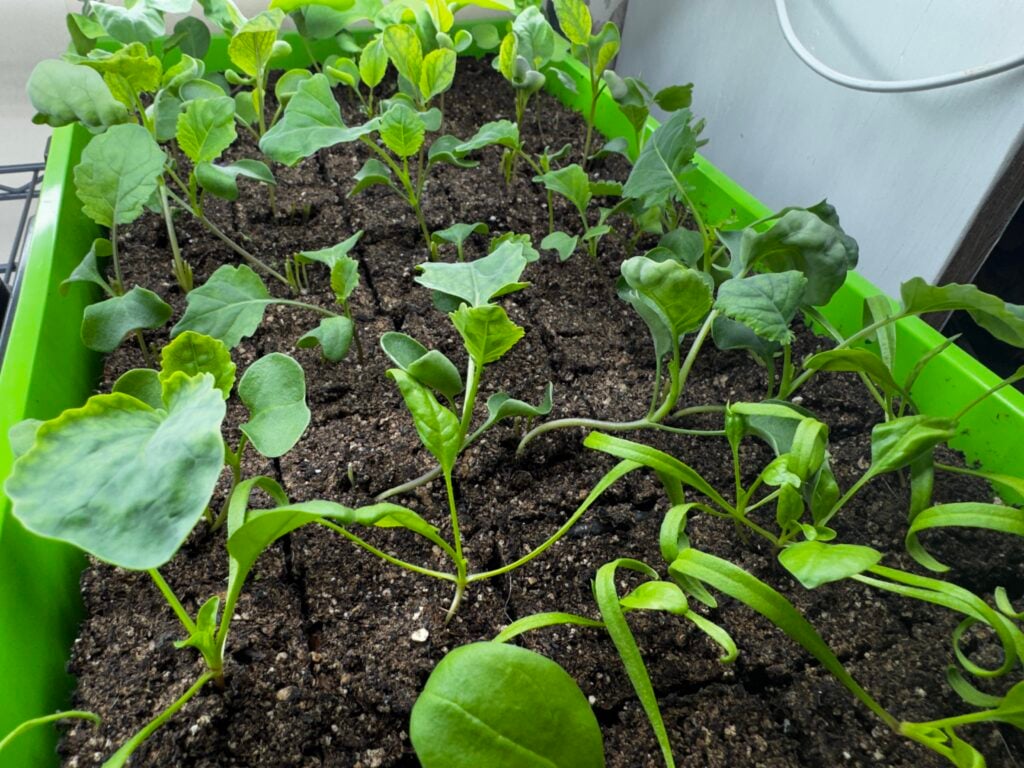
Don’t Panic, You Can Handle This
Seedlings look delicate because they are. If give them the right conditions, and thrive and become pretty tough plants.
If yours are falling over right now, don’t panic. Adjust a few key things, keep observing, and you’ll be back on track in no time.
Frequently Asked Questions: Why Seedlings Fall Over After Sprouting
Q: Why are my seedlings falling over after sprouting?
A: Most of the time, it comes down to weak stems. Seedlings shoot up fast when they don’t have enough light, and those thin stems just can’t hold the weight of the leaves. If they look stretched and floppy, your plants are basically reaching for a better light source. Move the light closer or switch to a grow light, and you’ll usually see improvement within a few days.
Q: Can leggy seedlings be saved?
A: In many cases, yes, but not all of them can. If the stems are still healthy and not damaged, you can fix legginess by improving light and, for certain plants like tomatoes, planting them deeper when you transplant. That extra buried stem will grow roots and help stabilize the plant. Think of it as giving your seedling a second chance to build a stronger foundation. If brassicas get too leggy, they will not recover and should be restarted.
Q: What does dampening off look like?
A: Dampening off has a very specific look once you know it. The seedling will suddenly fall over, and the stem right at the soil line will look thin, pinched, or almost melted. It’s not gradual like legginess, it’s quick. If you see that, remove the affected plants right away to keep it from spreading.
Q: How often should I water seedlings?
A: There’s no perfect schedule. You want the soil to stay lightly moist, but not constantly wet. A good rule is to let the surface dry out just a bit before watering again.
Q: Why are my seedlings tall, thin, and bending?
A: That’s almost always a light issue. When seedlings don’t get enough light, they stretch fast and grow weak. It’s not something you can fix with fertilizer or more water, it has to be corrected with better lighting. Once you fix that, new growth will come in much stronger.
Q: Do seedlings need a fan?
A: They don’t need one to survive, but they definitely benefit from it. A little airflow helps prevent disease and encourages thicker stems. Even a small fan on a low setting for a few hours a day can make a noticeable difference. No fan? Brushing your hand lightly over the plants a couple times a day will help too.
Q: Should I thin my seedlings if they’re falling over?
A: Yes, especially if they’re crowded. When too many seedlings share the same space, they compete for light and stretch even more. Thinning them out gives the remaining plants room to grow stronger. It feels counterproductive at first, but it’s something that can help the remaining seedlings become stronger.
Q: Can overwatering cause seedlings to fall over?
A: Absolutely. Too much water weakens the roots and creates the perfect environment for problems like dampening off. If your soil stays soggy and your seedlings look wilted or unstable, pull back on watering and let things dry out slightly between cycles.
Q: Is it better to start over or try to save them?
A: It depends on what you’re dealing with. Leggy seedlings can often be corrected, but dampening off is usually the end of the road for affected plants. If most of your tray is struggling, starting fresh with better light and airflow might actually set you ahead instead of trying to rescue weak plants.
Q: How do I keep my seedlings from falling over next time?
A: Start strong and you won’t have to fix much later. Use a good light source right away, avoid overwatering, give them airflow, and don’t overcrowd your trays. When those basics are dialed in, seedlings grow sturdy from the beginning and you skip the whole “why are they flopping?” stage altogether.