How to Fix Leggy Seedlings (Proven Fixes for Stronger, Healthier Starts)
There’s a particular kind of disappointment that comes from checking on your seedlings in the morning… only to find them stretched thin, leaning, and pale. Leggy seedlings are weak, fragile, and far less productive later on. But here’s the good news is most leggy seedlings can be fixed. And even better—you can prevent it entirely next time. Let’s walk through exactly what’s happening, how to fix leggy seedlings, and how to grow thick, sturdy seedlings that are ready to thrive.
*As an Amazon Associate I may earn from qualifying purchases at no cost to you.
What Are Leggy Seedlings?
Leggy seedlings are young plants that have grown tall, thin, and weak instead of short and sturdy with a thicker stem.
Instead of building strong stems and leaves, they stretch upward quickly, often bending or falling over under their own weight.
This usually happens right after germination—when seedlings are at their most vulnerable stage.
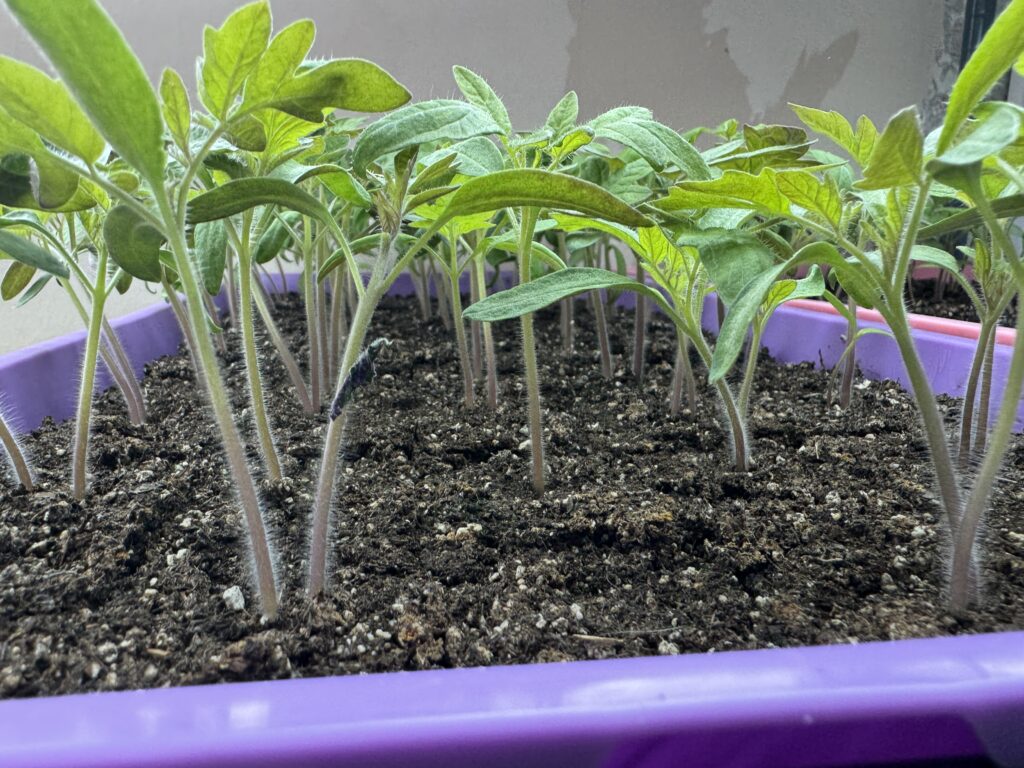
Why Are My Seedlings Tall and Skinny?
The answer to this is almost always that they need more light.
That’s almost always the root cause. But there are a few key factors that can contribute to leggy seedlings.
1. Not Enough Light (The #1 Cause)
Seedlings need intense light right from the start. A sunny window might feel bright to us, but to a seedling, it feels more like a cloudy day. They need light that’s basically directly on top of them. Not light that passes through a piece of glass from only one direction.
Without enough light, plants stretch toward the nearest source, sacrificing strength for height. My favorite grow lights are these Barrina lights. I’ve been using them for about 5 years now and they still work as well as the day I got them. They aren’t as expensive as other grow lights, either, which is also a plus!
2. Light Is Too Far Away
Even with grow lights, distance matters.
If your light is more than a few inches above the seedlings, they’ll stretch to reach it—resulting in weak stems.
I’ve made this mistake many times when I was first starting my own seedlings. I still make it now occasionally when I have seedlings at different stages I’m trying to fit onto one shelf. Don’t feel bad if you’ve made this mistake, as well. Just move the light closer to the seedlings and they’ll be much happier.
3. Too Much Heat
Warm soil helps seeds germinate, but once they sprout, too much heat encourages rapid, weak growth.
Think of it like this: heat says “grow fast,” while light says “grow strong.”
The only plants I use heat mats for are peppers. And as soon as the peppers sprout, I take them off the mats.
4. Overcrowding
Seedlings planted too closely compete for light. That competition triggers upward stretching, even if your lighting is decent.
5. No Air Movement
In nature, wind strengthens stems. Indoors, still air creates soft, weak growth that can’t support itself.
Adding a small fan can be a big game changer in creating healthy seedlings with strong stems. It also helps prepare the plant for the outdoor environment.
Reed more about airflow and how it can help your seedlings in Why Airflow is Important for Healthy Plants.
Can Leggy Seedlings Be Saved?
Yes—in most cases, they can.
But the approach depends on how far along they are.
A slightly stretched seedling is usually easy to fix. But a severely leggy one might need to be replaced.
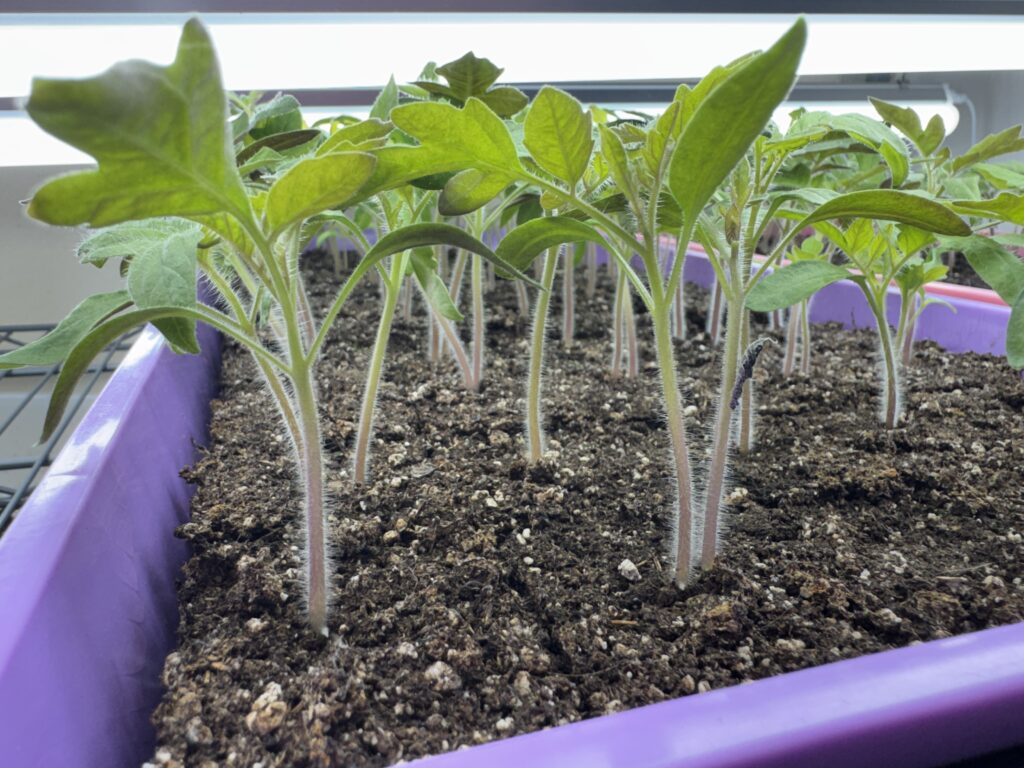
How to Fix Leggy Seedlings (Step-by-Step)
1. Move Them Into Strong Light Immediately
This is the first and most important fix.
If you’re using a window, choose your brightest south-facing option. If you’re using grow lights, position them no more than 2–3 inches above the seedlings.
Keep the lights on for 12–16 hours per day for most seedlings.
PLEASE NOTE: If you are growing onions do not do this or it will encourage your young onion seedlings to try and bulb. Do not go more than 8-10 hours of light for these seedlings until they go outside.
2. Lower the Temperature Slightly
After germination, most seedlings prefer cooler conditions—around 60–70°F.
If your space is too warm, move trays to a slightly cooler area or remove heat mats if you are using them.
This slows upward growth and encourages plants to grow thicker stems.
3. Add Gentle Airflow
This is one of the most overlooked fixes for leggy seedlings.
Set up a small fan on low, just enough to create a gentle breeze across your seedlings. You don’t want a wind storm, just enough to see your plants gently sway.
This mimics natural wind, encouraging stems to strengthen and thicken.
If you don’t have a fan, brushing your hand lightly over the tops once or twice a day works surprisingly well.
4. Thin Your Seedlings
If multiple seedlings are growing in one cell, thin them down to the strongest one.
Yes, it can feel hard—but overcrowding guarantees legginess.
Read more about When to Thin Seedlings to guide you on the exact right timing to thin for best success.
5. Repot Them Deeper (Especially Tomatoes)
Some plants can be buried deeper when repotted—and they’ll grow new roots along the buried stem.
Tomatoes are the standard example of this, but you can do this with peppers as well. They aren’t as successful with this method, but they still do great.
If you’re dealing with leggy tomato seedlings:
- Transplant them into deeper containers
- Bury the stem up to the first set of leaves
- Water well and return them to strong light
This single step can completely rescue a stretched tomato plant.
6. Support Them (Temporarily)
If seedlings are already falling over, use small stakes or toothpicks to gently support them while they recover.
This is just a temporary support until the plant recovers. You want the stems to grow stronger and not rely on the stake for permanent support.
How to Prevent Leggy Seedlings From the Start
Fixing leggy seedlings is helpful, but preventing them is even better.
Here’s how to set yourself up for strong, compact growth from day one.
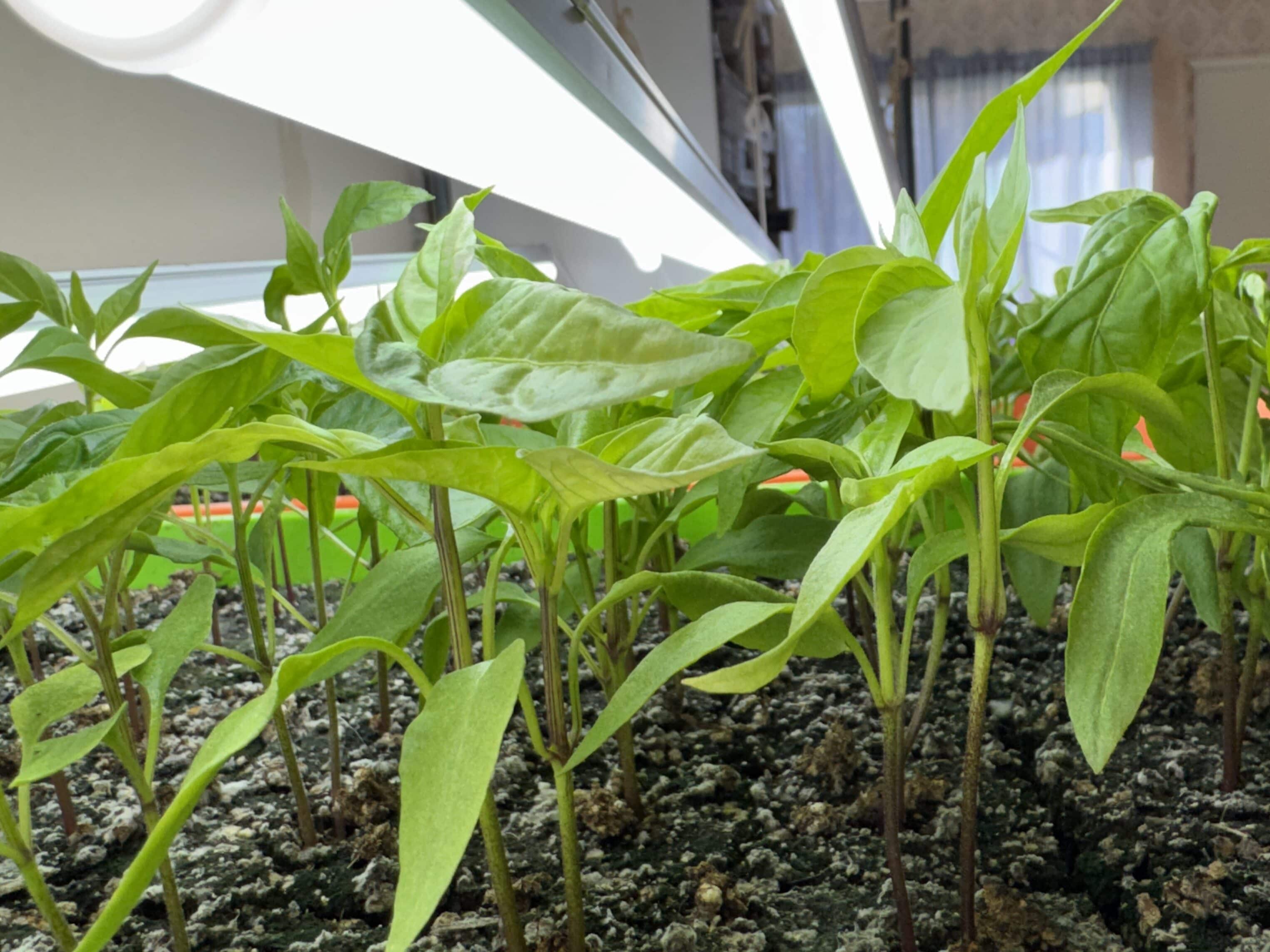
Use Proper Grow Lights
Not all light is created equal.
For consistent results, use full-spectrum LED or fluorescent grow lights placed just inches above your seedlings. I really like these Barrina lights I use for my set up.
Raise the lights as the plants grow, but always keeping that close 2-3 inch distance.
Start With the Right Setup
Your seed-starting environment matters more than most people think.
Strong light, proper spacing, airflow, and temperature control all work together.
Don’t Start Too Early
Starting seeds too early often leads to leggy plants simply because they outgrow your indoor conditions.
If this happens before they’re ready to go outside, then it creates stress on the plant.
If you’re unsure about how to determine when a plant should be ready to go outside, check out this guide When To Transplant Seedlings Outdoors.
Rotate Trays Daily (If Using Natural Light)
If you only have a window to start your seedlings, rotate your trays every day so seedlings don’t lean in one direction.
Every morning turn the tray around so the light is hitting the seedlings from a different direction. They will move towards the light, adjusting positions each day. This will help with leggy seedlings, but you may still deal with some leggy issues if the sun is not strong enough coming through the window.
Water Consistently (But Don’t Overdo It)
Overwatering doesn’t directly cause legginess—but it contributes to weak growth overall.
Aim for evenly moist soil, not soggy.
Overwatering can cause a lot of issues such as Damping Off. Learn more about this is my guide What is Damping Off and How to Stop It.
How to Get Thick, Strong Seedling Stems
Here’s how to give your seedlings strong stems from the beginning.
- Keep light close and consistent
- Provide airflow daily
- Avoid excessive heat after sprouting
- Space plants properly
- Don’t overfeed early
You’re essentially training the plant to grow like it would outdoors.
What Seedlings Recover Best?
Not all plants handle legginess the same way.
Best Recovery Candidates:
- Tomatoes
- Peppers
- Herbs like basil or cilantro
More Difficult to Save:
- Lettuce
- Root crops (carrots, radishes)
- Brassicas (like broccoli, cauliflower and cabbage)
If these become severely leggy, it’s often better to start over.
When to Start Over Instead of Fixing
Sometimes the most productive choice is to replant, even when you really don’t want to.
Consider starting fresh if:
- Seedlings are extremely thin and collapsing
- Leaves are pale or yellowing
- Growth has stalled
- They’ve been leggy for too long
Seeds are cheap, but time and garden space are limited. If your seedlings are very leggy for over a week and starting to collapse, try again. Being set back a week is better than trying to recover plants that are too weak. You’ll likely end up losing them and not getting any harvest.
The Hidden Cost of Leggy Seedlings
Here’s something many gardeners don’t realize:
Even if leggy seedlings survive, they often produce less.
Weak stems mean slower establishment, greater susceptibility to stress, and lower yields overall.
Fixing the issue early—or preventing it entirely—pays off at harvest time. If you find your plants are struggling, read my guide on How To Tell If Your Plants Are Stressed. Learn what to look for and what to do if they are to help them recover at any stage of growth.
Final Thoughts
Leggy seedlings are frustrating, but they’re also one of the clearest signals your plants can give you.
They’re not failing—they’re trying to adapt to the environment you’ve given them. Which often means reaching for light.
Give them stronger light.
Bring the light closer.
Add a little movement.
Dial back the heat.
And in just a few days, you’ll start to see the change. Stems thickening, leaves deepening in color, growth becoming compact and steady.
And that’s exactly what you want to be putting out into your garden when transplant time comes.
Frequently Asked Questions About How to Fix Leggy Seedlings
Q: How do you fix leggy seedlings fast?
A: The fastest way to fix leggy seedlings is to increase light immediately. Move grow lights to about 2–3 inches above the seedlings or place them under stronger full-spectrum lighting for 12–16 hours a day. Lower temperatures slightly after germination, add gentle airflow with a fan, and thin overcrowded seedlings so they stop competing for light. For tomatoes, repotting deeper can also work wonders.
Q: Can leggy seedlings still be planted?
A: Yes, many leggy seedlings can still be planted, especially tomatoes, peppers, and some brassicas. Tomatoes are the easiest to save because you can bury much of the stretched stem deeper in soil, where it will grow additional roots. If seedlings are severely weak, pale, or collapsing, starting over may give you better results.
Q: What causes seedlings to get leggy?
A: The most common cause is insufficient light. Seedlings stretch toward available light when they aren’t getting enough intensity. Other causes include grow lights placed too far away, overly warm temperatures after sprouting, overcrowding, and poor airflow.
Q: How close should grow lights be to seedlings?
A: For most seedlings, grow lights should stay about 2–3 inches above the tops of the plants. If the light is too far away, seedlings stretch. As seedlings grow taller, raise the light gradually to maintain that close distance without overheating the leaves.
Q: Will leggy seedlings recover?
A: Often, yes. Once you correct the lighting and environmental issues, new growth can become stronger and healthier. The original stretched stem may remain thin, but future growth can improve dramatically. Early intervention gives the best chance of full recovery.
Q: Can you bury leggy seedlings deeper?
A: Some plants can, and some cannot. Tomatoes are ideal candidates because buried stems develop roots. Peppers may tolerate slightly deeper planting, but most herbs and leafy greens should not be buried much deeper than they originally grew, as this can lead to rot.
Q: Are sunny windows enough for seedlings?
A: Usually not. Even bright windows often don’t provide enough direct intensity for strong indoor seedlings, especially in late winter or early spring. South-facing windows are best, but most gardeners get sturdier seedlings by supplementing with grow lights.
Q: How do I make my seedlings stronger?
A: Strong seedlings need bright light, cooler temperatures after sprouting, airflow, and proper spacing. A gentle fan helps mimic outdoor wind, strengthening stems naturally. Avoid overwatering and overfeeding early on, which can encourage weak growth.
Q: Should I start over with leggy seedlings?
A: If seedlings are only mildly stretched, they’re often worth saving. But if they’re severely elongated, falling over, yellowing, or growing poorly despite corrections, replanting may save you time and lead to a healthier harvest.
Q: Do leggy seedlings mean poor harvests later?
A: They can. Weak seedlings often struggle more after transplanting and may produce less than sturdy, healthy starts. Fixing legginess early or preventing it altogether gives your plants a stronger foundation and often better long-term yields.