How to Grow Peppers in Containers for High Yields (Even in Small Spaces)
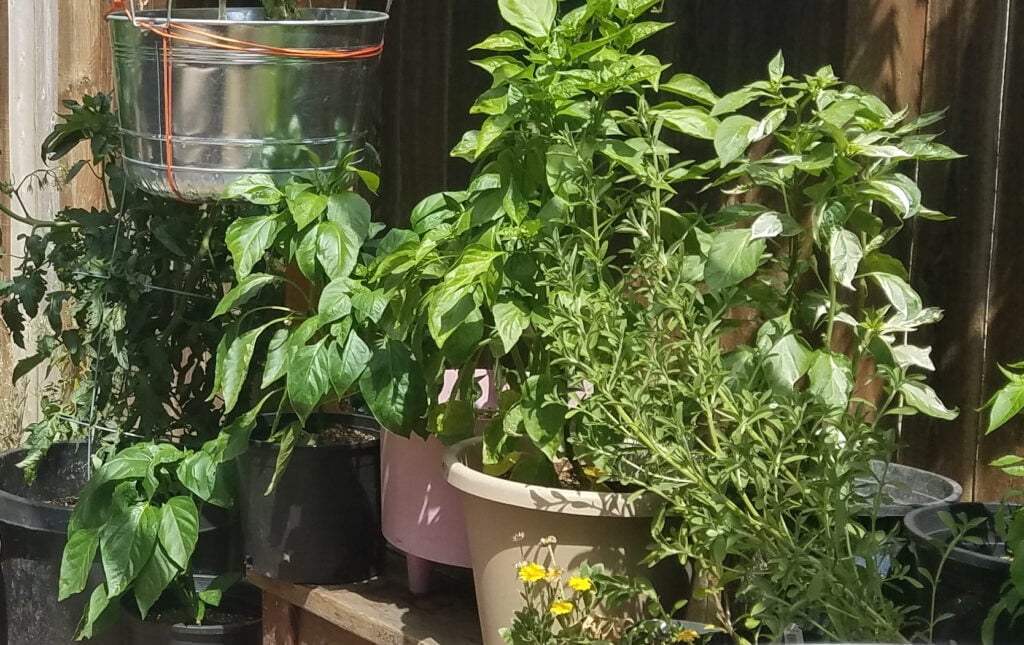
Learning how to grow peppers in containers for maximum yield is one of the most reliable ways to produce a strong harvest in a small garden or on a patio. With the right container, soil mix, and care routine, pepper plants in containers can match or even outperform those grown in the ground. I’ve grown lots of peppers in containers and had bigger yields than from my raised beds. One year I grew 30 pepper plants in 2 square feet with a vertical planter and got lots of peppers from them. This guide explains exactly how to set up and manage container peppers so they produce heavily throughout the season.
*As an Amazon Associate I may earn from qualifying purchases at no cost to you.
Can You Grow Peppers in Containers?
Peppers grow well in containers. They naturally grow with a compact root system compared to many other vegetables. They do not need deep or sprawling soil to thrive, which makes them one of the easiest fruiting crops to grow in pots.
Containers also give you more control over growing conditions. You can:
- choose the exact soil mix
- move plants to follow sunlight
- easily protect them from cold weather
- manage watering and feeding precisely
This level of control often leads to faster early growth and more consistent fruit set. To get even more out of your container peppers, read Proven High Yield Container Gardening Tips.
Choosing the Right Container for Maximum Fruit Production
The container you choose directly affects how large the plant can grow and how many peppers it can produce.
Minimum vs Ideal Container Sizes
While peppers can survive in smaller pots, yield increases as soil volume increases.
- 3 gallon pots: suitable for small hot peppers but limit overall production
- 5 gallon pots: the minimum size for bell peppers and most standard varieties
- 7 to 10 gallon pots: ideal for maximum yield and larger fruit
Larger containers hold moisture longer and provide a larger nutrient reservoir. This reduces stress during hot weather and supports steady fruit development.
Best Container Materials
Peppers grow well in:
- plastic nursery pots
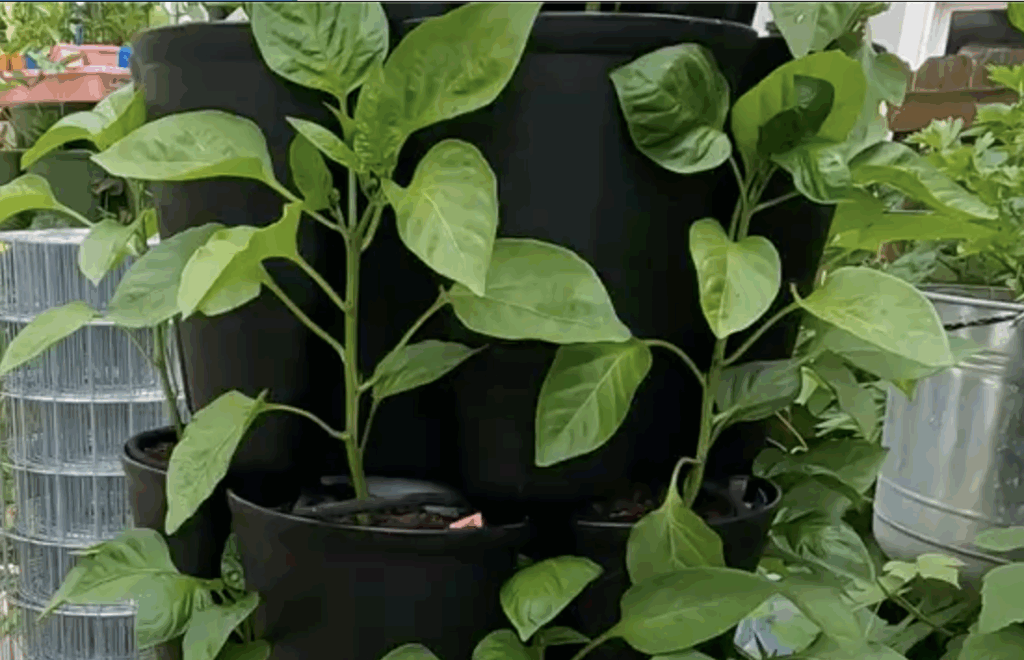
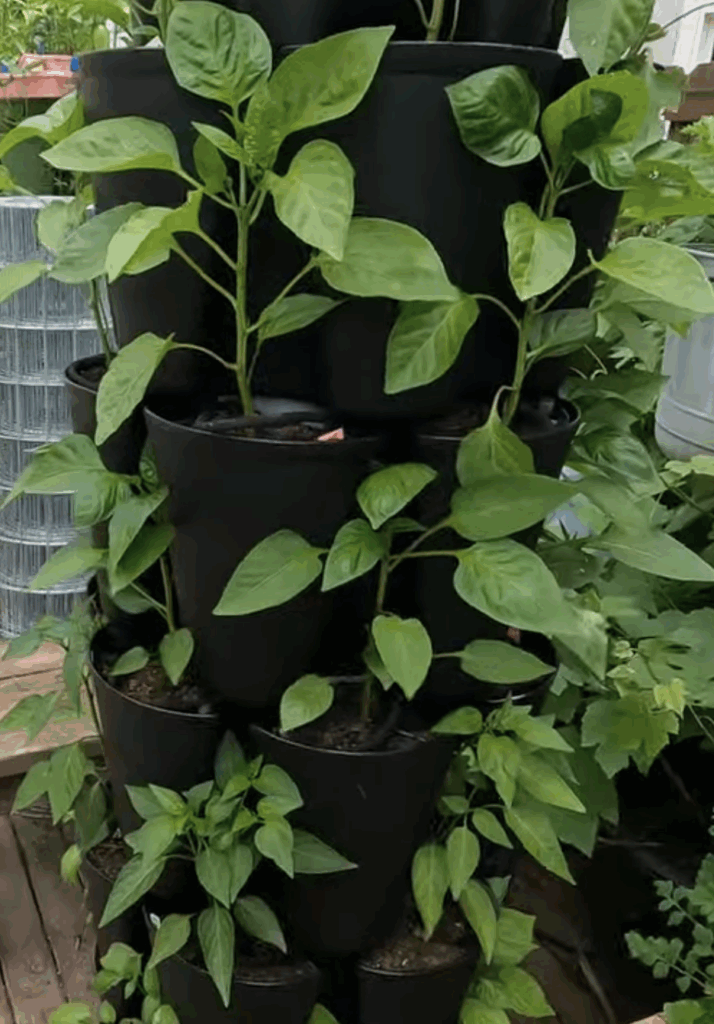
- Vertical grow systems like the GreenStalk
- fabric grow bags
- glazed ceramic containers
Fabric pots improve drainage and airflow around roots but dry out faster, which means more frequent watering. Plastic containers hold moisture longer and are easier for beginners to manage. The only pot that is not recommended is a terracotta pot. Terracotta pots wick moisture away from the soil. I don’t recommend using these, especially if you are a beginner.
If you have a very limited amount of space I really recommend a vertical planter. I love the GreenStalk planters.
Best Soil Mix for Growing Peppers in Pots
Container peppers need soil that stays moist but never becomes dense or waterlogged. Poor soil structure is one of the main reasons container peppers fail to produce well.
A strong pepper potting mix should include:
- organic matter such as compost or worm castings for nutrients
- peat moss or coco coir to retain moisture
- perlite or vermiculite to keep the soil loose and aerated
The mix I discuss in Best Soil Mix for Raised Beds can be modified to be used in containers with slightly more aeration material to prevent compaction.
- 35% compost
- 35% peat moss or coco coir
- 30% aeration material
Avoid using garden soil in containers. It becomes compacted, restricts oxygen flow to roots, and often introduces pests, disease, and weeds. It doesn’t drain well enough for container growing and roots tend to suffocate and/or rot.
Planting Peppers in Containers the Right Way
Transplanting peppers into pots is simple, but small mistakes during planting can slow growth for weeks.
Step-By-Step Planting Process
- Fill the container with pre-moistened soil mix.
- Remove the pepper plant gently from its nursery pot.
- Place it into the new container at the same depth it was previously growing or up to a couple inches below its first leaves.
- Firm the soil lightly around the root ball.
- Water deeply to settle the soil and remove air pockets.
It’s important to pre-moisten the soil. It settles into the pot better and ensures the plant starts with the proper soil moisture. Dry soil can sometimes become hydrophobic as well, meaning it actually tries to push water away instead of soak it up. Pre-moistening soil prevents that from becoming a problem and affecting the growth of your pepper plants.
Sunlight Requirements for High Yield
Peppers are warm-season plants that require a lot of sunlight to fuel fruit production. Without enough light, plants may grow leaves but will produce very few flowers.
For strong production, peppers need:
- at least 6 hours of direct sun daily
- ideally 8 or more hours for maximum fruiting
If your growing area has partial shade, place containers where they receive the most consistent afternoon sun. Containers can be repositioned during the season to adjust for changing sun angles, which is a major advantage over in-ground planting.
If you do not have a place that has that much sunlight, you can still try to grow peppers if you have extra space to fill. But you will probably not get much. Instead, I’d recommend using that space for other plants that do better with less sun. Many of the plants I recommend in The Best Cut-And-Come-Again Vegetables are great options.
Watering Peppers in Pots Without Causing Stress
Watering is one of the most important parts of container gardening. Peppers are sensitive to both drought and overwatering. Either condition can reduce yields.
How Often to Water
In mild weather, container peppers may only need watering every other day. During hot summer conditions, they will likely require daily watering.
The most reliable method is to check soil moisture directly:
- insert your finger into the top 1–2 inches of soil
- if it feels dry, it is time to water
- if it still feels wet, check again the next day until the soil feels dry
How to water correctly
Always water deeply until excess water drains from the bottom of the pot. This ensures the entire root zone is hydrated. You want to encourage roots to grow deep and not stay at the surface. Watering deeply is the best way to encourage this. Deep, extensive root systems access more nutrients and produce healthier plants.
Inconsistent watering is a common cause of blossom drop, misshapen fruit, and bitter flavor.
Fertilizing Peppers in Containers for Heavy Harvests
Unlike garden beds, containers cannot store nutrients for long. Every time you water, small amounts of nutrients wash out through the drainage holes. This means peppers in pots need regular feedings throughout the season.
Fertilizer schedule for container peppers
At planting:
- Mix a balanced organic fertilizer into the soil. I prefer using compost and worm castings mixed directly into the soil before I add the pepper plant. You can use other fertilizers, but I find at this stage that these two soil additions work the best.
During early growth:
- Feed every 2 to 3 weeks with a balanced liquid or granular fertilizer. I really like fish fertilizers like this Alaskan fish fertilizer. It’s what I use for my container garden.
Once flowering begins:
- Switch to a fertilizer slightly higher in phosphorus and potassium to support fruit development. Fox Farm makes great organic fertilizers like this Happy Frog fruit & flower fertilizer. I’ve used many products of their Happy Frog line and have loved them all.
Avoid high-nitrogen fertilizers after plants start flowering, but do not use no nitrogen fertilizers. Too much nitrogen encourages excessive leafy growth, but you do still want some growth. You just want the majority of the plants energy to go into fruit.
Supporting Pepper Plants in Containers
Even compact pepper plants can become top heavy once fruit begins to form. Containers are lighter than garden soil and can tip over easily, especially in wind or storms. I’ve had planters tip over before and it’s pretty devastating to see all the hard work you’ve put into your plants gone with one strong wind. Staking helps keep the plant from breaking if the container does tip over.
To prevent damage:
- insert a stake at planting time
- or use a small tomato cage for larger varieties
Providing support early prevents root disturbance later and keeps branches from breaking under the weight of developing fruit. Placing the stake or cage later can cause a bit of shock to the plant and stall it’s growth for a short time while it recovers.
Managing Temperature for Better Fruit Set
Peppers grow best in warm conditions but can struggle in extreme heat just like they can the cold. It’s much easier to handle these conditions when you grow peppers in containers.
If temperatures drop below about 55°F at night, growth slows and flowering may stop. During heat waves above 90°F, flowers may drop before forming fruit. In either of these conditions, you can move your pots to help prevent stress on the plants.
Move containers:
- closer to a wall for reflected heat in cool weather. If the containers or on the smaller size you can also bring them indoors during a cold night.
- or into partial afternoon shade during extreme heat.
Choosing to move your containers to protect your plants can help your plants thrive. If you’re not sure whether or not your pepper plants are becoming stressed, reference my post How to Tell if Your Plants Are Stressed.
Pruning and Plant Management in Pots
Peppers do not require heavy pruning, but small adjustments can improve airflow and direct more energy toward fruiting.
Remove:
- damaged or yellowing leaves
- any branches and leaves that touch the soil
- very dense interior growth that blocks airflow
Good airflow reduces disease risk and improves pollination success. For more information on how airflow helps plants, read Why Airflow is Important for Healthy Plants.
Common Problems When Growing Peppers in Pots
Blossom drop
This is one of the most common issues with container peppers. I’ve had this happen a lot when I was first starting to grow peppers in containers. Flowers fall off without forming fruit when the plant experiences stress.
Typical causes include:
- inconsistent watering
- excessive nitrogen fertilizer
- high daytime temperatures or cold nights
Small or slow-growing plants
If pepper plants remain small well into the growing season, the most likely causes are:
- containers that are too small
- nutrient deficiencies
- or lack of sunlight
It’s very easy to find your peppers aren’t growing very well in containers. If you’re anything like me, life interferes and you forget to fertilize on a regular basis. I can be so bad at that! I’ve found it helpful to set reminders in my phone calendar to help keep me on track. Setting reminders for yourself is a great way to keep track of your fertilization schedule.
Choosing Pepper Varieties That Perform Well in Containers
While nearly all peppers can be grown in pots, some varieties are better suited to container conditions.
Good high-yield container choices include:
- jalapeños
- banana peppers
- shishito peppers
- compact bell pepper cultivars
Large, long-season varieties can still be grown successfully but benefit from larger containers and a longer growing season. I’ve had great success with jalapeños, particularly the early jalapeño variety, as well as poblanos, cayennes, and fish peppers. King of the North bell pepper has also done particularly well for me in containers. I’ve grown many others successfully, but these are a few of my favorites for my climate.
Pollination and Fruit Set in Container Peppers
Peppers are self-pollinating, but they still rely on movement from wind or insects to transfer pollen within the flower. If your are growing on a patio, balcony, or other space that is sheltered from the elements pollination could be a challenge.
Gently shaking the plant or brushing flowers with your hand once every few days during peak flowering can help set fruit. If your space is open to the breeze you shouldn’t have to worry about this.
Harvesting Peppers to Increase Overall Yield
Pepper plants respond to harvesting by producing more flowers and fruit. Leaving mature peppers on the plant signals that reproduction is complete, which stops the plant from producing more peppers.
For maximum yield:
- harvest peppers once they reach a usable size
- pick regularly every few days during peak production
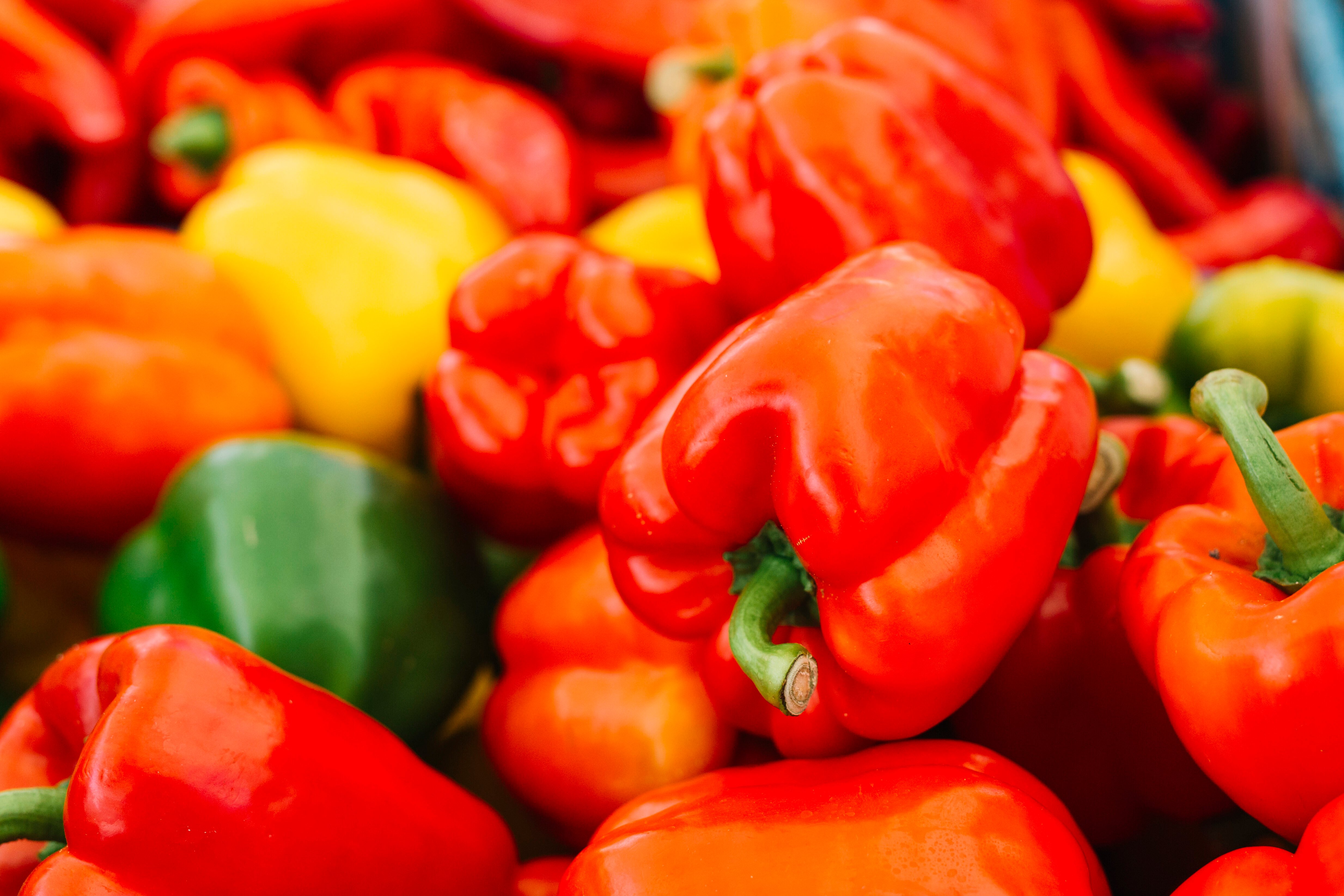
Peppers can be harvested green (immature) or allowed to ripen fully to red, yellow, or orange depending on the variety. Fully ripe peppers have a sweeter flavor but take longer to develop. If you choose to let the peppers mature, pick them as soon as they are the color you’d like them to be. Don’t leave them on longer or it might tell the plant to stop producing more peppers.
End-of-Season Care and Extending Production
In cooler climates, pepper plants often stop producing when nighttime temperatures fall below 45-50ºF (7-10ºC). Because container peppers are portable, they can be moved to protected areas to extend the harvest if you choose.
Placing pots:
- near a south-facing wall
- or inside a greenhouse or covered porch
- or inside with grow lights
can add several weeks to the growing season.
Some gardeners even overwinter healthy pepper plants indoors to grow them again the following year, which can lead to earlier and heavier harvests in the second season. In warm climates peppers are perennial plants. By overwintering them indoors it simulates the warm climate that peppers are native to.
Key Practices That Lead to Maximum Yield
To consistently grow high-producing peppers in containers, focus on five core factors:
- large enough containers for strong root development
- high-quality, well-aerated soil mix
- steady watering without extreme dry or wet cycles
- regular fertilization throughout the season
- frequent harvesting to keep plants producing
When you follow these best practices, peppers in pots can produce a large harvest, even in small spaces such as patios, balconies, or compact backyard gardens.
Frequently Asked Questions: Growing Peppers in Containers for Maximum Yield
Q: What size pot is best for growing peppers?
A: A pot that holds at least 5 gallons of soil is the minimum for most pepper varieties. Larger containers, such as 7 to 10 gallons, usually produce bigger plants and more fruit because the roots have more room and the soil holds moisture and nutrients longer.
Q: How many pepper plants can I grow in one container?
A: One pepper plant per container is recommended, unless you have a large container. Growing more than one plant in the same pot that’s less than 15 gallons causes competition for water and nutrients. This will lead to smaller plants and fewer peppers. If you use a container that’s 15 gallons or more, you can plant 2 plants in the container. Just note you may have to fertilize a little more often to keep up with both plant’s needs.
Q: How often should I water peppers in pots?
A: Peppers in containers often need watering once per day during warm weather. Container soil dries out faster than garden soil because it is exposed on all sides.
A good rule is to check the top 2 inches of soil. If it feels dry, it is time to water.
Q: Do peppers grow better in pots or in the ground?
A: Peppers can grow just as well in pots as they do in the ground when given enough sunlight, water, and nutrients. In cooler climates, container peppers sometimes perform better because the soil warms up faster in spring.
Q: What is the best soil for growing peppers in containers?
A: The best soil is a loose, well-draining potting mix that contains compost for nutrients and materials like perlite or vermiculite for airflow. Garden soil should not be used in containers because it compacts and restricts root growth.
Q: Why are my pepper plants flowering but not producing fruit?
A: This is usually caused by stress, but could also be a lack of pollination if you don’t have very good airflow in your growing space. The most common causes include:
- inconsistent watering
- too much nitrogen fertilizer
- temperatures that are too hot or too cold
When conditions improve, the plant typically resumes fruit production.
Q: Do peppers need full sun when grown in pots?
A: Yes. Peppers need at least 6 hours of direct sunlight daily, but 8 hours or more leads to stronger plants and higher yields. Insufficient light often results in tall, weak plants with few flowers.
Q: Should I stake or support pepper plants in containers?
A: Supporting container peppers is recommended, especially for larger or high-yielding varieties. Heavy fruit can cause stems to bend or break without support.
Q: How long do pepper plants produce in containers?
A: Pepper plants can continue producing fruit for several months if harvested regularly and kept healthy. In mild climates, they may keep producing until frost or even survive multiple seasons if brought indoors.
Q: Can I reuse potting soil from last year for peppers?
A: Yes, but it should be refreshed before planting. Old container soil often lacks nutrients. Mixing in fresh compost and a slow-release fertilizer like worm castings help restore fertility and structure.