10 Mistakes Growing Tomatoes in Containers (and How to Fix Them)
Tomatoes are one of the most rewarding crops you can grow in a small container garden. A single healthy plant can produce pounds of fruit throughout the summer. But growing tomatoes in a container is a little different than growing them in large garden beds. Some of the most common mistakes growing tomatoes in containers include limited soil, less airflow, and container growing all change the way the plants behave. The good news is that most tomato problems are easy to fix once you understand what the plants need.
Mistakes are common, especially if you are a new gardener. Read How Mistakes Make You a Better Gardener to learn why mistakes are an important part of learning.
*As an Amazon Associate I may earn from qualifying purchases at no cost to you.
1. Choosing the Wrong Tomato Variety
One of the biggest mistakes growing tomatoes that gardeners make is choosing a tomato variety that simply isn’t suited for a small growing area.
Tomatoes fall into two main categories: determinate and indeterminate.
Determinate tomatoes grow to a set height, produce most of their fruit over a short period, and then slow down. These types of tomatoes are usually easier to manage in containers.
Indeterminate tomatoes continue growing and producing fruit all season long. Some varieties can reach 8–10 feet tall if they have enough space.
While indeterminate varieties can still be grown in containers, they need strong support and larger pots. I’ve grown both types of tomatoes successfully in containers, but indeterminate tomatoes are definitely harder and more finicky.
If you’re gardening in a tight space like a balcony or patio, it’s best to look for varieties labeled:
- patio tomatoes
- dwarf tomatoes
- bush tomatoes
- container tomatoes
Examples include varieties like Patio Princess, Tiny Tim, or Bush Early Girl. Roma tomatoes also work well if you’re looking for a sauce type of tomato.
Choosing the right plant from the beginning prevents a lot of problems later in the season.
If you’re planning a small garden, this guide on How to Plan a Vegetable Garden That Actually Produces can help you map out plant spacing and container placement before planting.
2. Using Containers That Are Too Small
A common mistake is trying to grow tomatoes in small decorative pots. Tomatoes grow large root systems. When they are planted in containers that are too small, the roots quickly run out of space.
This causes several problems:
- plants dry out faster
- nutrients run out quickly
- growth slows down
- fruit production decreases
For most tomato plants, the minimum container size should be 5 gallons, but larger is always better.
Recommended container sizes:
- Dwarf tomatoes: 3–5 gallons
- Determinate tomatoes: 5–7 gallons
- Indeterminate tomatoes: 10+ gallons
Larger containers hold more soil, which means moisture and nutrients stay available longer. This makes the plants much easier to care for. Make sure containers also have drainage holes. Tomatoes do not tolerate soggy roots. Grow bags are a great option. They drain well, allow great airflow, and are inexpensive.
3. Using Poor Soil in Containers
Another common mistake is filling containers with garden soil.
Garden soil becomes compacted inside pots and prevents proper drainage. It can also contain pests or diseases that affect tomato plants.
Instead, use a high-quality potting mix designed for containers.
Good tomato container soil should:
- drain well
- be light and fluffy, not compacted
- hold moisture without becoming soggy
- contain organic matter for nutrients
Many gardeners also mix in compost to improve fertility and soil life.
Healthy soil is the biggest factors in successful gardening. If you want a simple way to improve soil health naturally, this guide on How to Prepare Soil For Planting explains what to look for before planting.
4. Overcrowding Plants
When space is limited, it can be tempting to plant multiple tomatoes in the same container or pack several pots tightly together.
Unfortunately, overcrowding is one of the common mistakes growing tomatoes that creates several issues.
Tomato plants need good airflow around their leaves to stay healthy. Poor airflow increases the risk of fungal diseases like early blight and powdery mildew. See Common Tomato Diseases and Why Airflow is Important for Healthy Plants to learn more.
Crowded plants also compete for water and nutrients.
As a rule of thumb:
- Plant one tomato per container.
- Leave 12–24 inches of space between containers if possible.
This small amount of spacing can make a big difference in plant health.
5. Incorrect Watering
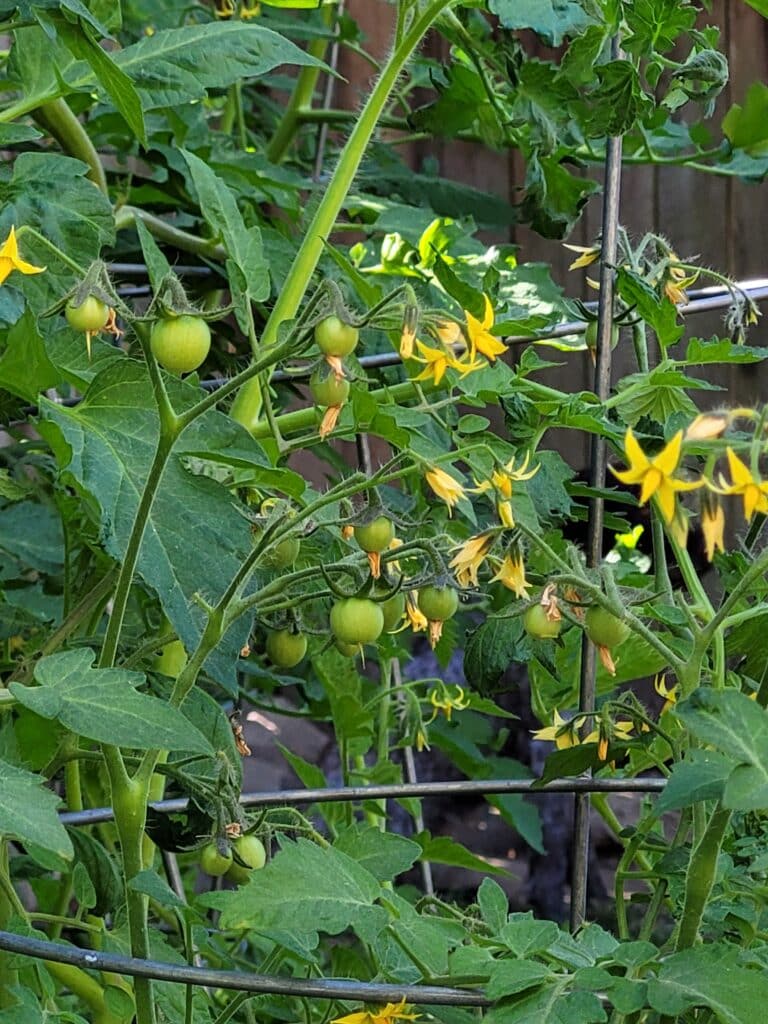
Watering mistakes are one of the biggest reasons tomato plants struggle in containers. I’ve made all of these mistakes before with my tomatoes. Sometimes learning the hard way teaches the best lessons. But I’m hopeful I can help you skip the hard learning.
Two common watering mistakes are:
Overwatering
Too much water can cause:
- yellow leaves
- root rot
- slow growth
- blossom end rot
The soil should be moist but not constantly wet.
Underwatering
Underwatering is even more common in container tomatoes.
Dry soil can cause:
- leaf curling
- blossom drop
- cracked tomatoes
During warm, dry weather, container tomatoes may need daily watering. But that is not always the case. A good approach is to check the soil with your finger. If the top 2 inches of soil feel dry, it’s time to water.
Water deeply until excess water drains out of the bottom of the container. You want water to reach the bottom of the roots and you want to encourage the roots to grow down to the bottom of the container.
6. Skipping Support or Trellising
Tomatoes are naturally sprawling plants. Technically they are vines. Without support, stems bend and fruit touches the soil. This increases the chance of disease.
Even container tomatoes need some support so do not skip this.
Some simple support options include:
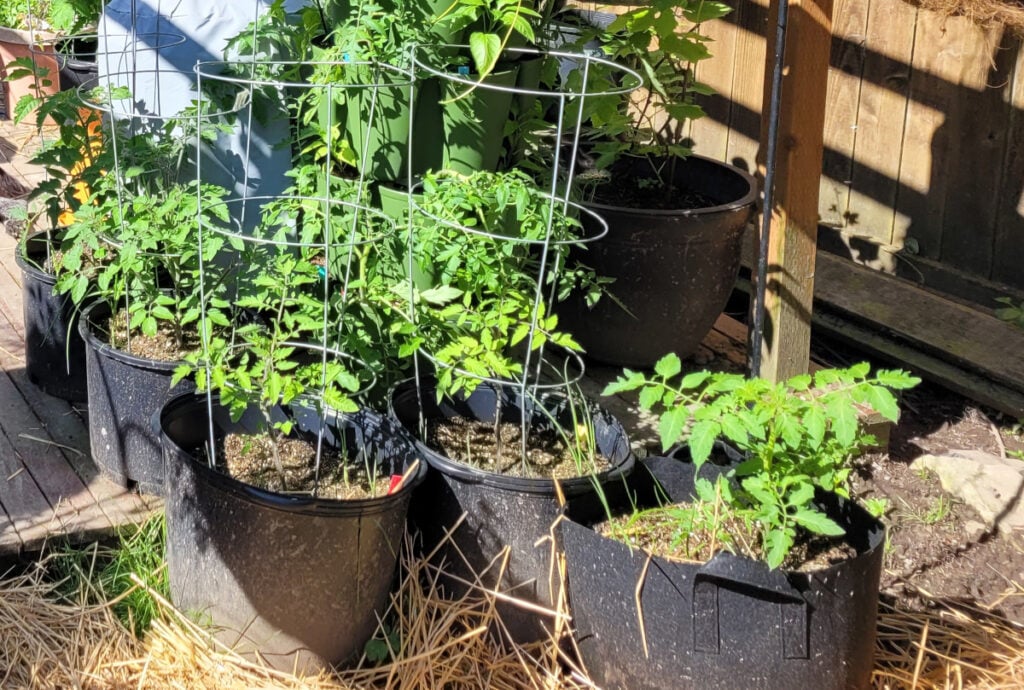
- tomato cages
- bamboo stakes
- vertical trellises
- string trellising systems
I’ve tried most of these systems. Tomato cages work really well for containers. Strings are also a good choice if you have something above the containers to attach the strings too. Bamboo stakes can work very similar to tomato cages. Vertical trellises can work, similar to training a cucumber up a trellis, but I feel this works best for raised bed or in-ground gardens.
Supporting tomato plants improves airflow, keeps fruit clean, and makes harvesting easier.
Vertical growing is especially helpful in small gardens because it allows you to grow more food in less space.
7. Not Pruning Container Tomatoes
Pruning is sometimes overlooked when growing tomatoes in general, but especially in containers.
Tomato plants often develop small side shoots called suckers that grow between the main stem and branches. If left alone, these suckers grow into full stems. These suckers end up crowding the plant and reducing airflow. They also suck energy from the plant. Pruning these shoots help the plant focus its energy on fruit production and not stem/leaf production.
For indeterminate varieties, removing suckers throughout the season can improve both plant health and harvest size. If you have limited height, topping indeterminate varieties can help keep them at a manageable size. This also helps redirect plant energy into fruiting instead of continuing to grow taller.
Determinate tomatoes usually need less pruning but they can still produce suckers that should be pruned for best plant health and maximum fruit production.
8. Fertilizing Incorrectly
Tomatoes are heavy feeders, especially when grown in containers. Since containers hold limited soil, nutrients can be used up quickly. However, too much fertilizer can cause problems.
Fertilizers high in nitrogen encourage leafy growth but reduce fruit production. This often results in large plants with very few tomatoes.
A better approach is using a balanced fertilizer or one designed specifically for tomatoes. This Happy Frog Tomato and Vegetable fertilizer is a great option. Happy Frog makes good quality products. Adding compost to the container before planting is a great way to give your tomatoes a good start. Then the fertilizer can be added throughout the growing season as the plant starts to develop flowers.
Look for fertilizers with nutrients such as:
- nitrogen (N)
- phosphorus (P)
- potassium (K)
Many gardeners feed container tomatoes every 2–3 weeks during the growing season for maximum harvest. This might vary depending on the fertilizer chosen, so be sure to read the directions before using.
9. Not Enough Sunlight
Tomatoes love the sun, they do not do well in shady spaces. Ideally they need at least 6–8 hours of direct sunlight per day to produce well.
Small space gardens sometimes struggle with this because patios, fences, or buildings create shade during part of the day.
If tomatoes aren’t getting enough sun, you may notice:
- slow growth
- fewer flowers
- small harvests
If possible, place containers on the sunniest side of your yard or balcony.
I have grown tomatoes in spaces with 4-5 hours of sunlight and still had them produce. They didn’t produce as much as they could have, but they were still quite successful. I wouldn’t go any less than that, though, or the plants will really suffer.
Another option is choosing tomato varieties that tolerate partial sun better. Some good options are: Sungold, Black Cherry, Juliet, Sweet 100, Gold Nugget, Roma, and Juliet.
You can also apply the same plant-selection strategies used when gardening in difficult spaces like shade or windy areas.
10. Harvesting Too Late or Too Early
The final mistake many gardeners make is harvesting tomatoes at the wrong time.
Tomatoes are ready to pick when they:
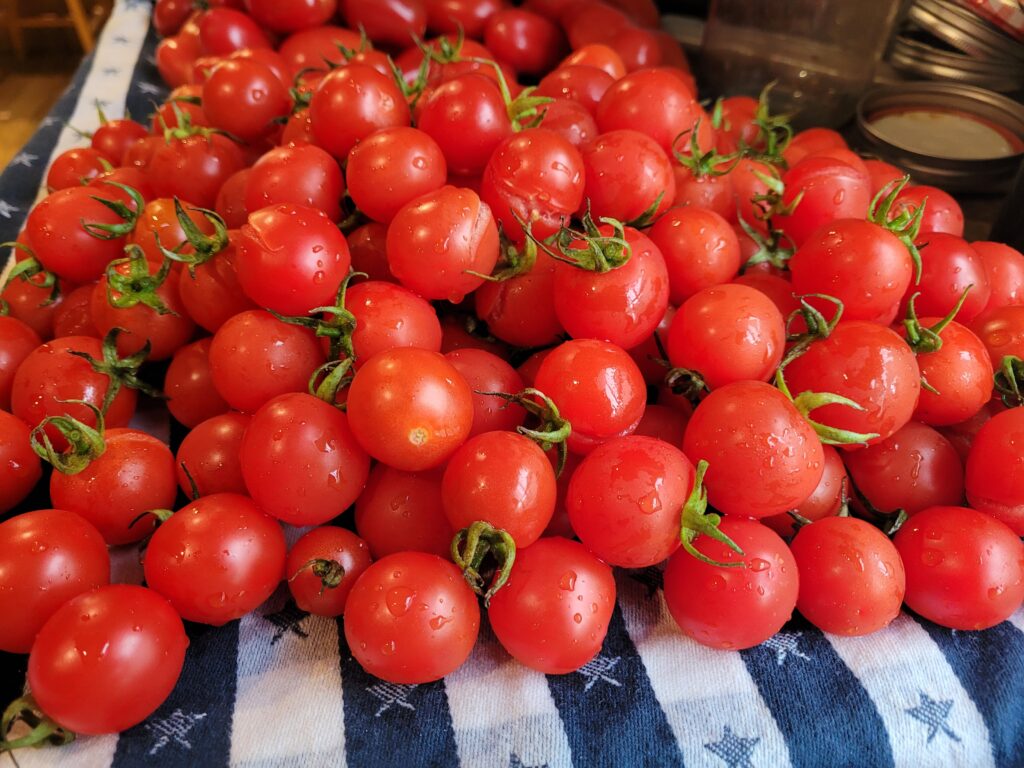
- reach full color
- feel slightly soft when gently squeezed
- easily detach from the stem
Leaving tomatoes on the plant too long can cause them to split or attract pests.
If you have tomatoes that are ripe or almost ripe and you have a rainstorm coming, pick them. Sudden large amounts of rain will cause tomatoes to split as well.
Regular harvesting encourages the plant to continue producing new fruit. Leaving them too long tells the plant it’s done and it will start to die off instead of continuing to produce fruit.
Checking plants every few days during peak season will help keep fruit production high.
Final Thoughts
Growing tomatoes in containers is incredibly productive and successful when you pay attention to a these key factors.
Most problems gardeners face come down to a handful of common issues:
- containers that are too small
- poor soil
- watering mistakes
- overcrowding
- lack of sunlight
Once these factors are corrected, tomato plants usually bounce back quickly and begin producing healthy fruit.
Even a small patio or balcony can grow an impressive tomato harvest with the right setup.
If you’re building a small-space garden, starting with strong soil, good planning, and the right containers will make the entire season easier and far more productive.
Frequently Asked Questions About Common Mistakes Growing Tomatoes
Q: What is the biggest mistake when growing tomatoes in containers?
A: The biggest mistake is using containers that are too small. Tomato plants grow large root systems, and when roots run out of space the plant struggles to absorb water and nutrients. This usually leads to slow growth, fewer flowers, and smaller harvests. A good rule is to use at least a 5-gallon container for most tomato plants, although larger pots are even better. Bigger containers hold more soil, which helps regulate moisture and gives roots room to grow.
Q: Why are my container tomatoes growing but not producing fruit?
A: When tomato plants grow lots of leaves but very little fruit, the cause is often too much nitrogen fertilizer. Nitrogen encourages leafy growth, but tomatoes need balanced nutrients to produce flowers and fruit. Lack of sunlight can also be a factor. Tomato plants typically need at least 6–8 hours of direct sun each day to set fruit properly. If your plant looks healthy but isn’t producing, check the fertilizer you’re using and make sure the plant is getting enough light.
Q: How often should you water tomatoes in pots?
A: Container tomatoes usually need more frequent watering than tomatoes grown in the ground. During warm summer weather, they may need watered every day. The best way to decide is to check the soil. If the top 2 inches of soil feel dry, it’s time to water. When watering, soak the soil thoroughly until water drains from the bottom of the container. Deep watering encourages stronger roots and helps prevent issues like blossom drop or cracked fruit.
Q: What size container is best for growing tomatoes?
A: For most tomato varieties, a container that holds at least 5 gallons of soil works well. Larger plants, especially indeterminate varieties, benefit from 10-gallon containers or bigger. Large containers provide more stable moisture levels and give roots the space they need to support healthy plant growth. Small containers dry out quickly and can limit the plant’s ability to grow and produce fruit.
Q: Do tomatoes grow well on balconies or patios
A: Yes, tomatoes can grow very well on balconies or patios as long as they receive enough sunlight and are planted in large containers with good soil. Many gardeners successfully grow tomatoes in small spaces using containers, grow bags, or raised planters. Choosing compact or patio tomato varieties and providing support like a cage or stake helps keep plants manageable in tight spaces.
Q: Should you prune tomatoes grown in containers?
A: Pruning can help container tomatoes stay healthier and more productive. Many tomato plants develop small side shoots called suckers that grow between the main stem and branches. Removing these suckers improves airflow and helps the plant direct more energy toward fruit production. Indeterminate tomato varieties can have the tops trimmed to keep the plants at a manageable height. Determinate tomato varieties usually need less pruning than indeterminate varieties.